Commercial Modified Bitumen Roofing in Vallejo, CA
Evaluate modified bitumen roofing in Vallejo, CA with ply condition, flashing, drainage, and repair or replacement choices in view.

Why Commercial Roofing Vallejo?
Commercial Modified Bitumen Roofing in Vallejo, CA
A modified bitumen roof needs an inspection of its plies and details before an owner decides between another repair and a new assembly. The roof may have a surfaced cap sheet, base layers, prior patches, or tie-ins to additions that do not appear uniform from the ground. We review seams, laps, flashings, drains, and the areas where service traffic or equipment may affect the surface. Summer readings at the Vallejo station average about 85 to 87°F, while July and August average no rainfall. Use that calendar context for planning, then verify the surface, substrate, and layers in the field. Mare Island includes office, retail, and industrial spaces; confirm whether equipment or loading activity changes access and staging at the building under review. A roof inspection can document the existing layers. If localized damage is present, a repair scope can remain tied to the affected zone. Where failures recur across several areas, compare those findings with a complete replacement evaluation.
Read the Plies and Prior Repairs
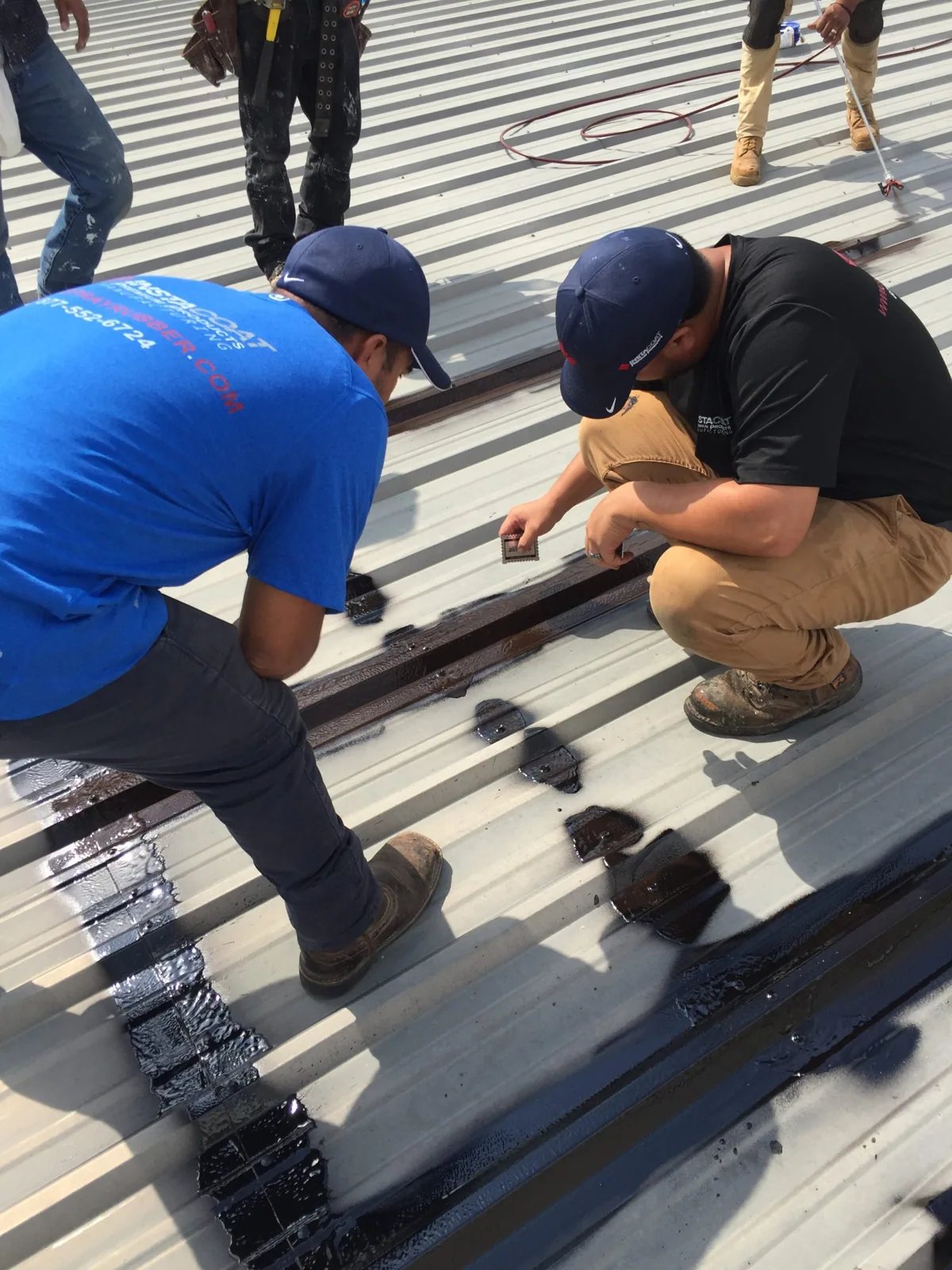
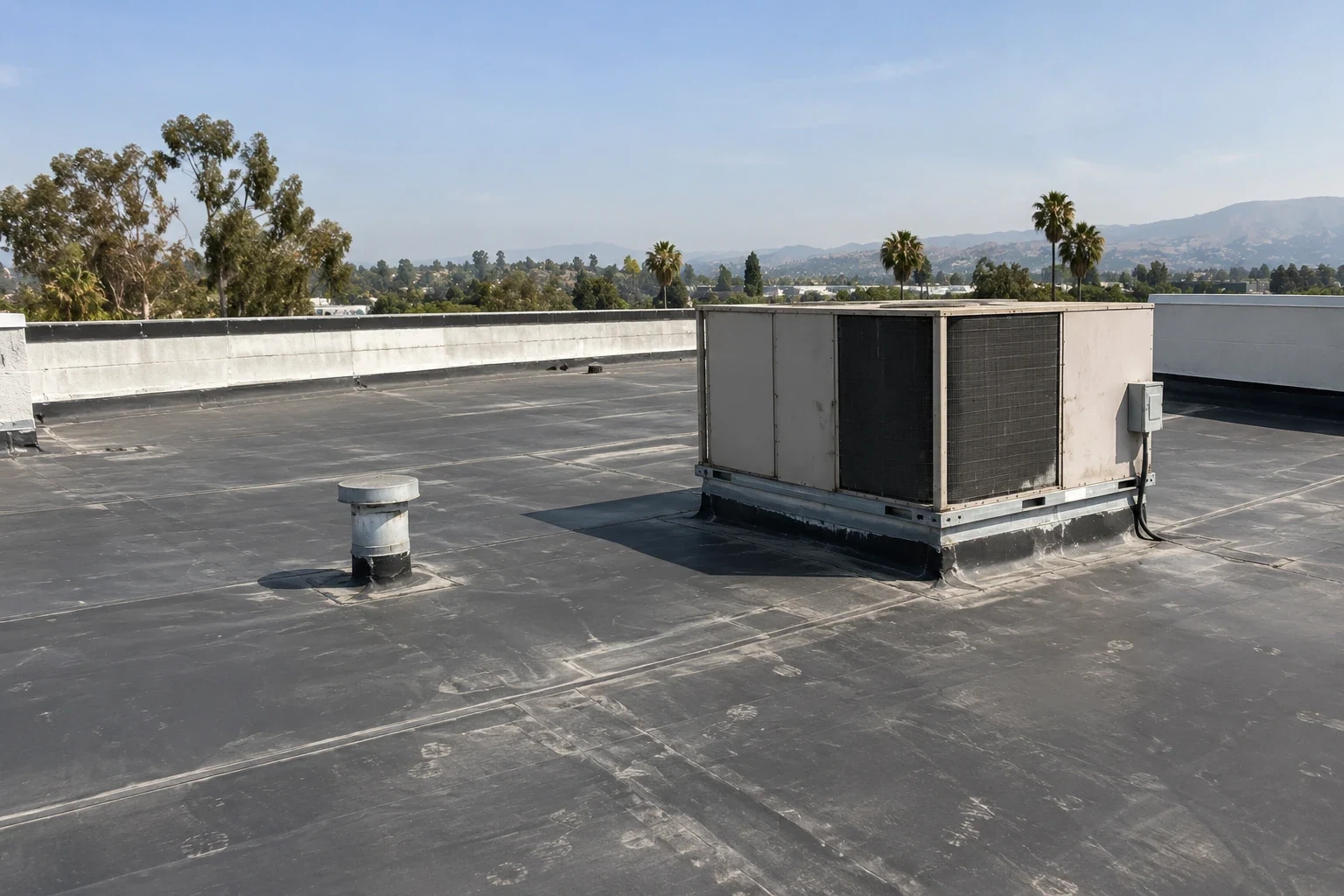
Inspect the visible surface for open laps, splits, blisters, exposed reinforcement, loose surfacing, and movement around curbs or drains. A wrinkle or raised area is a condition to investigate, not a conclusion about trapped water by itself. Compare prior repair photographs and invoices with current roof zones to see whether a detail has opened again or the scope has shifted. If several layers or patches are present, identify what is visible and where a test cut may be needed to establish the assembly. A report should distinguish confirmed conditions from areas that could not be reached. At an occupied building, coordinate any opening or test with the site contact and protect the interior below. When a cap-sheet lap is open, a seam assessment can identify whether the repair is confined to that joint. If the leak entry point is not clear, a leak investigation follows the water path rather than treating the indoor stain as a roof map.
Choose a Repair or New Assembly
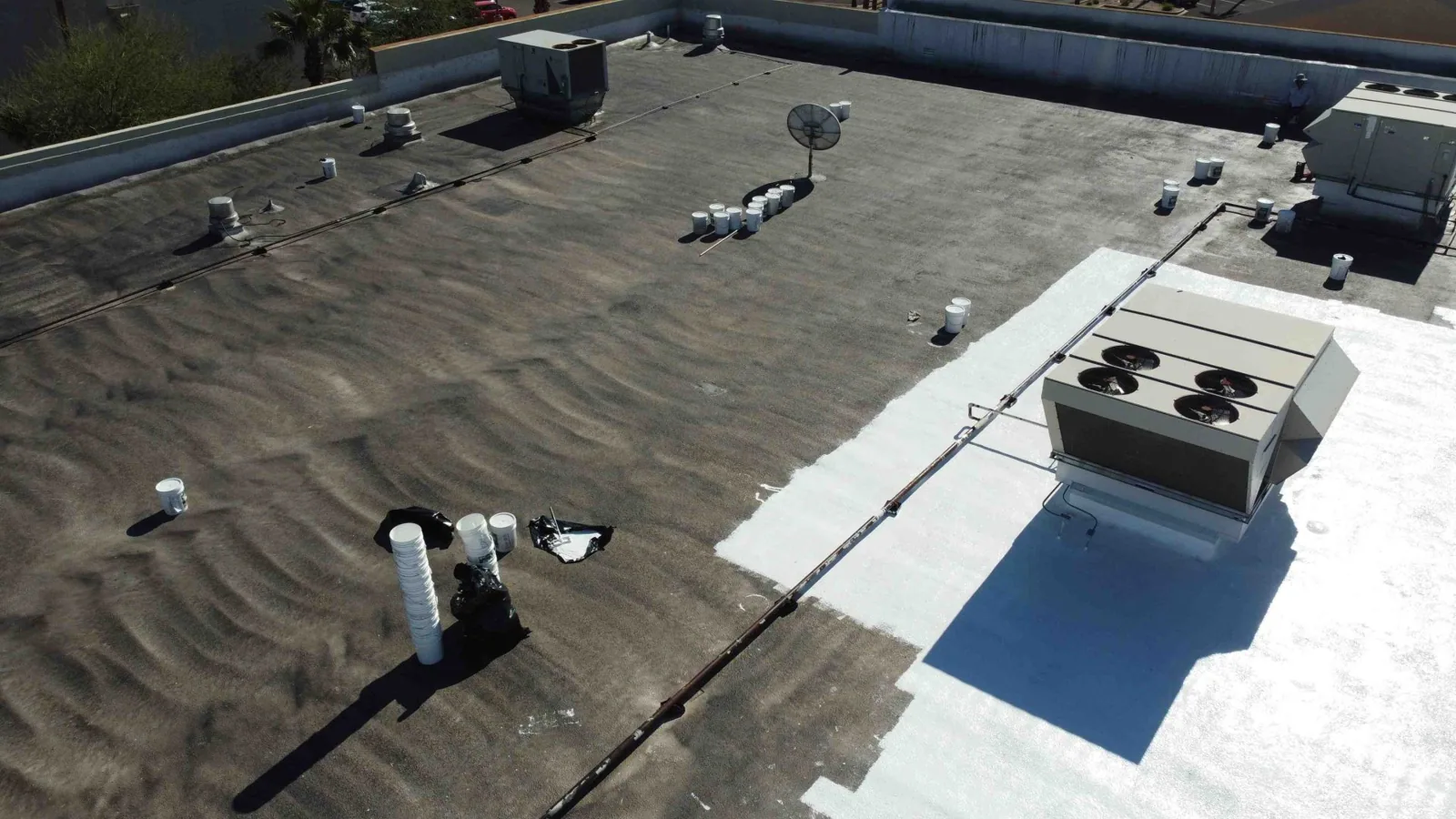
A localized repair may be suitable when the surrounding plies are firmly attached and the defect can be tied into sound material. The scope should specify preparation, reinforcement, patch dimensions, laps, surfacing, and any protection needed below. If the existing roof has broad wear, repeated failures, or concealed moisture, identify the test or removal needed before proposing a larger system. Modified bitumen can be installed in assemblies with different ply counts and surfacing choices; the specification should state the actual build-up and method rather than leave those terms vague. Compare the proposed system with built-up roofing and EPDM only after deck, drainage, access, and use requirements are documented. If insulation or cover board is included, tie the layers to the membrane and flashings in the same proposal. A product name alone does not define the work at a drain, parapet, or curb.
Check Penetrations and Perimeter Details
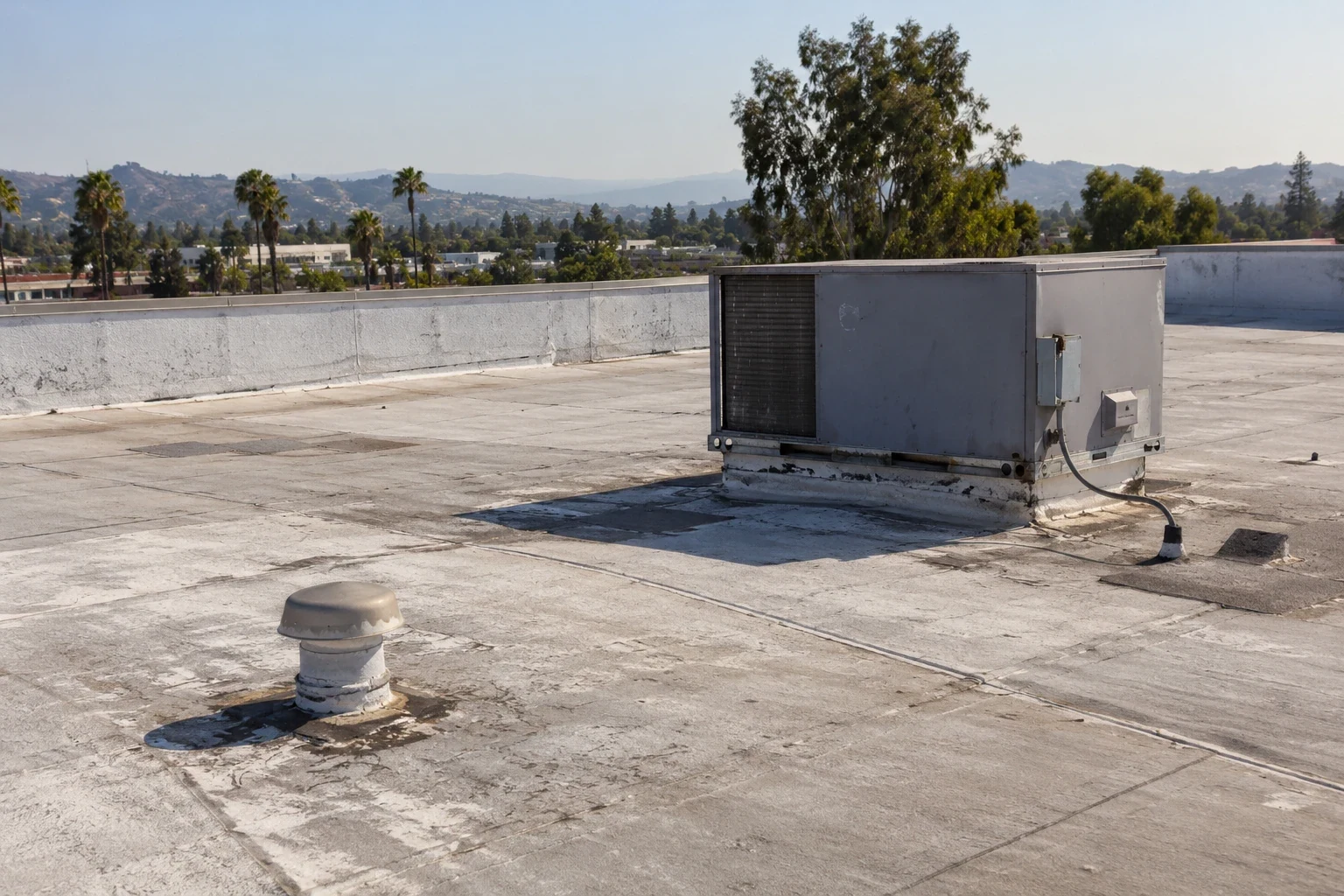
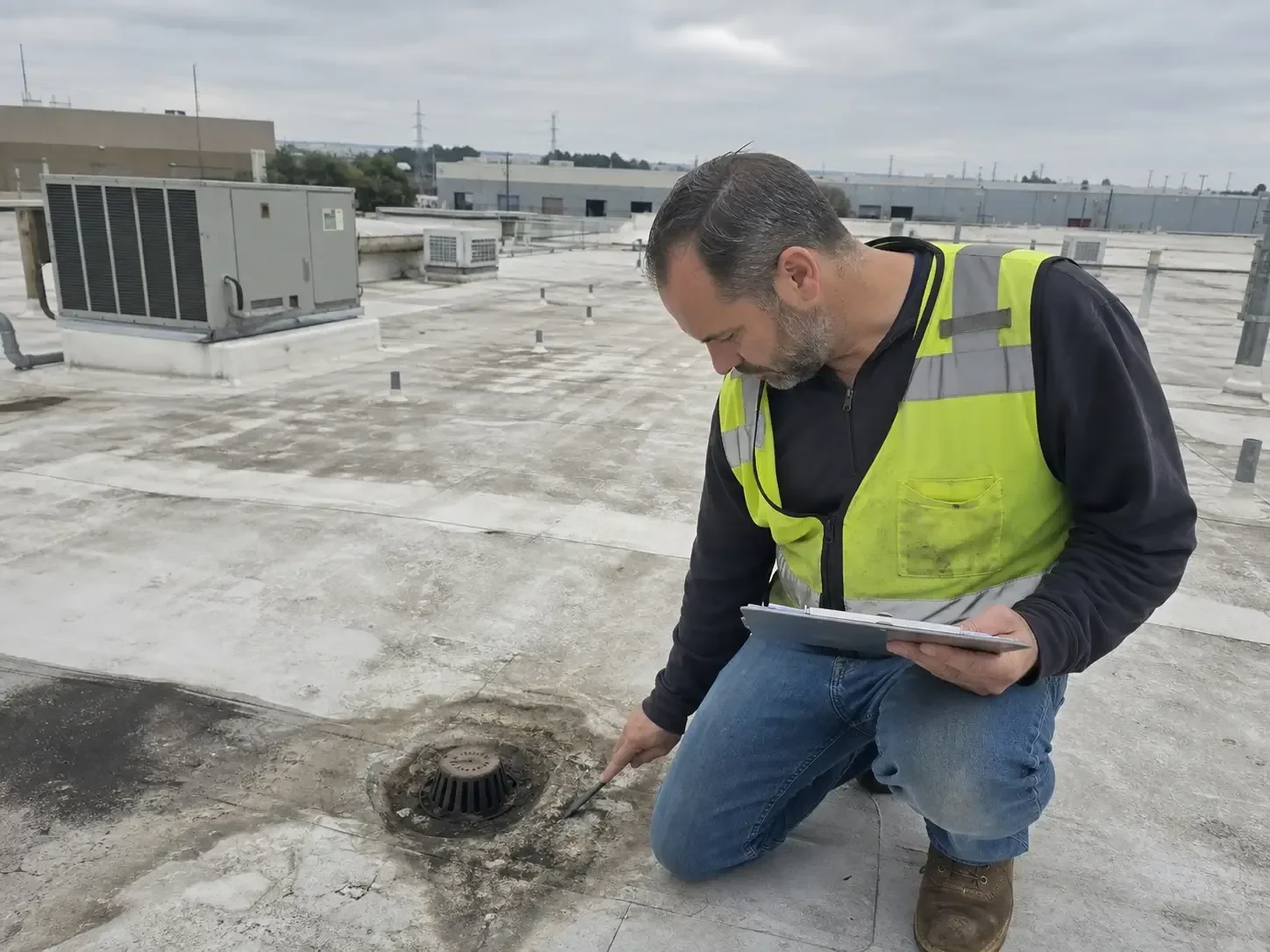
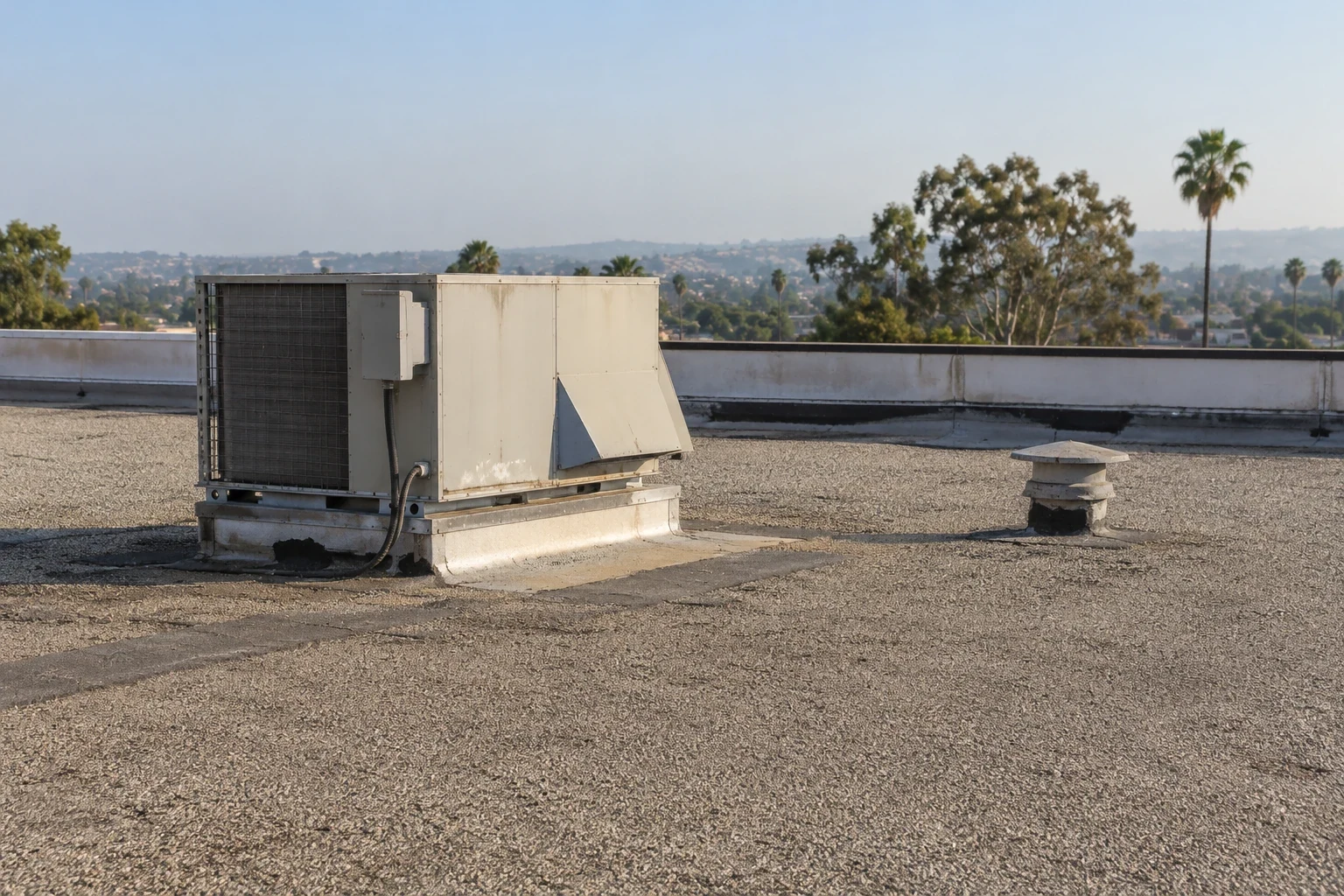
Modified bitumen transitions deserve careful review at pipes, equipment curbs, skylights, drains, wall turns, and edge metal. Laps that look intact in the field may still separate at a corner or where a different material meets the roof. We identify each transition and record whether the flashing is part of the roofing work or another trade's scope. A curb and penetration review can define details around units and openings, while a perimeter assessment can coordinate the membrane termination with coping and metal. If the roof drains slowly, inspect slopes and outlets before adding another layer or patch. A drainage review can identify whether obstruction, drain detail, or roof geometry needs attention. These interfaces should appear on the roof-zone sketch so the estimate can describe what is included and what remains for follow-up.
Plan the Work Method and Access
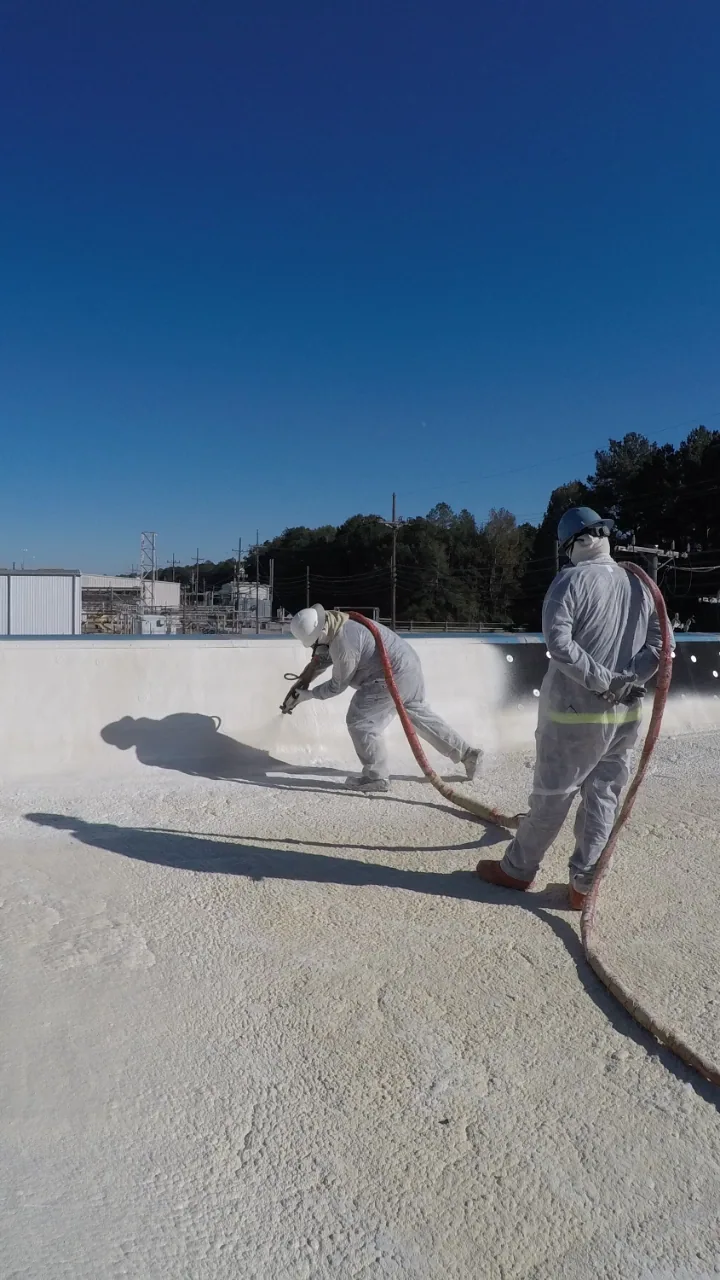
Modified bitumen installation can involve heat, adhesives, or other methods set by the specified system. The work plan should identify the method, fire prevention controls when applicable, ventilation, staging, and building protections. Confirm roof access, nearby operations, and any restrictions before choosing a sequence. On Mare Island, overhead cranes and oversized roll-up doors are noted at some commercial spaces; that context makes a direct access review useful, not a general assumption about all properties. Tennessee Street is one of Vallejo's neighborhood or commercial corridors connecting city districts; a roof project still needs its own access and staging plan. Actual site conditions govern staging. Cost and timing depend on removal depth, insulation condition, number of plies, flashing complexity, occupied-area protection, and the method specified. If concealed deck damage appears, document it and ask for approval before changing the work boundary. The daily close-in plan should show how each opened zone will be protected if weather or operations pause the shift.
Record the Assembly for Future Reviews
The closeout should identify the modified bitumen assembly, ply and surfacing details, insulation or cover board, repair areas, and the transitions completed. Keep photographs by roof zone and note field changes or areas excluded. A future site walk can then compare the current condition with the repaired or replaced layers. Owners with properties in Downtown Vallejo and on Mare Island may use the same record format while maintaining separate assembly histories. If a patch recurs, the next visit can see its location and original repair boundary rather than start with a vague location note. Arrange a roof review with plans, repair records, access needs, and budget timing. We will connect the repair decision to the observed plies, drainage, flashings, and use of the building so the capital record explains what changed and why.
Commercial Roofing Questions
How can we tell whether modified bitumen needs a patch or broader work?
We compare the defect with nearby plies, laps, surfacing, and prior repairs. An isolated opening with sound surrounding material may support a focused repair. Repeated failures, widespread wear, or concealed moisture can require testing or a larger assembly review. The report should identify what was observed and which condition changes the scope, rather than recommend replacement from one symptom alone.
What is checked around a modified bitumen roof drain?
Inspect the drain bowl and flange, membrane laps, flashing, strainer, and the roof surface leading toward the outlet. Confirm whether water is moving toward the drain and whether ponding persists after nearby areas clear. If the flange is open, define its tie-in to sound plies. A blocked leader or outlet below the roof may require plumbing coordination beyond the roofing detail.
Can another modified bitumen layer be installed over the existing roof?
That depends on the existing layer count, attachment, moisture, substrate condition, added height, and system requirements. We verify those conditions before recommending a recover. Drains, curbs, and perimeter edges must accommodate the new build-up. If wet or unstable materials remain, the proposal should define removal rather than cover them.
Which details should appear in a modified bitumen replacement scope?
The scope should identify ply count, surfacing, substrate preparation, insulation and cover board, attachment, flashings, drains, curbs, and edge terminations. It should state the installation method and any required protection for occupied areas. If the roof varies by addition or repair, show those zones separately so quantities and tie-ins are clear.
How do you handle hot work at an occupied commercial property?
We confirm the specified installation method, site restrictions, building operations, ventilation, staging, and fire-prevention controls before work starts. The owner or facility contact should identify sensitive areas and the person responsible for access. If conditions change, pause and document the issue before continuing. The close-in sequence should protect each open zone at the end of a shift.
Review the Plies Before Choosing the Scope
Arrange a Vallejo roof review with plans, repair records, access needs, and budget timing. We will document the modified bitumen layers, transitions, and condition trend before comparing repair and replacement work.
Request a Roof Assessment
Questions About Commercial Modified Bitumen Roofing in Vallejo, CA
Common questions from building owners and property managers.
How can we tell whether modified bitumen needs a patch or broader work?
We compare the defect with nearby plies, laps, surfacing, and prior repairs. An isolated opening with sound surrounding material may support a focused repair. Repeated failures, widespread wear, or concealed moisture can require testing or a larger assembly review. The report should identify what was observed and which condition changes the scope, rather than recommend replacement from one symptom alone.
What is checked around a modified bitumen roof drain?
Inspect the drain bowl and flange, membrane laps, flashing, strainer, and the roof surface leading toward the outlet. Confirm whether water is moving toward the drain and whether ponding persists after nearby areas clear. If the flange is open, define its tie-in to sound plies. A blocked leader or outlet below the roof may require plumbing coordination beyond the roofing detail.
Can another modified bitumen layer be installed over the existing roof?
That depends on the existing layer count, attachment, moisture, substrate condition, added height, and system requirements. We verify those conditions before recommending a recover. Drains, curbs, and perimeter edges must accommodate the new build-up. If wet or unstable materials remain, the proposal should define removal rather than cover them.
Which details should appear in a modified bitumen replacement scope?
The scope should identify ply count, surfacing, substrate preparation, insulation and cover board, attachment, flashings, drains, curbs, and edge terminations. It should state the installation method and any required protection for occupied areas. If the roof varies by addition or repair, show those zones separately so quantities and tie-ins are clear.
How do you handle hot work at an occupied commercial property?
We confirm the specified installation method, site restrictions, building operations, ventilation, staging, and fire-prevention controls before work starts. The owner or facility contact should identify sensitive areas and the person responsible for access. If conditions change, pause and document the issue before continuing. The close-in sequence should protect each open zone at the end of a shift.