Commercial Roof Inspection in Vallejo, CA
Inspect a Vallejo commercial roof with mapped findings, photographs, and condition priorities. Use the record to plan repairs, maintenance, and renewal.
Why Commercial Roofing Vallejo?
Commercial Roof Inspection in Vallejo, CA
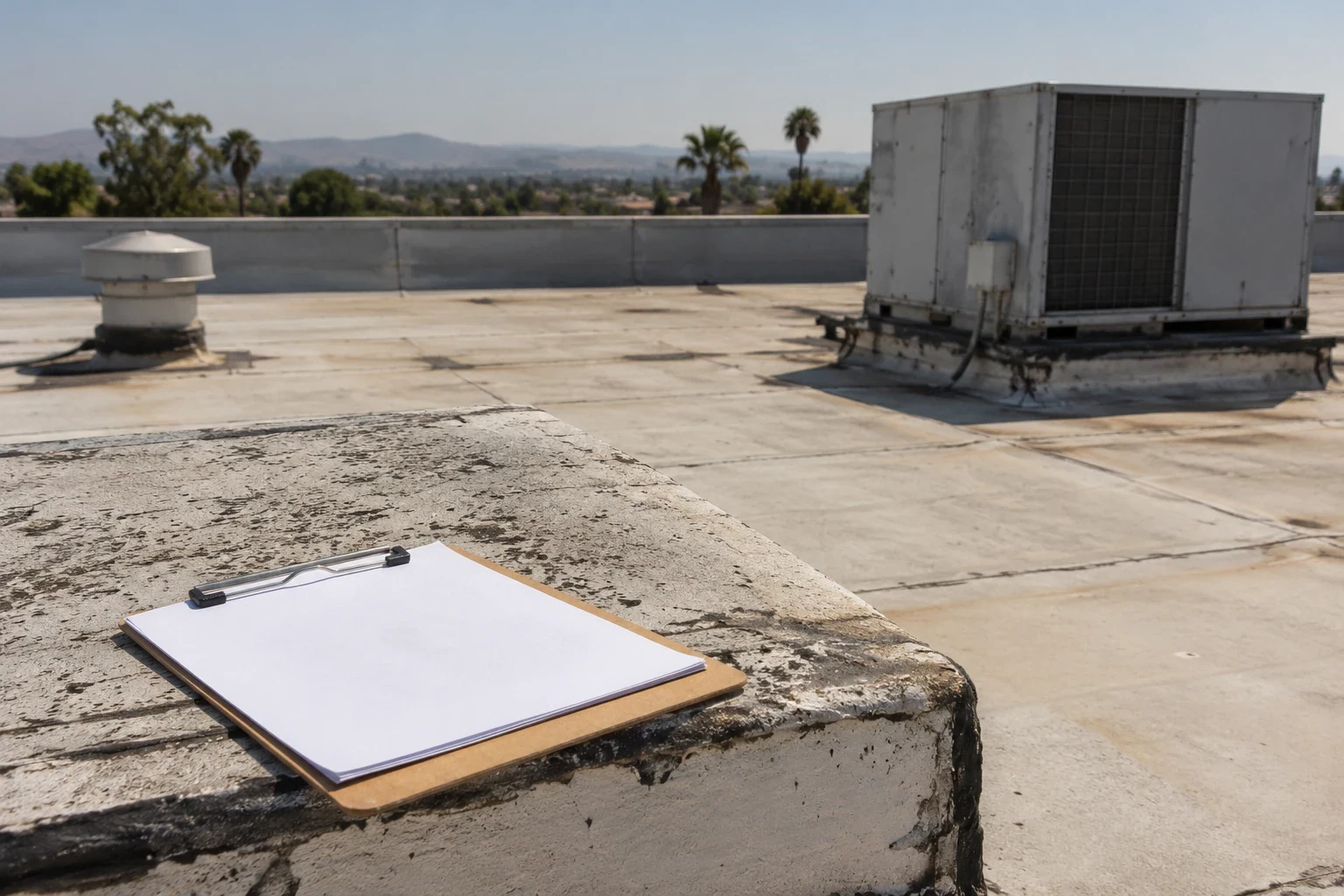
The inspection question on an industrial roof is often which condition can wait for the next capital cycle and which one will keep spreading. In Vallejo, CA, we begin with the building use, available roof records, and the work decision the owner needs to make. We walk the membrane, seams, edges, flashings, drains, penetrations, and rooftop equipment details by hand. We photograph conditions, note their locations, and separate visible repair needs from areas that require more testing. The resulting record gives property and facility teams a common view of the roof before a repair is authorized or a renewal budget is set.

A Walk Across the Roof Zones
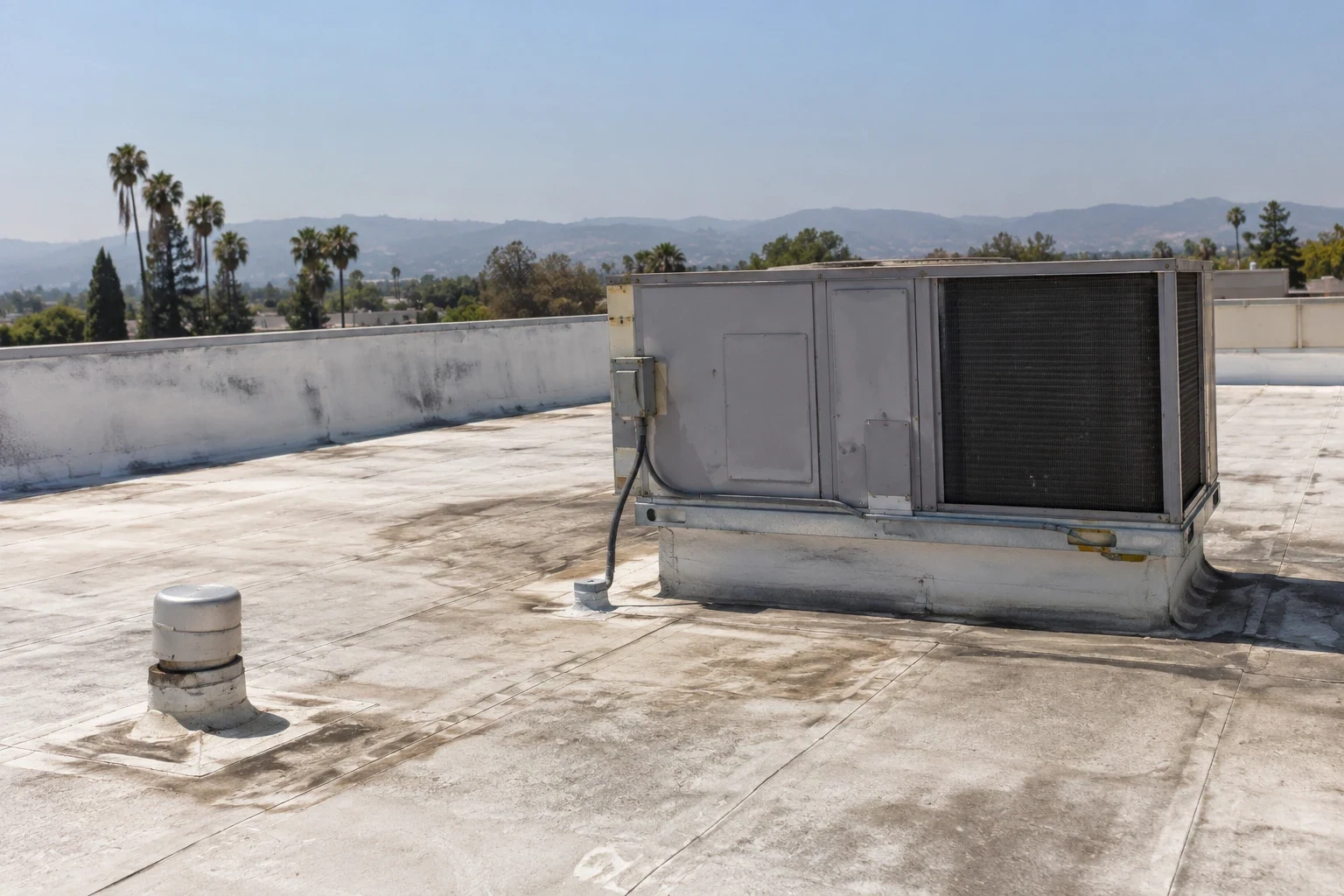
We review the roof in zones and follow the transitions that connect them. The walk includes membrane surfaces, laps, wall flashings, pipe boots, skylight curbs, equipment supports, edge metal, drain bowls, and scuppers. We note ponding, debris, patch history, exposed fasteners, displaced materials, and details that have changed since the last visit. If access is limited or a surface cannot be safely reached, the report says which area was not observed and what access would be needed to review it.
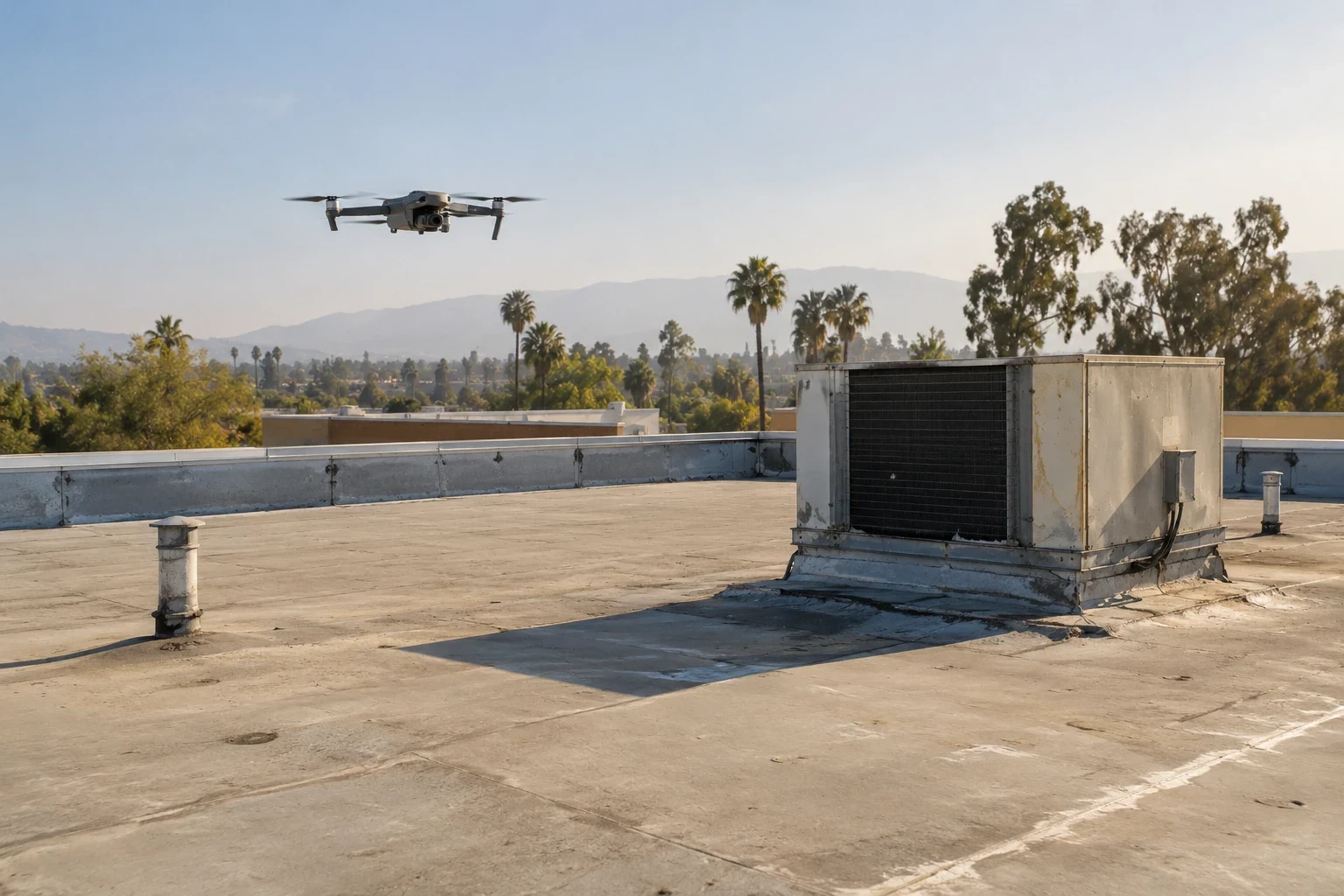
Commercial spaces on Mare Island include offices, retail, and industrial buildings, some with overhead cranes or oversized roll-up doors. Those operating features matter when planning roof access and the inspection route, but they do not reveal the roof's age or material. We compare available plans and repair invoices with field conditions and flag differences for follow-up. When images would help cover a difficult section, a drone roof inspection can supplement the walk; the hands-on review still checks accessible details that an aerial image cannot touch.
Findings Tied to Location
A useful finding names the condition, its roof zone, and what it affects. We distinguish an open seam from a surface scuff, a loose counterflashing from aged sealant, and a blocked drain from a low point that may need slope correction. Photos use location references so the site team can match them to the plan. Where a visible defect suggests a concealed issue, the report recommends a test opening or moisture survey instead of presenting an assumption as a confirmed condition.
Sonoma Boulevard, Tennessee Street, and Broadway orient the property list; each roof still needs its own observations and building identifier for comparison. For assets in the Curtola Employment Center or elsewhere in the city, we record the building identifier supplied by ownership and map the findings to that asset. A written condition report carries those observations forward for budget review.
Repair Now, Monitor, or Test
Inspection findings have different time horizons. An active opening, loose edge, or blocked drainage path can need prompt repair. A stable seam or worn surface may be monitored at a defined interval. A suspected wet area may call for infrared imaging or a core cut before the owner selects repair or replacement. We group the findings by action and explain what would change the recommendation, so a priority list does not treat every photograph as an emergency.
Vallejo's long-term climate averages show no average rainfall in July and August, which helps frame seasonal drain reviews. The long-term pattern can inform a drainage and maintenance review before the wet season; it is not a property-level forecast or proof of roof condition. We check low points and outlets on the day of inspection and note debris or detail failures. An infrared moisture survey can investigate suspected wet insulation, while preventive maintenance can schedule cleaning and minor corrections before they widen.
The Property's Operating Context
A roof walk on an occupied building involves more than a route across the membrane. The site contact can identify sensitive rooms below, active rooftop equipment, customer entrances, delivery periods, and access rules. We coordinate around those needs and note where a later repair would affect operations. If a roof area can only be reached with an escort or equipment shutdown, that requirement belongs with the observation so the next scope includes it.
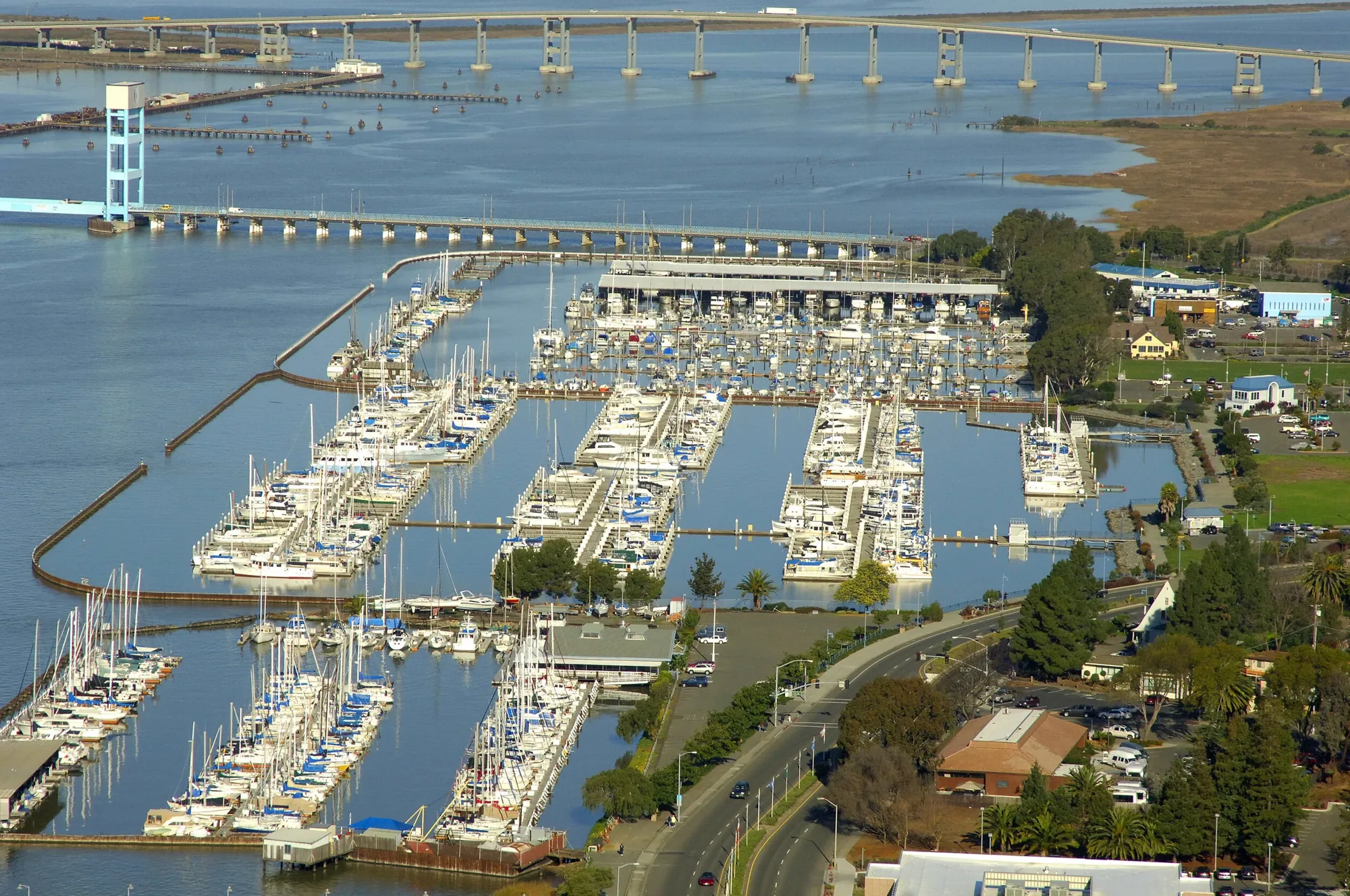
Along Sonoma Boulevard and near Mare Island, retail, office, industrial, and community uses sit within the wider city mix. Those district names help set context, yet the inspection records only what is observed at the property. We can review the plan, repair history, and past inspection notes with the owner, then identify gaps that affect the next budget decision. A portfolio roof inventory helps compare assemblies and condition trends, while capital planning connects priority work with the owner's budget cycle.
A Baseline for the Next Visit
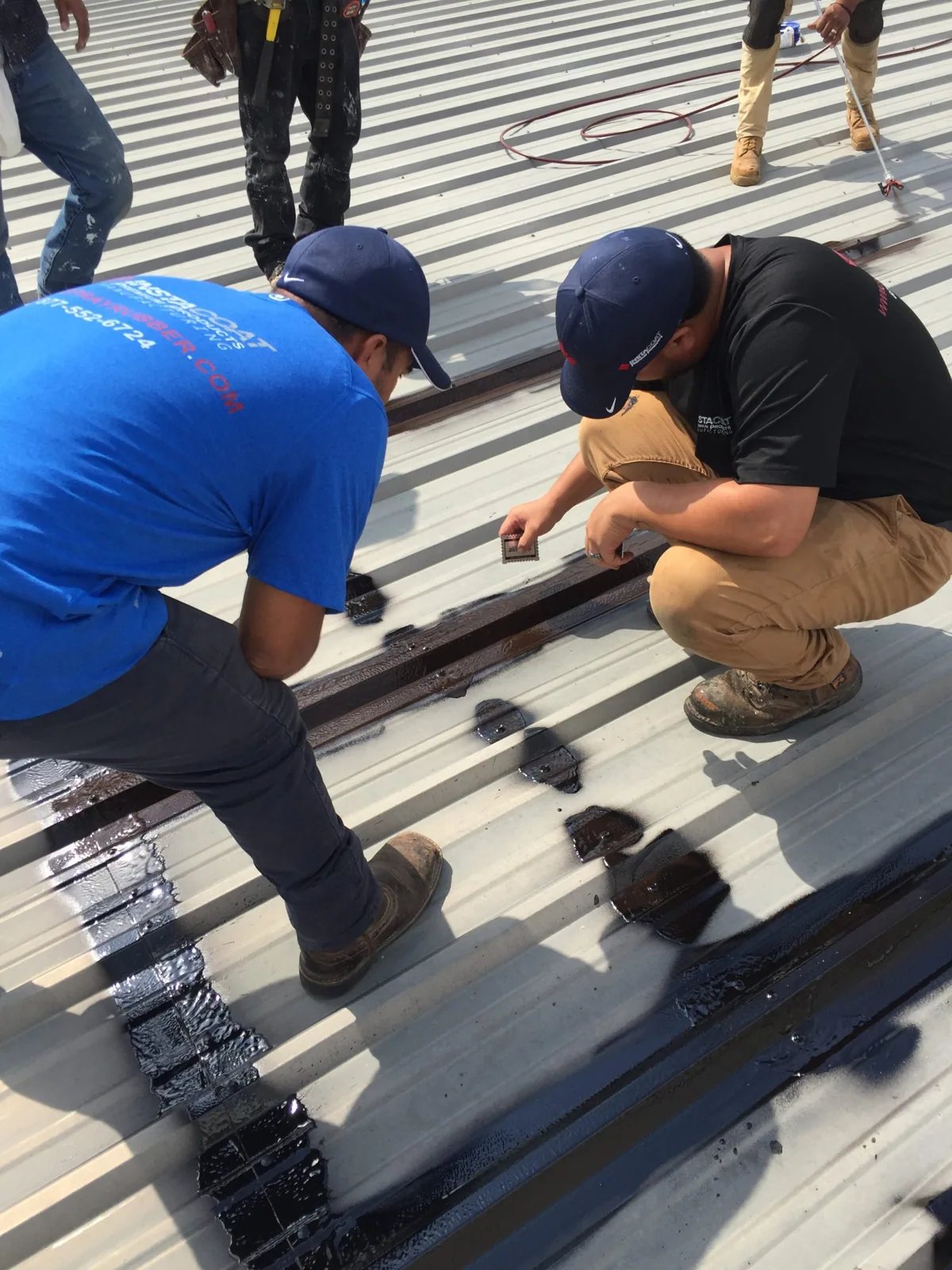
The closeout record includes the inspection date, accessible areas, photographs, location labels, and recommended actions. We state whether an item was repaired during the visit, needs separate pricing, or requires more evidence. That baseline helps the next inspector compare the same location and identify a changing condition instead of relying on memory. Owners can keep the assembly record, repair invoices, and inspection findings together so the roof's condition trend remains tied to its history.
Arrange an inspection with available roof plans, repair records, access details, and the decision the review should support. We will walk the accessible areas, document the assembly and visible details, and return findings organized by location and action. For a roof on a retail or industrial property near the Vallejo waterfront, the record can also note access or operating needs for future work. The report gives ownership a practical basis for setting maintenance, repair, testing, or renewal priorities.
Commercial Roofing Questions
What does a commercial roof inspection record include?
The record identifies accessible roof zones, observed assembly details, photographs, and conditions that need action or monitoring. We label findings by location and note areas that could not be reached. If a condition suggests concealed moisture or deck damage, the report states what additional opening or survey would help confirm it before ownership selects a broader scope.
Can an inspection show whether the roof is ready for replacement?
An inspection can document deterioration, recurring repairs, moisture indicators, and details that affect service life. It supports a replacement decision when those findings show a wider assembly issue, but concealed layers may need testing. We separate visible evidence from conditions that require confirmation, then outline whether repair, monitoring, or a capital scope fits the observed roof.
How should a property team compare this inspection with last year's?
Use the same roof-zone labels where possible and compare photographs, repaired locations, and conditions that were left for monitoring. A changed seam, new ponding, or recurring flashing issue may alter the priority. We can review prior reports and repair invoices during the walk, then record where the assembly or condition differs from its earlier baseline.
When is a moisture survey needed after a roof inspection?
A moisture survey helps when blistering, interior leak history, soft areas, or thermal patterns raise a question about insulation below the membrane. The inspection can identify candidate zones; imaging and selected core cuts can test them. The scope should say what the survey covers and how the results will affect repair, recover, or replacement limits.
Can we combine the roof walk with repair work?
Yes, minor corrections can be completed during an inspection when materials, access, and authorization allow. We record those items separately from observations that need a larger scope or owner decision. This keeps the condition baseline clear and lets the property team see which locations were changed during the visit and which remain in the maintenance or capital queue.
Set a Roof Condition Baseline
Arrange a site walk with plans, repair history, access needs, and the budget decision ahead. We will return a photo record with findings mapped to roof zones.
Request a Roof Assessment
Questions About Commercial Roof Inspection in Vallejo, CA
Common questions from building owners and property managers.
What does a commercial roof inspection record include?
The record identifies accessible roof zones, observed assembly details, photographs, and conditions that need action or monitoring. We label findings by location and note areas that could not be reached. If a condition suggests concealed moisture or deck damage, the report states what additional opening or survey would help confirm it before ownership selects a broader scope.
Can an inspection show whether the roof is ready for replacement?
An inspection can document deterioration, recurring repairs, moisture indicators, and details that affect service life. It supports a replacement decision when those findings show a wider assembly issue, but concealed layers may need testing. We separate visible evidence from conditions that require confirmation, then outline whether repair, monitoring, or a capital scope fits the observed roof.
How should a property team compare this inspection with last year's?
Use the same roof-zone labels where possible and compare photographs, repaired locations, and conditions that were left for monitoring. A changed seam, new ponding, or recurring flashing issue may alter the priority. We can review prior reports and repair invoices during the walk, then record where the assembly or condition differs from its earlier baseline.
When is a moisture survey needed after a roof inspection?
A moisture survey helps when blistering, interior leak history, soft areas, or thermal patterns raise a question about insulation below the membrane. The inspection can identify candidate zones; imaging and selected core cuts can test them. The scope should say what the survey covers and how the results will affect repair, recover, or replacement limits.
Can we combine the roof walk with repair work?
Yes, minor corrections can be completed during an inspection when materials, access, and authorization allow. We record those items separately from observations that need a larger scope or owner decision. This keeps the condition baseline clear and lets the property team see which locations were changed during the visit and which remain in the maintenance or capital queue.