Infrared Roof Moisture Survey in Vallejo, CA
Map suspected moisture beneath a Vallejo commercial roof with infrared imaging and targeted core cuts, then use confirmed findings to set repair limits.

Why Commercial Roofing Vallejo?
Infrared Roof Moisture Survey in Vallejo, CA
An infrared reading earns its place when it helps answer a roof decision. For a commercial building in Vallejo, CA, imaging can locate areas with thermal patterns that differ from surrounding roof zones and may indicate moisture below the surface. Those patterns need context: roof assembly, recent weather, solar exposure, surface conditions, and the timing of the scan all affect interpretation. We use the image set to select places for closer review, then confirm suspected conditions with targeted core cuts where appropriate. The owner receives a mapped view of the survey area and a clearer basis for repair, recover, or replacement planning.
Conditions That Make Imaging Useful
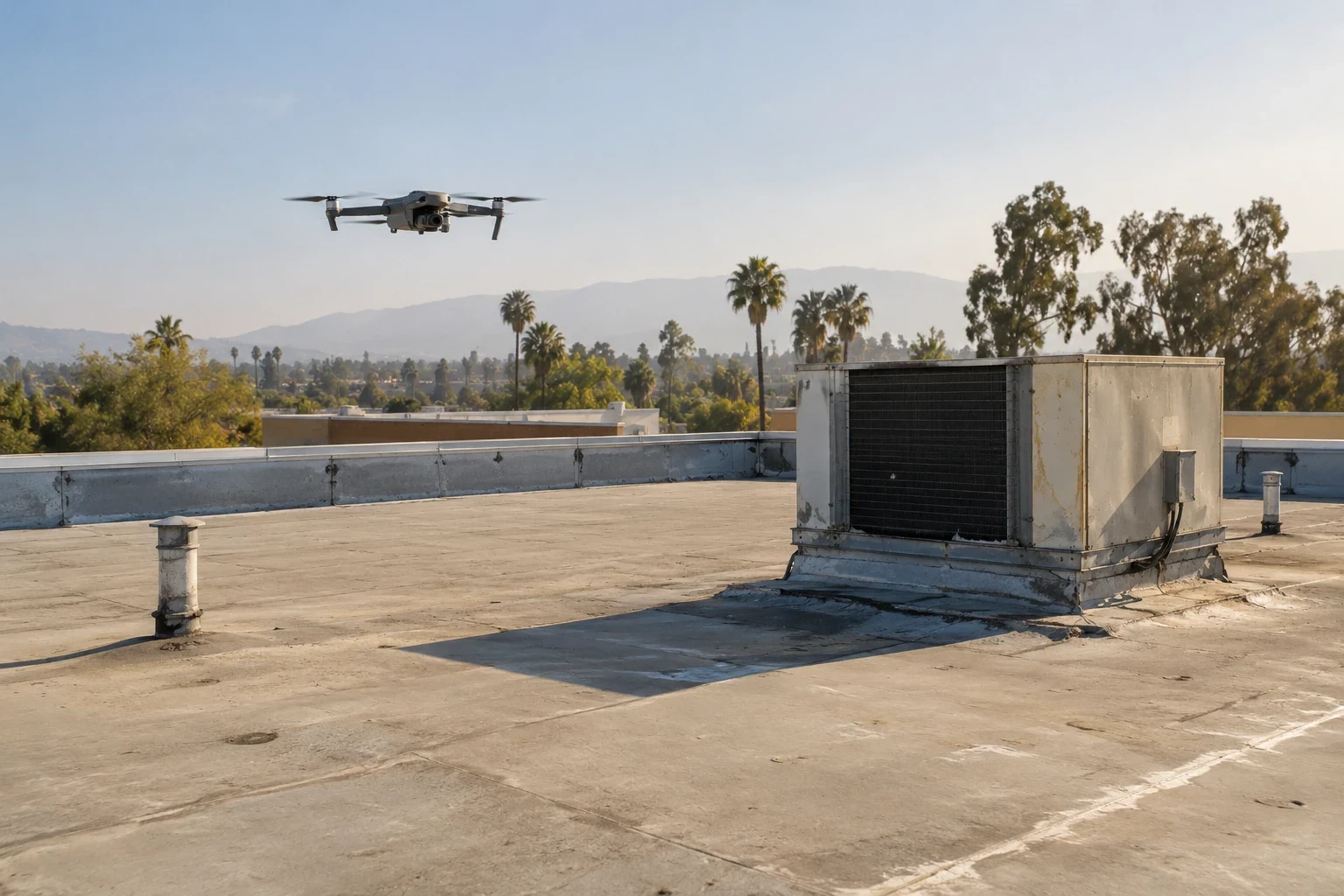
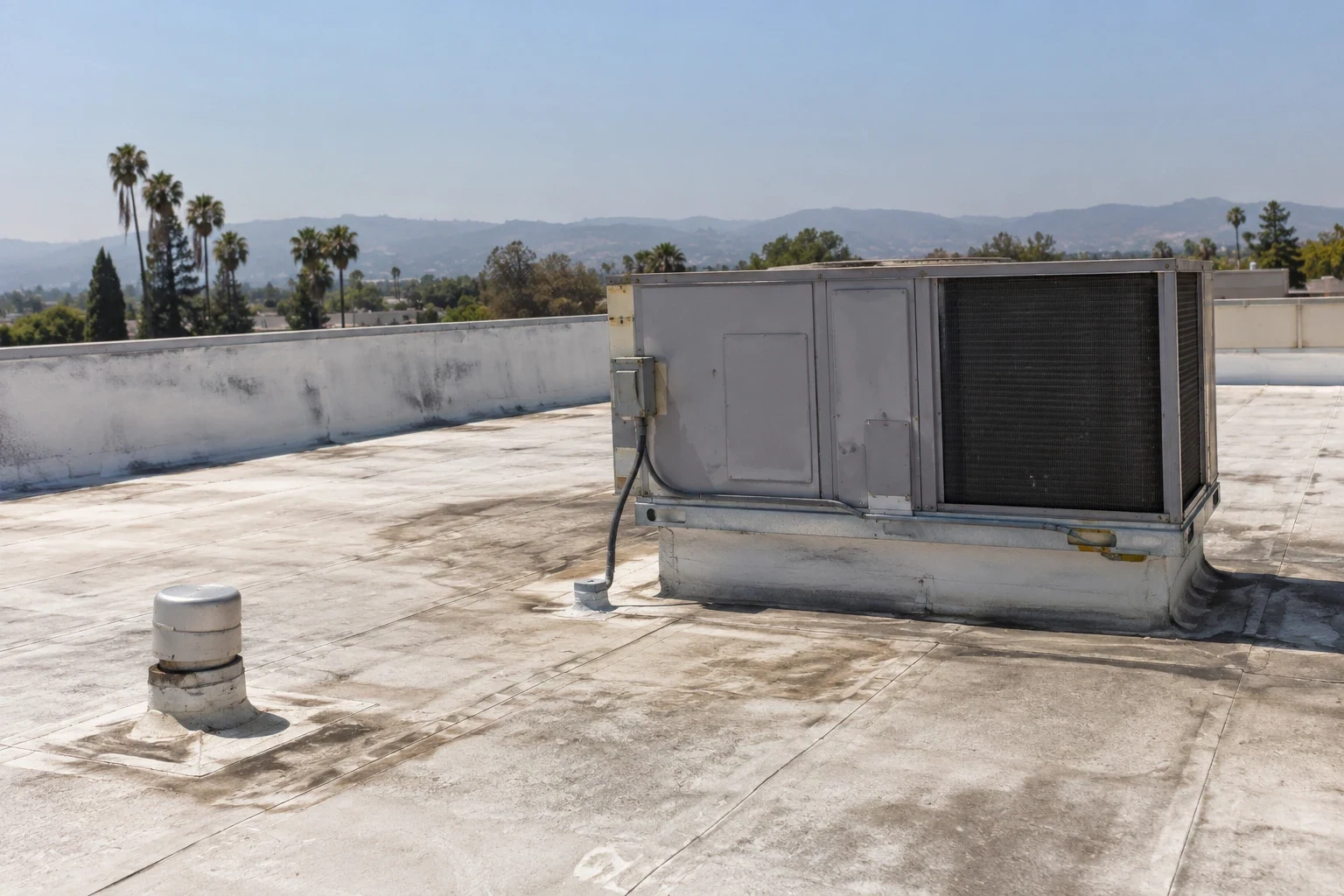
Thermal patterns are most useful when the roof surface and underlying materials can be compared under suitable conditions. The survey plan accounts for roof type, recent moisture, temperature changes, shading, equipment, and areas that may hold water for reasons unrelated to wet insulation. We document the conditions during capture and identify places where the image is inconclusive. An infrared camera detects temperature variation; it does not see through the membrane or identify the exact material below it. Choose survey timing from the roof assembly, recent site conditions, and the temperature contrast needed for comparison. Vallejo averages no rainfall in July and August, with summer monthly highs around 85 to 87°F. Those seasonal patterns inform planning, but the roof surface and recent conditions determine whether a scan can answer the question. Before interpreting a pattern, we consider whether recent rain, irrigation, rooftop equipment, or shade may affect the reading. For a broad or difficult roof, drone imaging can provide surface orientation, while the thermal survey concentrates on patterns that may warrant testing.
Reading Patterns Against the Assembly
We compare thermal images with the roof plan, visible membrane details, leak history, repair locations, drains, and equipment zones. A warmer or cooler area may reflect moisture, but it may also result from insulation changes, shade, a roof patch, stored heat, or a different assembly. Consistent labels help map each reading to a roof zone and give the owner a repeatable reference. We note the candidate areas and why they were selected for confirmation rather than treating a color contrast as a final diagnosis.
Mare Island includes office, retail, and industrial spaces, so roof assembly and equipment layout need to be confirmed at each property. A prior repair or overlay can create a thermal pattern that differs from adjacent roof areas even when the materials are dry. We review those records before choosing test locations. If a suspected wet zone aligns with an interior leak or soft surface, that combined evidence can help prioritize a leak investigation or a test opening. The survey record also notes locations that could not be interpreted with confidence.
Core Cuts and Moisture Confirmation
A core cut allows a selected roof area to be opened so the layers, insulation, and deck condition can be examined. We choose locations to test a question raised by the image set or repair history, and we document the opening before it is closed. A core result applies to its test location; it does not prove that every nearby roof area has the same condition. Several carefully selected openings can improve the map when the roof contains different assemblies, additions, or repair zones.
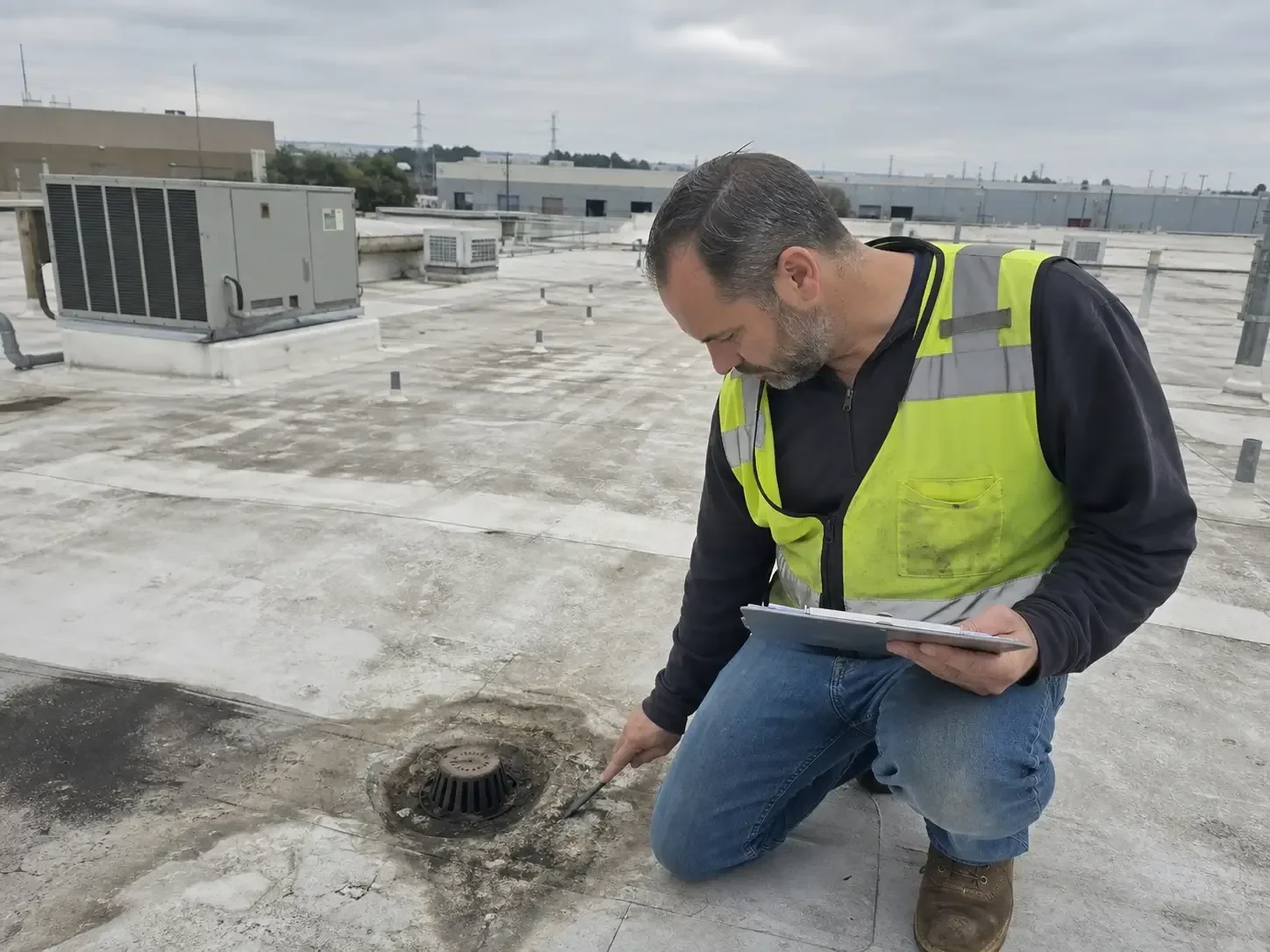
The owner should know how test locations were selected, what the results show, and whether the openings were restored. We record layer type, visible moisture, and any condition that changes the repair boundary. If the survey supports a recover in one zone but removal in another, the plan should preserve those differences. The findings can be compared with a recover assessment and a replacement scope before capital work is scheduled. A hands-on roof inspection helps relate test openings to seams, flashings, and drainage details.
From Survey Map to Budget Decision
Survey results should distinguish confirmed wet materials from areas that only showed a thermal contrast. We map each category by roof zone and connect it with the recommended next action. Confirmed moisture may call for removal and replacement of affected materials; a dry core may support continued monitoring or a different test location. The owner can then compare a local repair boundary with a broader renewal scope without treating every image variation as a replacement trigger.
Cost and timing follow the number of test openings, roof access, assembly variations, repair needs, and how quickly the survey findings need to inform a capital decision. Properties in the Downtown Vallejo area or across Mare Island can have different access constraints, which we confirm with the site contact. Keep Downtown/Waterfront and Mare Island assets distinct in the portfolio. A district label helps identify the property's area; the building's documents and field review establish its roof assembly. A condition report can retain image references, core locations, confirmed findings, and areas that remain uncertain.
Keeping the Survey in the Roof File
The final record should include the survey date, roof zones captured, conditions that may affect interpretation, image references, core locations, results, and repair details at test openings. We identify any areas that were not surveyed or could not be read clearly. Keeping this information with the assembly and repair history helps a future reviewer understand why a particular zone was opened and whether the same pattern has changed.
Arrange an infrared review with available roof plans, leak history, prior repair locations, access requirements, and the decision the results should support. We will document the capture conditions, map candidate areas, and confirm selected locations with core cuts where the owner approves that scope. The closeout record separates observation from confirmation and identifies next steps for repair, maintenance, or capital planning. That gives the asset manager a usable baseline for the next inspection or budget cycle.
Commercial Roofing Questions
Does an infrared survey prove that insulation is wet?
No single thermal pattern proves moisture. The camera records temperature differences that may have several causes, including assembly changes, shade, or stored heat. We interpret images with roof records and field observations, then use selected core cuts to confirm suspected conditions. The report distinguishes candidate areas from locations where wet materials were found.
Why are core cuts needed after infrared imaging?
A core cut exposes the roof layers at a selected point and allows direct inspection of insulation and deck. It tests whether an image pattern corresponds to moisture or another material difference. We choose locations based on the survey map and repair history, then photograph and restore each opening. Findings apply to the sampled area, so the map preserves test limits.
Can one test opening represent the whole roof?
A single opening confirms only the layers at that point. Roof additions, prior overlays, repairs, and changes in assembly can make conditions vary across the property. We select locations to answer specific questions and label each result by zone. If different areas show distinct patterns or construction, additional sampling may be needed before scope is set.
What should we do with a survey area that appears dry?
A dry reading can narrow the investigation, but it does not rule out every concealed condition. We compare it with the leak history, visible details, roof assembly, and timing of the scan. The report can identify whether monitoring, a different test location, or a hands-on inspection would add useful evidence before the owner closes the issue.
When should we schedule imaging in Vallejo?
Timing depends on roof assembly, recent weather, exposure, and the thermal conditions needed for useful comparison. Vallejo averages no rainfall in July and August, with rainfall varying across seasons. Recent weather and roof conditions, not a calendar alone, determine a useful survey date. We review the roof and recent conditions, then choose a capture window that can distinguish patterns and support the owner's repair or renewal decision.
Confirm the Moisture Map
Arrange a survey with roof plans, leak history, repair locations, access details, and the decision ahead. We will map candidate areas and document any core-cut confirmation.
Request a Roof Assessment
Questions About Infrared Roof Moisture Survey in Vallejo, CA
Common questions from building owners and property managers.
Does an infrared survey prove that insulation is wet?
No single thermal pattern proves moisture. The camera records temperature differences that may have several causes, including assembly changes, shade, or stored heat. We interpret images with roof records and field observations, then use selected core cuts to confirm suspected conditions. The report distinguishes candidate areas from locations where wet materials were found.
Why are core cuts needed after infrared imaging?
A core cut exposes the roof layers at a selected point and allows direct inspection of insulation and deck. It tests whether an image pattern corresponds to moisture or another material difference. We choose locations based on the survey map and repair history, then photograph and restore each opening. Findings apply to the sampled area, so the map preserves test limits.
Can one test opening represent the whole roof?
A single opening confirms only the layers at that point. Roof additions, prior overlays, repairs, and changes in assembly can make conditions vary across the property. We select locations to answer specific questions and label each result by zone. If different areas show distinct patterns or construction, additional sampling may be needed before scope is set.
What should we do with a survey area that appears dry?
A dry reading can narrow the investigation, but it does not rule out every concealed condition. We compare it with the leak history, visible details, roof assembly, and timing of the scan. The report can identify whether monitoring, a different test location, or a hands-on inspection would add useful evidence before the owner closes the issue.
When should we schedule imaging in Vallejo?
Timing depends on roof assembly, recent weather, exposure, and the thermal conditions needed for useful comparison. Vallejo averages no rainfall in July and August, with rainfall varying across seasons. Recent weather and roof conditions, not a calendar alone, determine a useful survey date. We review the roof and recent conditions, then choose a capture window that can distinguish patterns and support the owner's repair or renewal decision.