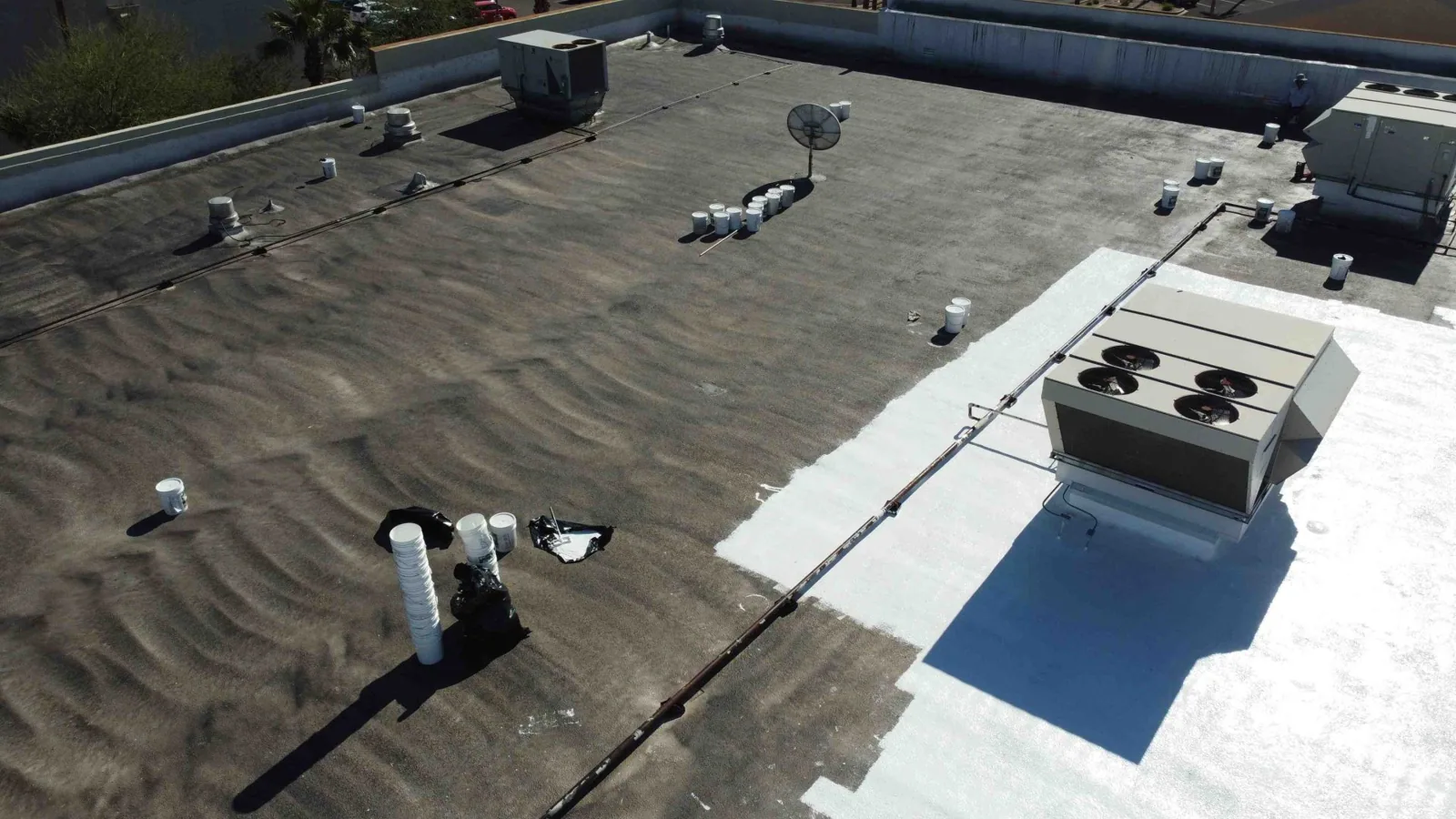
Commercial Roof Coating Restoration in Vallejo, CA
Compare commercial roof coating restoration in Vallejo, CA, including substrate checks, drainage details, repair needs, and work timing.
Why Commercial Roofing Vallejo?
Commercial Roof Coating Restoration in Vallejo, CA
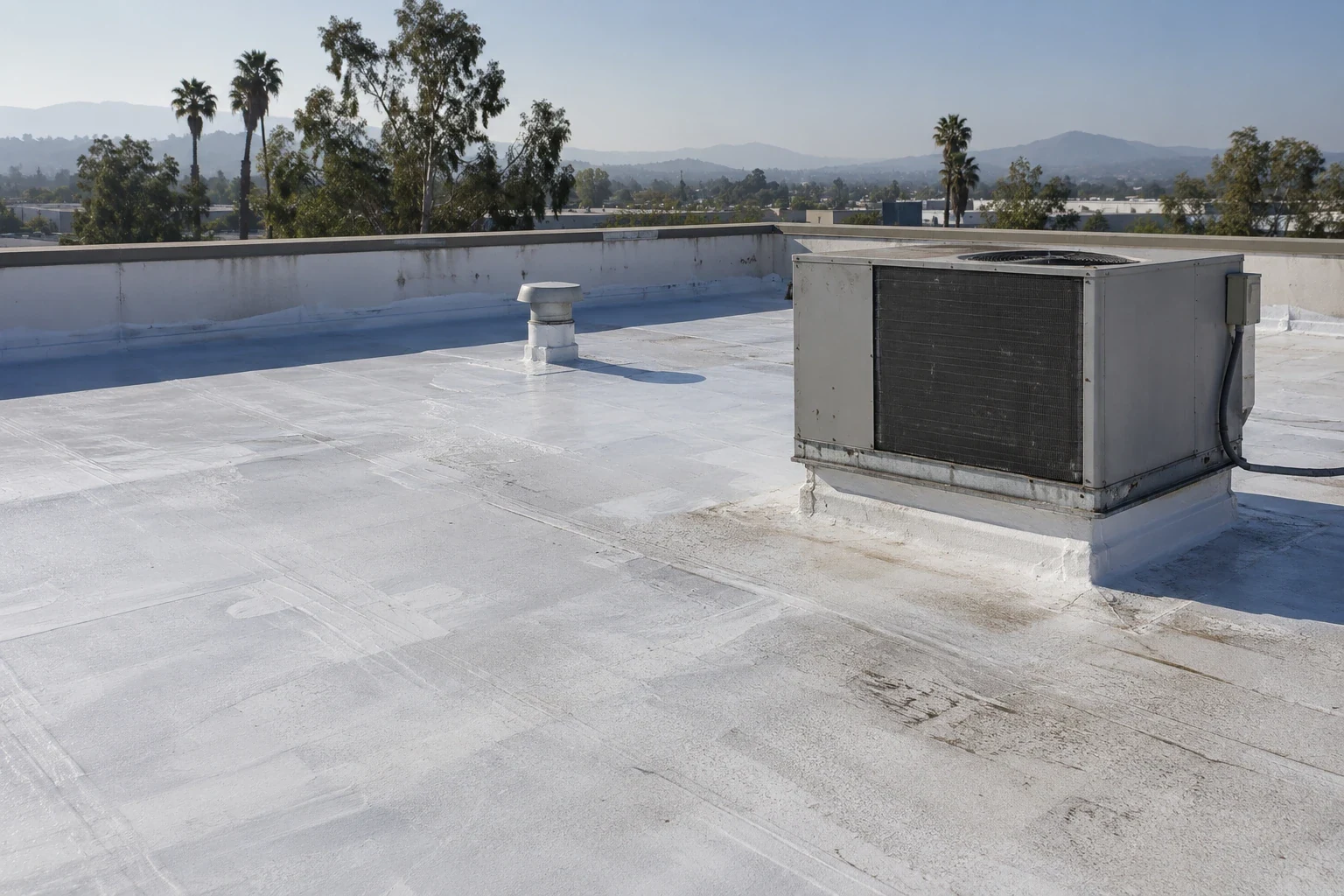
A coating belongs in a capital plan only when the roof beneath it can support the next layer. The decision starts with the existing assembly, not the product label. We check membrane condition, attachment, seams, flashings, ponding areas, and evidence of moisture before discussing a coating scope. On commercial properties in Vallejo, the mix of office, retail, and industrial space means access and tenant impact can differ from one roof to the next. Mare Island, for example, includes commercial spaces used for office, retail, and industrial purposes, with some spaces having overhead cranes or oversized roll-up doors. That context supports an access conversation, not an assumption about any one roof. A site walk should establish what can be repaired, what requires testing, and whether restoration is a sound option. A silicone coating system or acrylic coating system has to be matched to the substrate, slope, drainage, and exposure. When that fit is not clear, keep the proposal focused on investigation first.
Start with the Existing Assembly
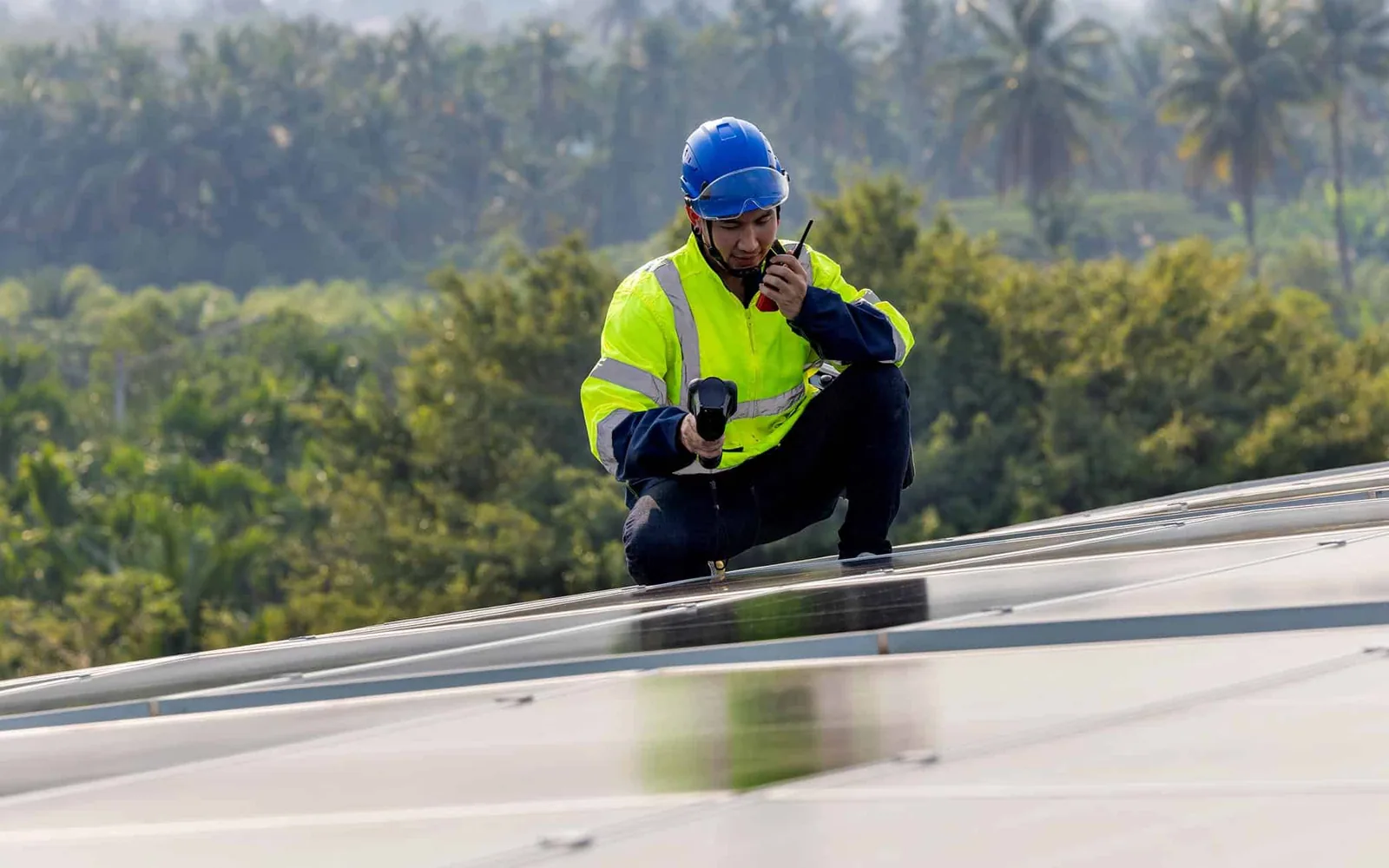
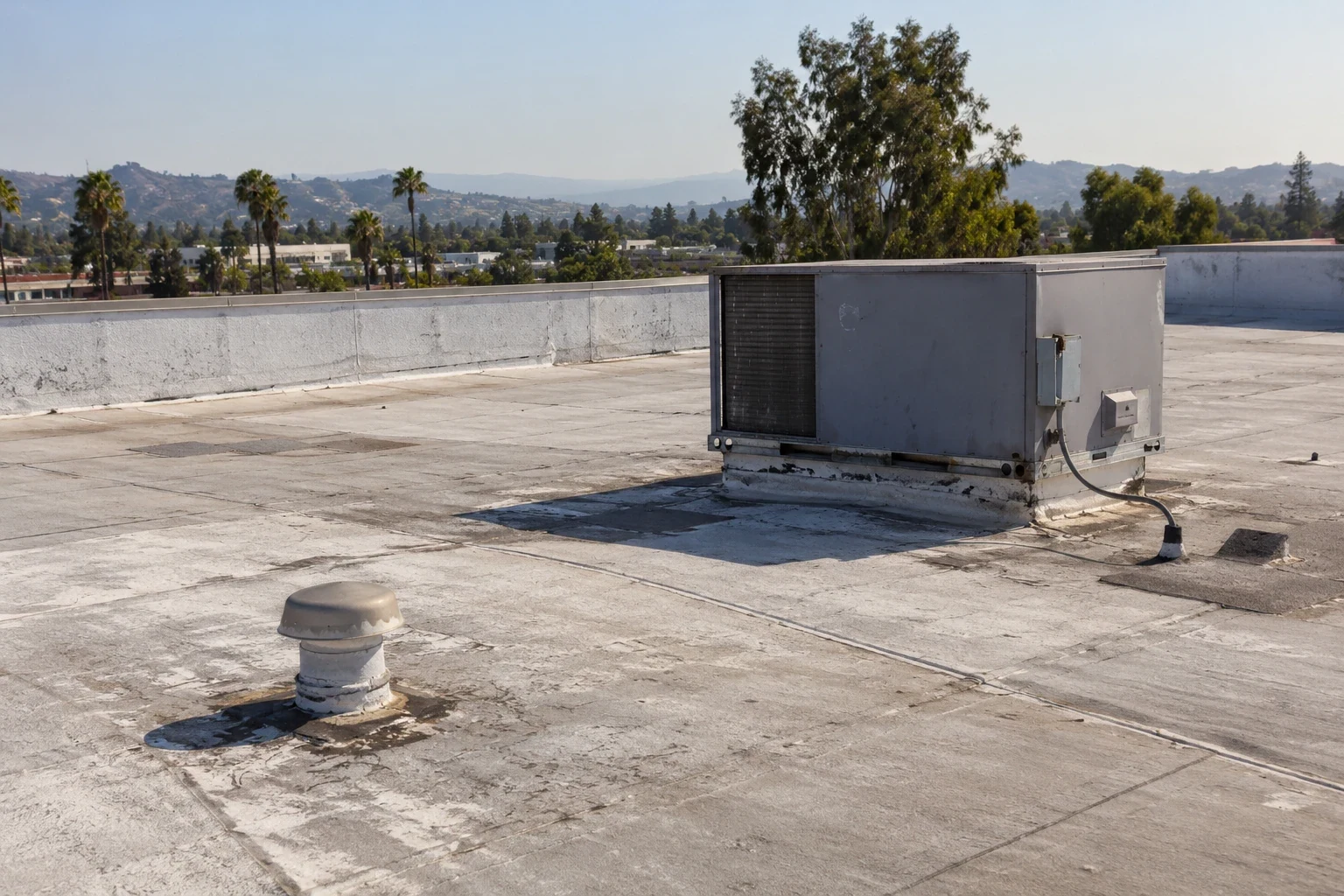
Before choosing a restoration, identify what is on the roof and how it is performing. A coating over a compatible, well-attached surface is a different scope from one over loose membrane, wet insulation, unstable seams, or failing flashings. We inspect the field, perimeter, penetrations, drains, and transitions, then note where the surface changes. Roof records and repair history help explain earlier patches or overlays, but the visible condition still has to be checked. If the assembly is not known or moisture is suspected below the surface, a diagnostic step may be more useful than a coating proposal. We can compare observations with available plans and, when appropriate, arrange an infrared moisture survey or test cut. The result sets a defensible boundary for preparation and repair. It also avoids burying a defect that could compromise adhesion or continue moving water into the building.
Preparation Carries the Scope
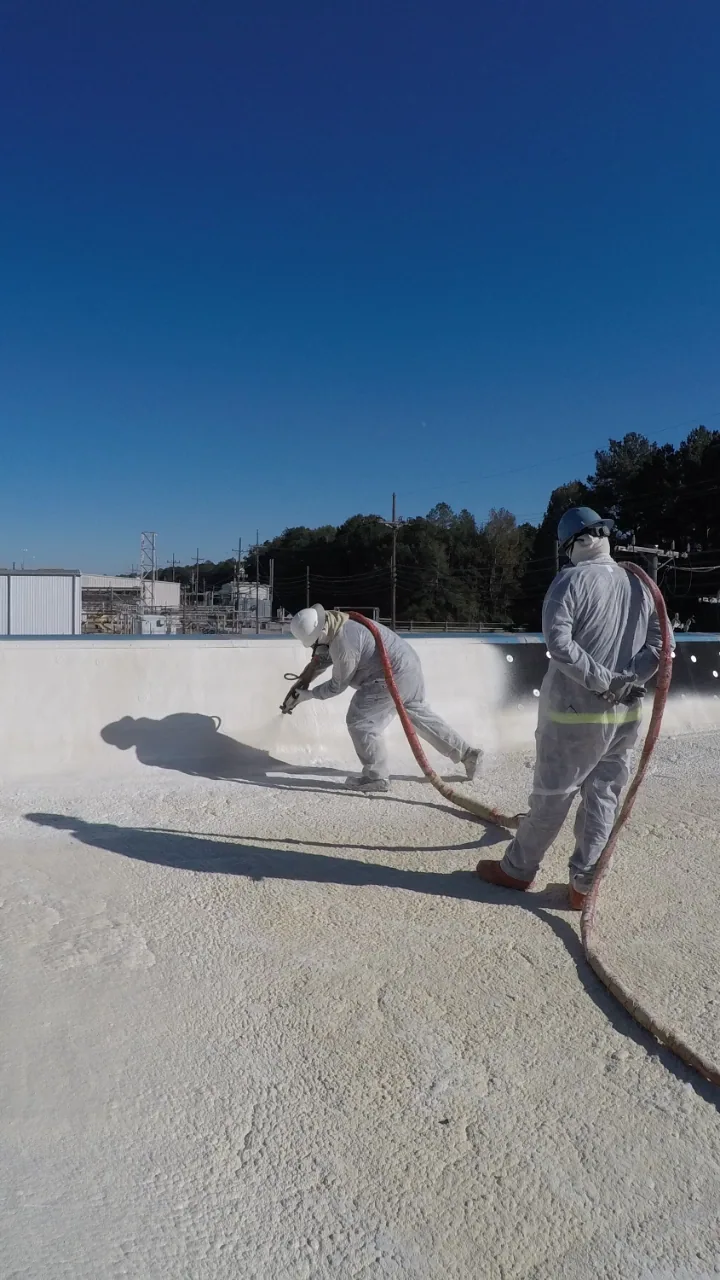
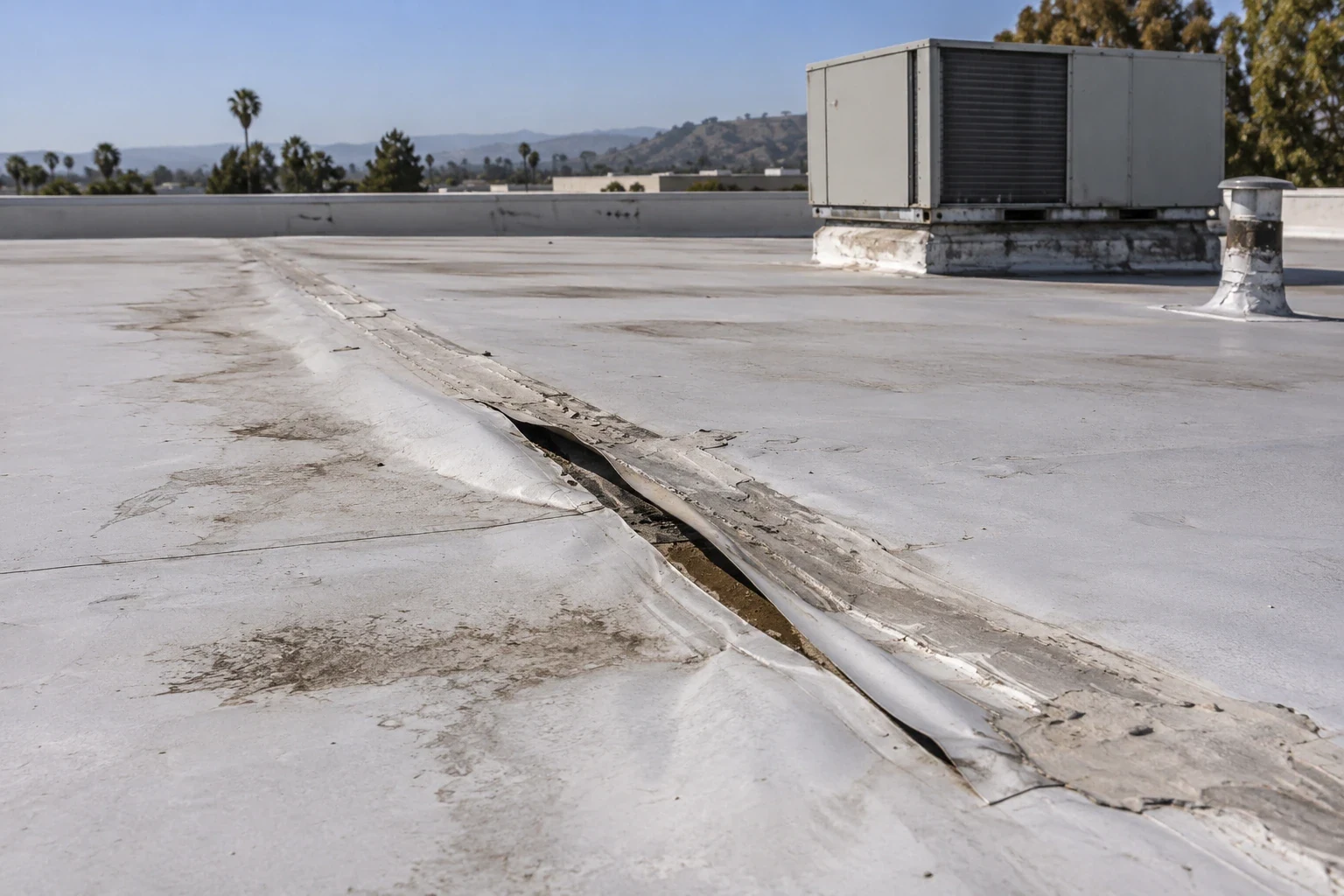
Most of the work that determines a coating result happens before application. The roof has to be cleaned with a method compatible with the existing surface. Loose material, failed sealant, and unsound patches need to be addressed; seams and penetrations may require reinforcement or separate flashing work. We check whether the selected product can bond to the roof and whether application conditions fit the schedule. A coating is not a substitute for repairing a leak path or replacing wet materials. If inspection finds an isolated seam failure, define that repair first and verify the adjacent surface before expanding coverage. A seam repair scope can stand apart from restoration so the owner sees what work is required regardless of the coating decision. Long-term Vallejo climate averages show a dry July and August and average summer highs around 85 to 87 degrees Fahrenheit. Those are long-term station averages, not a work forecast; surface temperature and weather during application still need a project-specific check.
Compare Repair, Restoration, and Replacement
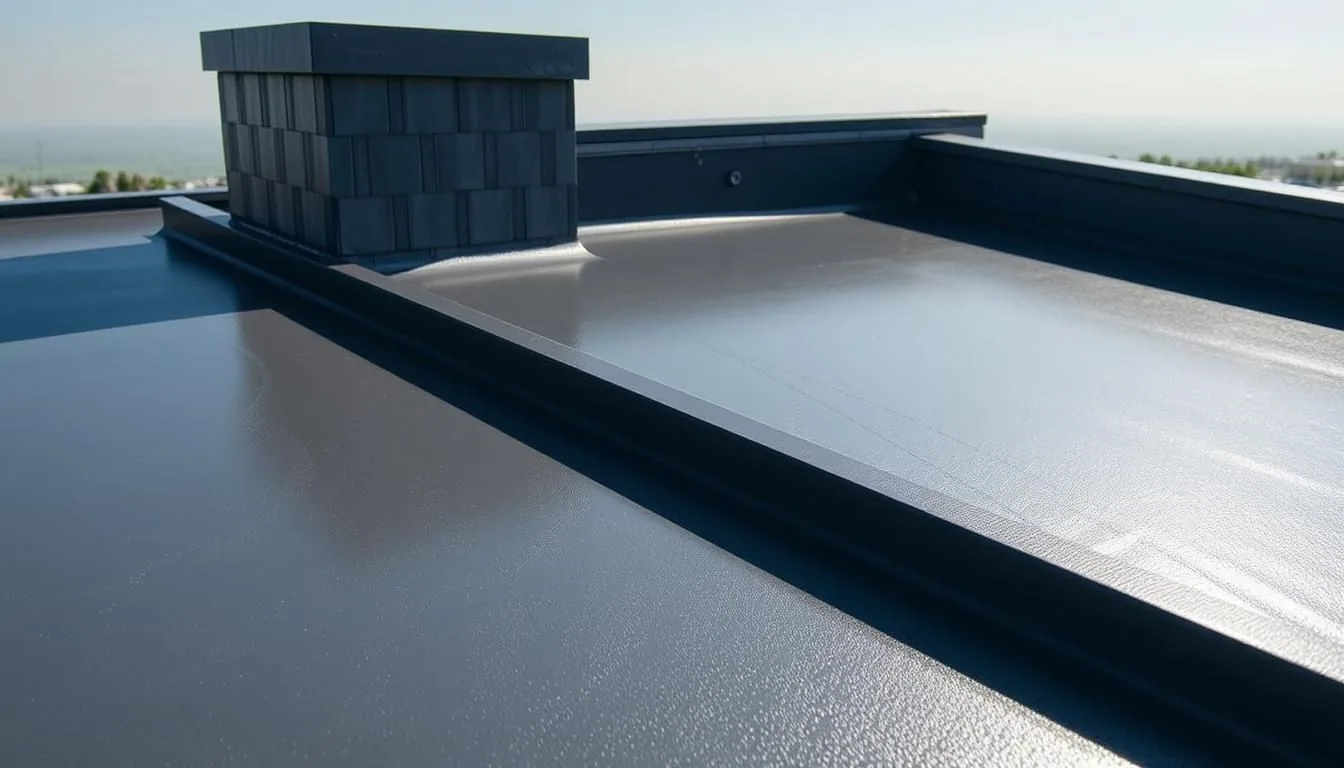
Coating restoration should be compared with a defined repair program and with replacement, using the same condition record for each option. The coating scope should state the areas included, preparation method, repairs, reinforcement details, drainage treatment, and the surface conditions required before application. It should also identify excluded areas and explain how those areas will be handled. For an owner considering a roof recover, added layers and attachment need a separate review. When deterioration is widespread or the existing assembly cannot provide a suitable substrate, a replacement evaluation may better address wet insulation, recurring failures, or poor transitions. No option should be described as extending service life by a fixed period unless the supporting system and written terms establish it. Our report can set out the observed condition and cost drivers without presenting an unsupported service-life promise.
Weather, Access, and Sequencing
Application timing depends on product requirements, substrate condition, forecast, dew point, and the ability to keep the work area clear. A schedule that looks convenient on paper can fail if a roof cannot dry after washing or if operations require access through the work zone. Vallejo's seasonal rainfall pattern makes planning around the roof's condition and the actual forecast more useful than treating a calendar month as a promise of dry conditions. On a property near Downtown Vallejo, pedestrian access and occupied entrances may determine staging. In an industrial setting, equipment and loading activity can shape the daily work window. We confirm access rules, equipment clearances, odor or ventilation considerations, and sensitive operations before mobilizing. The owner can compare staged restoration with a single mobilization and decide whether temporary protection or localized work is needed before coating begins.
Acceptance Conditions and Closeout
A useful restoration record shows what was prepared, repaired, reinforced, and coated. Identify the system and application requirements in the proposal, then document roof condition before work, repairs completed, and any field conditions that changed the scope. Photographs should correspond to roof zones and transitions. Note inspection limits and areas excluded from application. The closeout should include care requirements and documents the owner should retain with the assembly record. That handoff supports future maintenance and helps distinguish normal wear from a change that deserves attention. A condition report can give the asset manager a baseline for later reviews. Owners reviewing a property in the Downtown Vallejo area can bring available plans, repair history, access needs, and budget timing to a site walk before approving a coating. The decision should follow the roof's observed condition and the defined scope.
Commercial Roofing Questions
Which roof conditions can rule out a coating restoration?
Loose or poorly attached membrane, widespread wet insulation, active leaks with an unidentified path, failing flashings, and a surface that cannot accept the proposed product can make coating a poor fit. We inspect the assembly and mark conditions that need repair or testing before pricing a restoration. A localized defect may be corrected first, while broad deterioration can call for a replacement evaluation. The finding should explain which condition changed the recommendation.
Does a coating stop an active leak by itself?
A coating should not be used to conceal an unresolved water path. We trace the reported entry, inspect seams and transitions, and determine whether the entry path begins at a puncture, flashing, drain, or another detail. Any repair or reinforcement needed for a sound substrate belongs in the scope before field coating. If the path is uncertain, we can define a diagnostic step and keep broad application off the proposal until the roof condition is better understood.
How do you choose between silicone and acrylic coating systems?
The existing assembly, compatibility, drainage, exposure, preparation needs, and project requirements guide the selection. We review the product data for the substrate and conditions instead of treating one coating as a universal answer. Ponding, transitions, penetrations, and roof-edge details deserve particular attention because a field coating does not resolve a weak detail. The written scope should identify the selected system and how the critical details will be prepared and treated.
What can change the schedule after coating work is approved?
A damp substrate, unexpected loose material, concealed damage, access limits, or weather outside the system requirements can change the sequence. Washing and preparation may also require time before application. We identify the expected work windows and state which field conditions require a pause or revised scope. For occupied buildings, the owner can help set roof access, tenant notices, and equipment restrictions before work starts.
What should be kept with the roof records after restoration?
Keep the accepted scope, product and preparation details, repair notes, dated photographs, closeout observations, and any maintenance requirements with the roof's assembly record. If an area was not coated or a condition remained unresolved, make that visible in the closeout rather than relying on memory. A future inspector can then compare the same roof zones and tell whether a change is new, recurring, or outside the earlier work boundary.
Review the Substrate Before Choosing a Coating
Arrange a Vallejo roof review with available plans, repair history, access needs, and budget timing. We will document the existing assembly and identify the preparation, repairs, or testing that should precede a restoration decision.
Request a Roof Assessment
Questions About Commercial Roof Coating Restoration in Vallejo, CA
Common questions from building owners and property managers.
Which roof conditions can rule out a coating restoration?
Loose or poorly attached membrane, widespread wet insulation, active leaks with an unidentified path, failing flashings, and a surface that cannot accept the proposed product can make coating a poor fit. We inspect the assembly and mark conditions that need repair or testing before pricing a restoration. A localized defect may be corrected first, while broad deterioration can call for a replacement evaluation. The finding should explain which condition changed the recommendation.
Does a coating stop an active leak by itself?
A coating should not be used to conceal an unresolved water path. We trace the reported entry, inspect seams and transitions, and determine whether the entry path begins at a puncture, flashing, drain, or another detail. Any repair or reinforcement needed for a sound substrate belongs in the scope before field coating. If the path is uncertain, we can define a diagnostic step and keep broad application off the proposal until the roof condition is better understood.
How do you choose between silicone and acrylic coating systems?
The existing assembly, compatibility, drainage, exposure, preparation needs, and project requirements guide the selection. We review the product data for the substrate and conditions instead of treating one coating as a universal answer. Ponding, transitions, penetrations, and roof-edge details deserve particular attention because a field coating does not resolve a weak detail. The written scope should identify the selected system and how the critical details will be prepared and treated.
What can change the schedule after coating work is approved?
A damp substrate, unexpected loose material, concealed damage, access limits, or weather outside the system requirements can change the sequence. Washing and preparation may also require time before application. We identify the expected work windows and state which field conditions require a pause or revised scope. For occupied buildings, the owner can help set roof access, tenant notices, and equipment restrictions before work starts.
What should be kept with the roof records after restoration?
Keep the accepted scope, product and preparation details, repair notes, dated photographs, closeout observations, and any maintenance requirements with the roof's assembly record. If an area was not coated or a condition remained unresolved, make that visible in the closeout rather than relying on memory. A future inspector can then compare the same roof zones and tell whether a change is new, recurring, or outside the earlier work boundary.