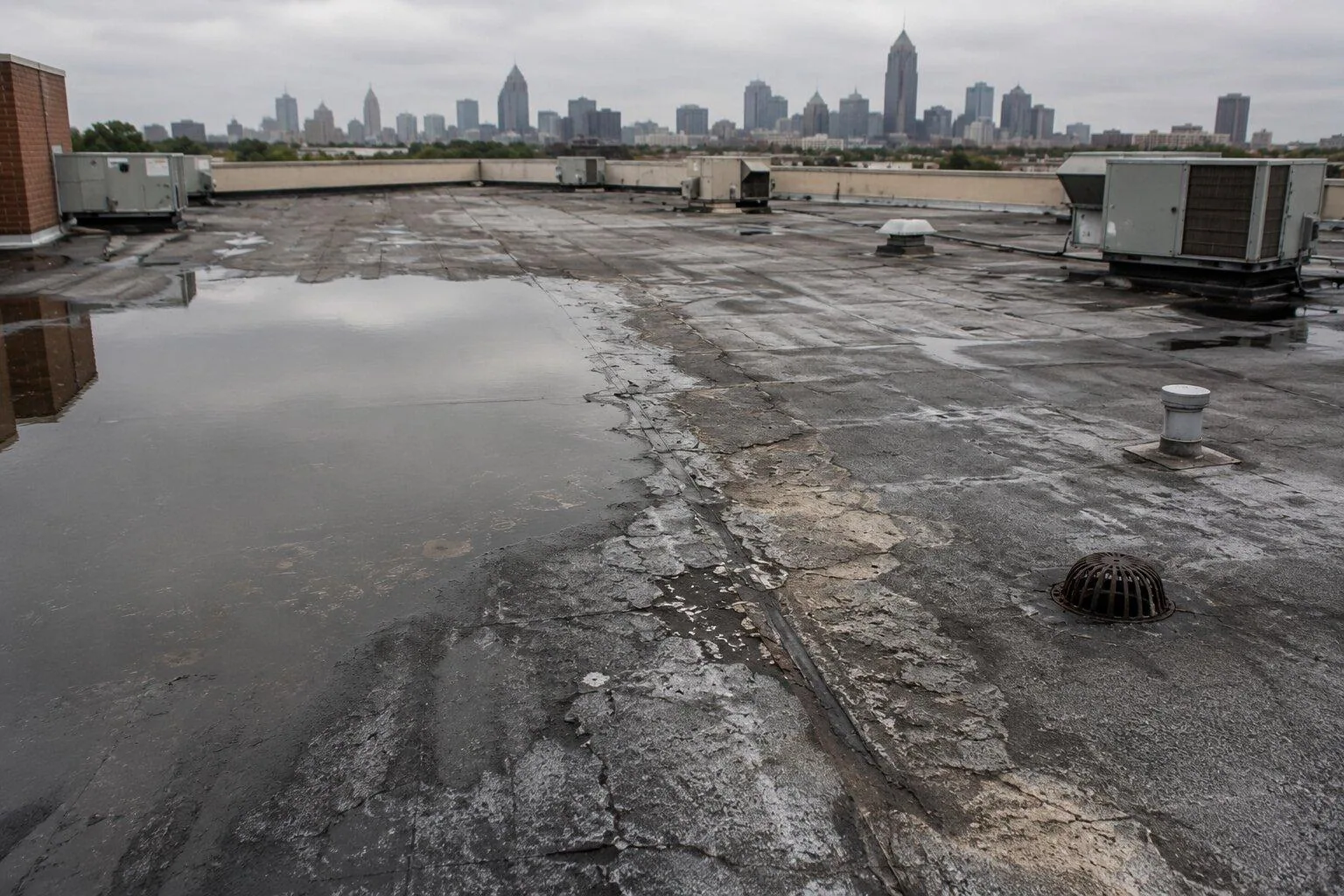
Commercial Roof Seam Failure Repair in Vallejo, CA
Commercial membrane seam inspections and repairs in Vallejo, with open laps, attachment, moisture, and patch limits mapped to each roof zone.
Why Commercial Roofing Vallejo?
Commercial Roof Seam Failure Repair in Vallejo, CA
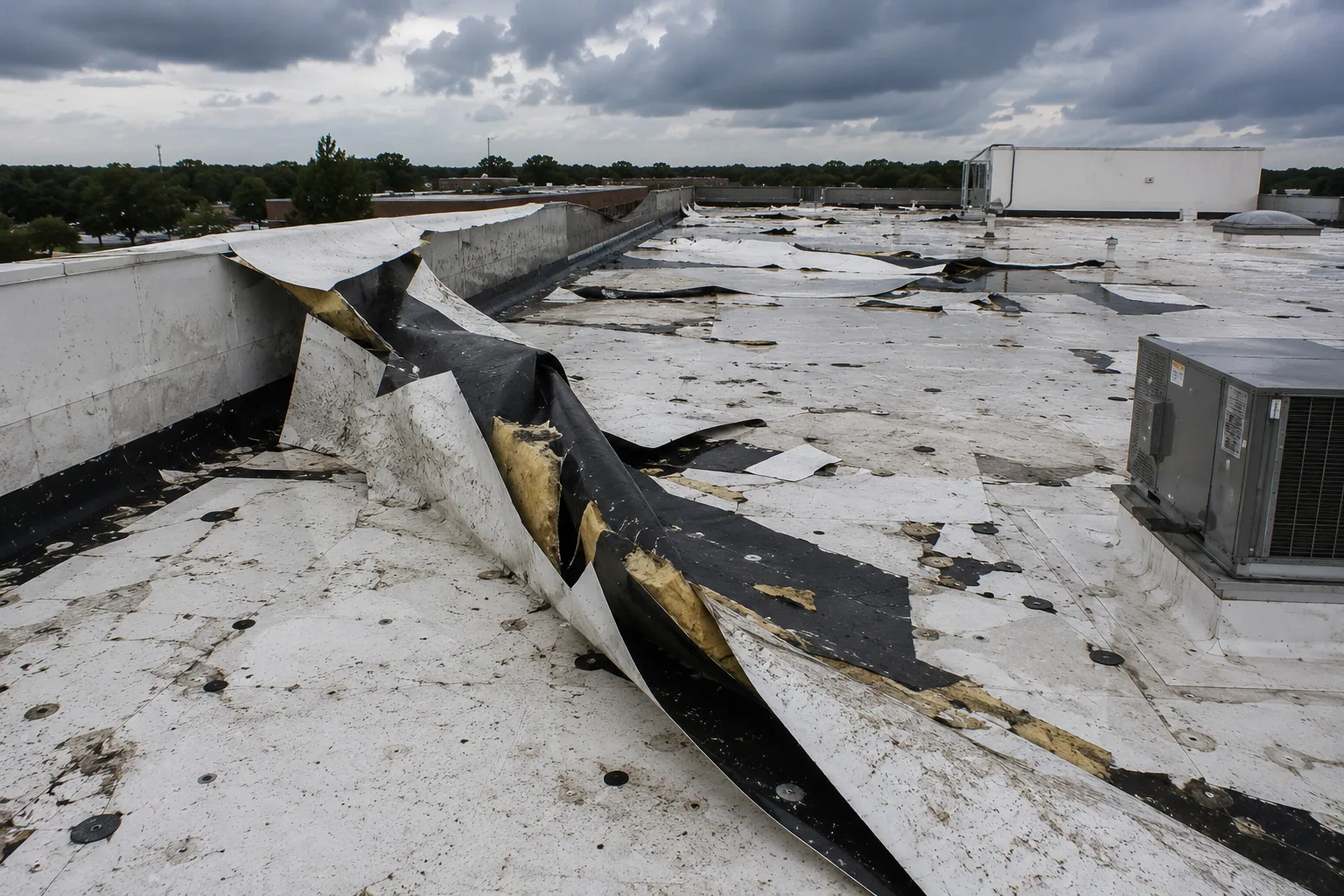
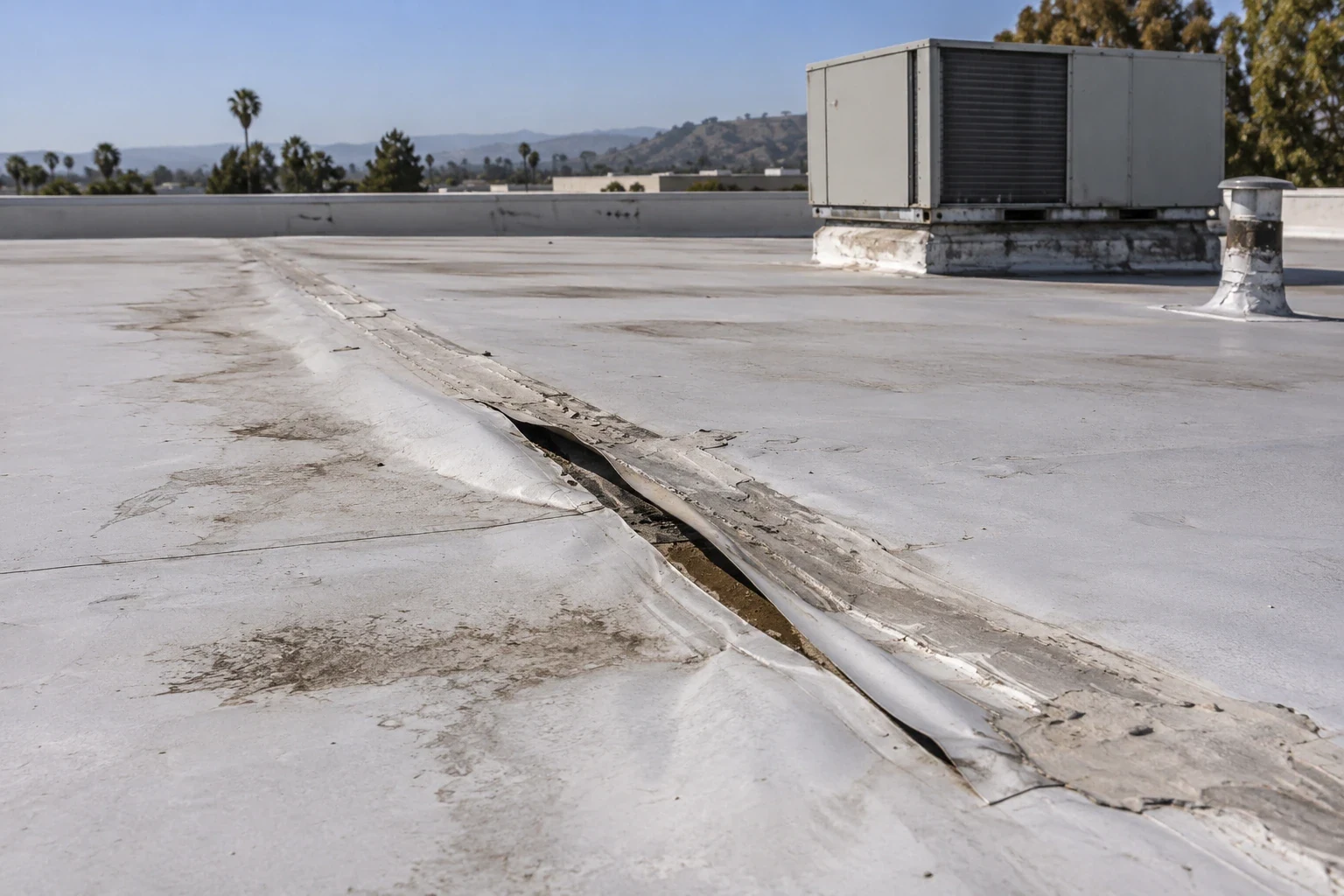
An open roof seam has a visible edge, but the repair question is how far the separation continues and whether the materials beside it still hold. We inspect the lap, nearby attachment, transitions, and any earlier patch before pricing a repair. The roof record maps each opening so a property team can distinguish one seam from a repeated line of failure. Vallejo's Mare Island includes office, retail, and industrial spaces; the Curtola Employment Center is a separate employment cluster south of downtown. These area facts help frame property operations, not the condition of an individual roof. A roof inspection can record the surrounding assembly while flashing repair addresses a transition where laps meet a wall or curb.
Map the Open Lap and Its Continuation
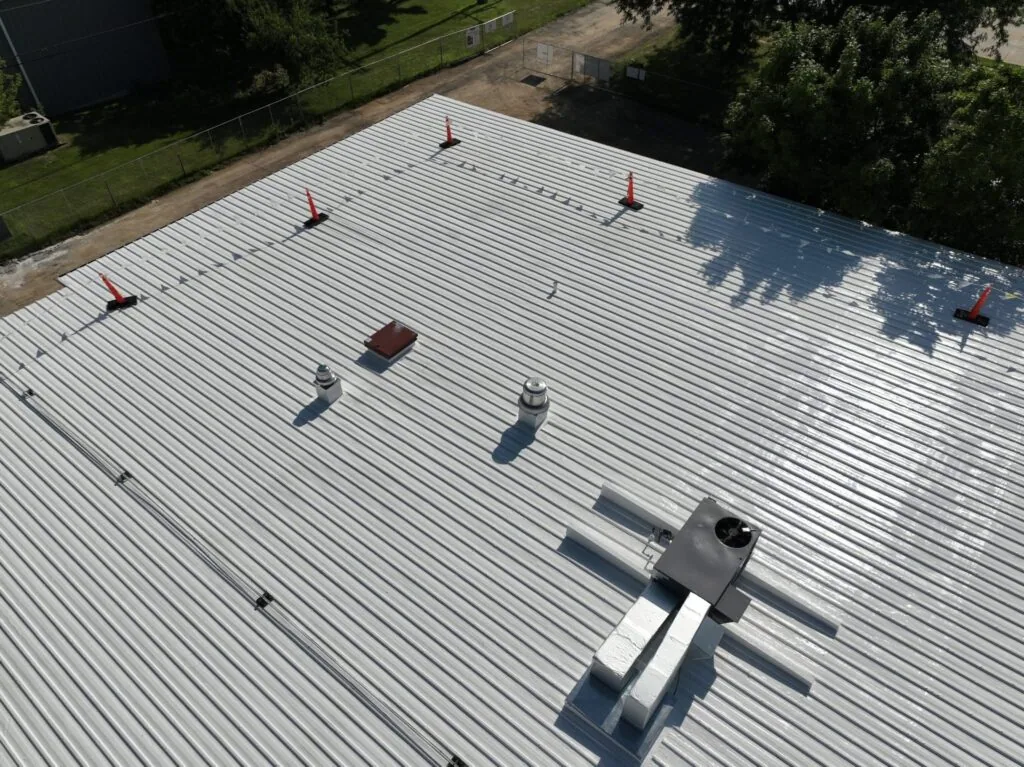
We mark where the seam begins, the direction of separation, the length that can be probed, and any change in bond or weld strength nearby. On a membrane roof, the review includes adjacent sheet edges, patches, penetrations, drainage features, and traffic paths. If the split disappears beneath a curb or crosses into a repair, the limit is recorded as uncertain until the detail can be opened. Photographs show both the opening and enough surrounding field to locate it later. That gives the owner a repair boundary based on the observed seam rather than a generic area allowance.
A Mare Island property has its own delivery and roof-entry requirements. Confirm the current truck route, staging point, and approved access with its property contact before scheduling a seam repair. Area-wide access notes do not establish roof attachment. A membrane system review helps confirm the assembly and suitable repair material before work begins.
Check the Existing Weld or Adhesive
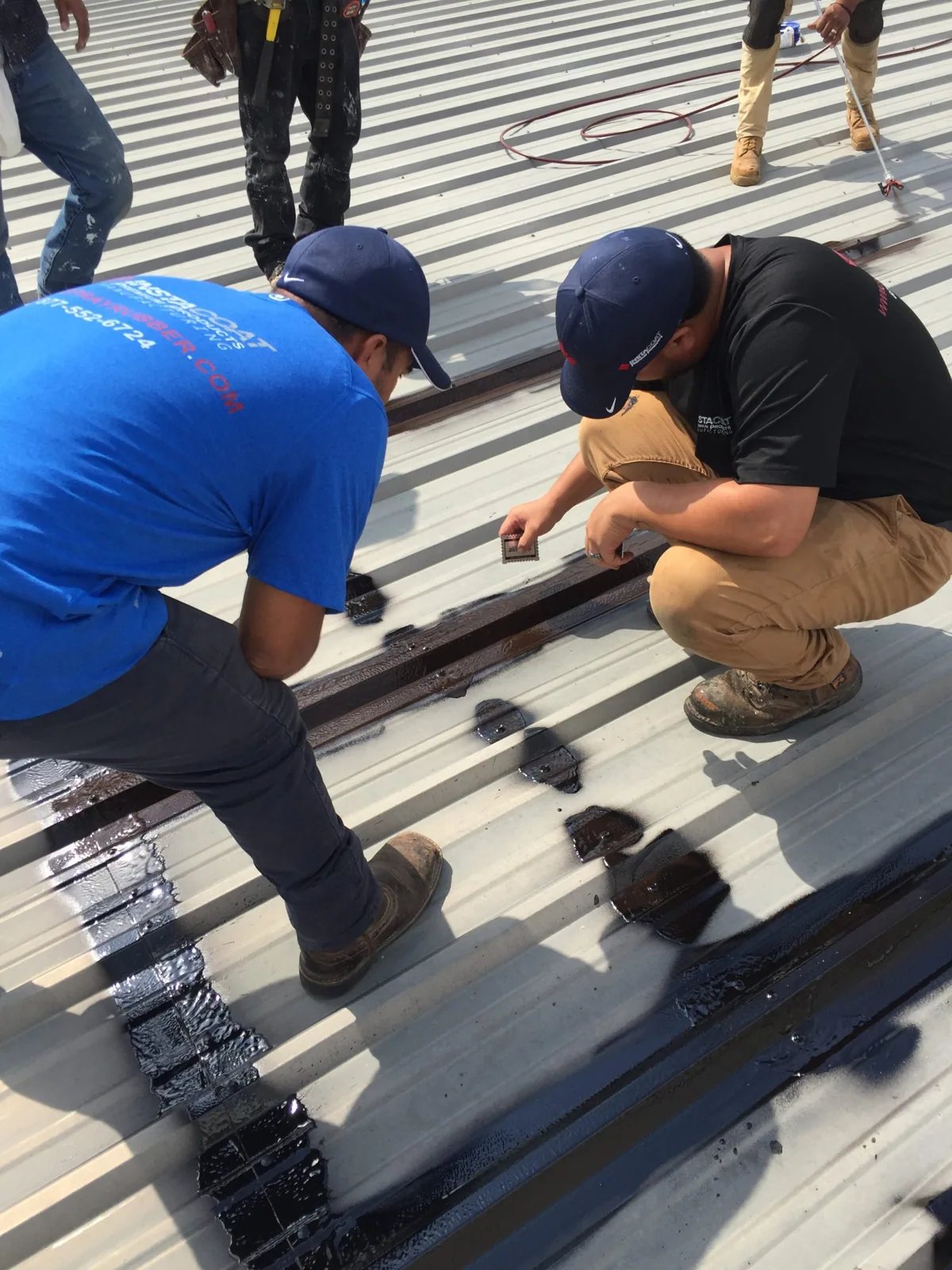
The repair method depends on the membrane type and the condition of the adjoining sheet. We identify whether the lap was heat-welded, adhered, or mechanically attached where the assembly allows, then check for contamination, wrinkles, trapped moisture, or movement at the bond line. A test peel or probe can reveal whether sound material remains beyond the opening. We note the conditions that could prevent a durable tie-in and avoid applying a patch over a surface that has not been prepared for the selected material.
Mare Island includes office, retail, and industrial property. Where a site has crane-served bays or oversized doors, we map seam repairs by roof zone and coordinate the lift path with the operator. We verify those conditions at the building rather than assume them from the district. Curtola is a separate employment area south of downtown; the district label does not identify a roof assembly or current tenant. We inspect each building's layers and access before setting the repair sequence. When moisture may be present below the seam, a targeted moisture survey can help define how much material should be opened.
Set a Patch Limit That Reaches Sound Material
A repair should extend to a bond or weld that can hold, with corners and terminations detailed so water is not directed beneath the patch. We describe the preparation, compatible membrane, seam width, roller or welding steps, and any reinforcement required at a T-joint. If the split crosses a larger field or repeats along the same row, a local patch may not address the underlying attachment or movement. The scope can compare a bounded repair with a wider replacement area, and each alternative states the tested limit and any unresolved condition.
When a seam opened near a drain or curb, the surrounding detail may need separate repair. Drainage review can identify a low area, while a puncture repair addresses another membrane defect. We list the related items separately so an owner can see whether each one shares the same cause or merely occurs within the same roof zone. A recovery study should follow moisture and attachment checks rather than conceal an unresolved seam condition.
Protect the Building During the Repair
Before opening a seam, the site contact confirms rooftop equipment access, interior spaces below, receiving hours, and any route used by other trades. We plan material staging and keep the exposed area small enough to close within the work window. If the roof remains occupied by maintenance crews, the schedule identifies a protected path and a limit on foot traffic across the repaired section. Temporary cover is recorded separately from the permanent weld or adhered patch.
Broadway and Tennessee Street connect Vallejo districts. A location along either corridor does not set the work schedule; the property's operating hours and access rules do. We confirm lift placement and material delivery with the manager before mobilization. The seam is cleaned and prepared only after the crew verifies that the chosen weld or adhesive can reach the full repair limit. If a test area shows the existing sheet is brittle, contaminated, or detached beyond the mapped opening, work pauses for a revised boundary. This avoids joining a new patch to material that cannot hold it. For a facility that remains open, occupied-building phasing can help coordinate the repair with tenant or production operations.
Verify the Repair and Preserve Its Location
After the patch is complete, we examine its perimeter, confirm the lap is closed, and photograph the repair with the roof-zone reference. The closeout lists material, preparation, any test used, and adjacent items left open. If an area could not be reached, the report identifies it instead of implying full coverage. A condition record gives the next inspector a fixed location to compare and supports maintenance planning when another seam begins to separate.
Arrange a roof review with the seam location, plans, repair history, and access details. We will inspect the opening and adjoining bond, identify whether moisture or related details affect the boundary, and describe a repair that reaches sound material. The owner can compare that work with broader renewal if failures recur across zones. Record the tested seam length and whether adjoining laps were checked.
Commercial Roofing Questions
Can an open membrane seam be patched without replacing the roof?
A localized patch may work when the separation can be bounded and the surrounding sheet still bonds. We test or probe the adjoining lap, inspect nearby details, and identify any moisture that could extend the repair. Repeated openings along a line call for a broader attachment review.
What causes a roof seam to open?
Age, movement, poor preparation, incompatible repairs, or attachment failure can affect a lap. We inspect the bond and surrounding assembly, then document what is visible. If records or testing do not establish the cause, the report describes the condition without attributing it to a specific event.
How far should the repair extend past an open seam?
The work reaches material that can accept the new weld or adhesive, not a fixed distance chosen without inspection. We probe beyond the split, check corners and terminations, and note any point where sound bond is not confirmed. The proposal shows the boundary and test assumptions.
Does a seam repair need a moisture survey?
Not for every opening. Imaging or a test cut can help when interior reports, soft areas, blistering, or prior leaks suggest moisture below the membrane. We identify candidate zones and explain how a result would change the patch limit before authorizing a larger investigation.
What should be recorded after the seam is repaired?
Keep the roof-zone location, photos before and after, material and preparation notes, test results, and any nearby condition that remains open. We record those items so facilities can revisit the same seam and distinguish the completed patch from future movement.
Map the Open Seam Before Repair
Arrange a roof walk with the seam location, prior repairs, roof plans, and access rules so the adjoining bond and repair boundary can be checked.
Request a Roof Assessment
Questions About Commercial Roof Seam Failure Repair in Vallejo, CA
Common questions from building owners and property managers.
Can an open membrane seam be patched without replacing the roof?
A localized patch may work when the separation can be bounded and the surrounding sheet still bonds. We test or probe the adjoining lap, inspect nearby details, and identify any moisture that could extend the repair. Repeated openings along a line call for a broader attachment review.
What causes a roof seam to open?
Age, movement, poor preparation, incompatible repairs, or attachment failure can affect a lap. We inspect the bond and surrounding assembly, then document what is visible. If records or testing do not establish the cause, the report describes the condition without attributing it to a specific event.
How far should the repair extend past an open seam?
The work reaches material that can accept the new weld or adhesive, not a fixed distance chosen without inspection. We probe beyond the split, check corners and terminations, and note any point where sound bond is not confirmed. The proposal shows the boundary and test assumptions.
Does a seam repair need a moisture survey?
Not for every opening. Imaging or a test cut can help when interior reports, soft areas, blistering, or prior leaks suggest moisture below the membrane. We identify candidate zones and explain how a result would change the patch limit before authorizing a larger investigation.
What should be recorded after the seam is repaired?
Keep the roof-zone location, photos before and after, material and preparation notes, test results, and any nearby condition that remains open. We record those items so facilities can revisit the same seam and distinguish the completed patch from future movement.