Commercial Roof Leak Repair in Vallejo, CA
Trace commercial roof leaks in Vallejo from interior symptoms to roof openings, then document a repair boundary that accounts for tenants and operations.
Why Commercial Roofing Vallejo?
Commercial Roof Leak Repair in Vallejo, CA
A ceiling mark in an occupied office can interrupt work before the roof defect is clear. In Vallejo, CA, leak repair starts by connecting the interior symptom to the roof assembly and the building's use. Water may travel along a deck, insulation joint, pipe, or framing member before it appears indoors, so the visible stain is one clue rather than a repair location. We review the timing and pattern of the leak, inspect roof details above and around the affected space, and document what the field evidence supports. That gives the property team a repair plan tied to the actual water path and an operating response for the rooms below.
Following the Entry Path
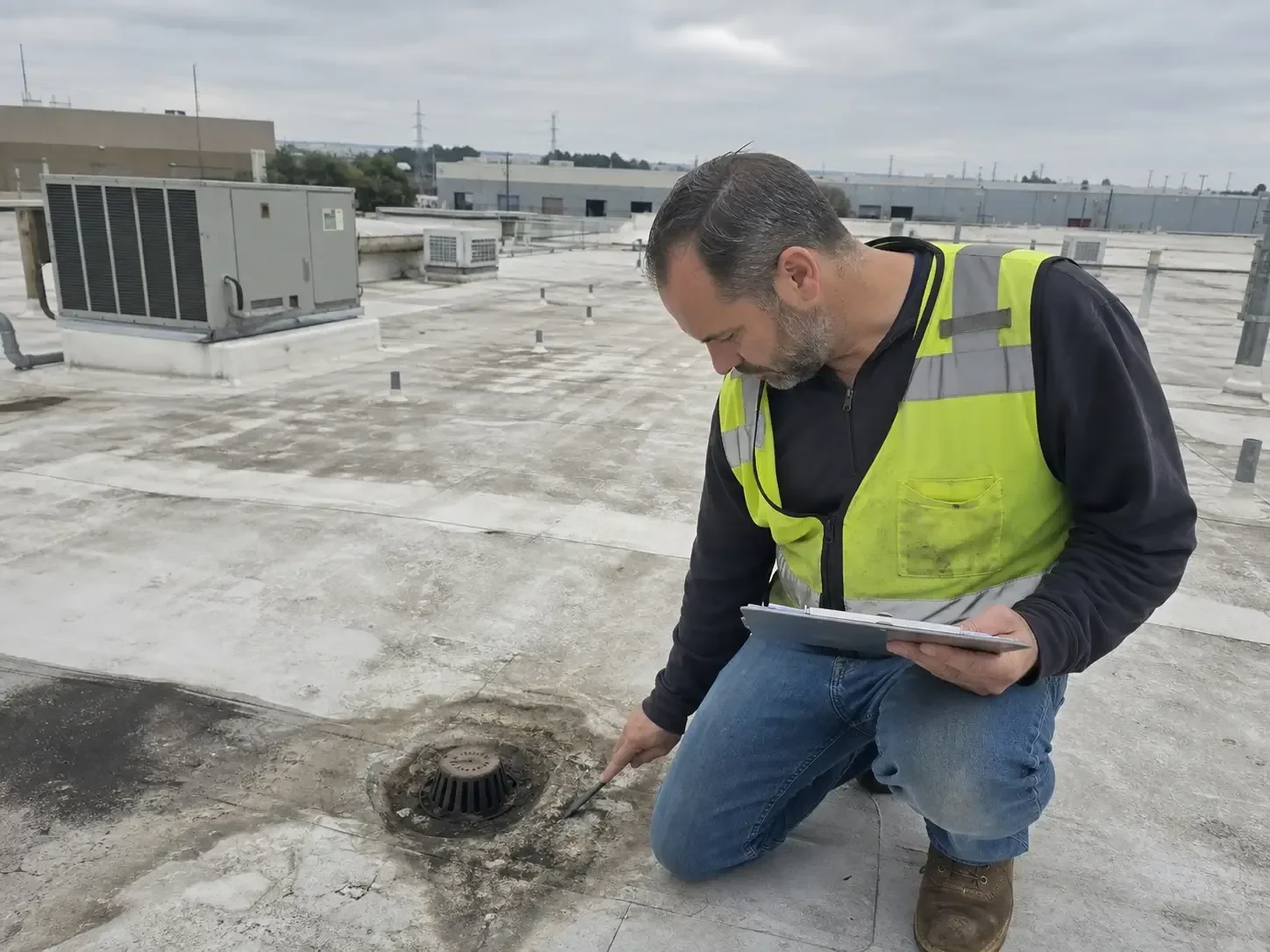
We begin with the affected room, the time water appeared, and any recent rain or roof work. The site contact can point out equipment, inventory, ceiling areas, or electrical concerns that need protection while the leak is active. Above, we inspect seams, penetrations, wall flashings, drains, scuppers, curbs, and transitions near the likely path. The opening may sit away from the interior mark, especially where water can move through insulation or along structural members.
Downtown Vallejo and the waterfront include commercial and mixed-use settings where rooms may remain occupied during a repair. A clear access plan helps the building contact route tenants and service staff around the work zone. We photograph the suspected entry area and the interior symptom, then trace between them before calling the repair boundary. If the entry point remains uncertain, a targeted opening or moisture check can narrow the search. A hands-on roof inspection creates a broader condition record; active water entry can also require emergency roof response while the cause is assessed.
Details That Admit Water
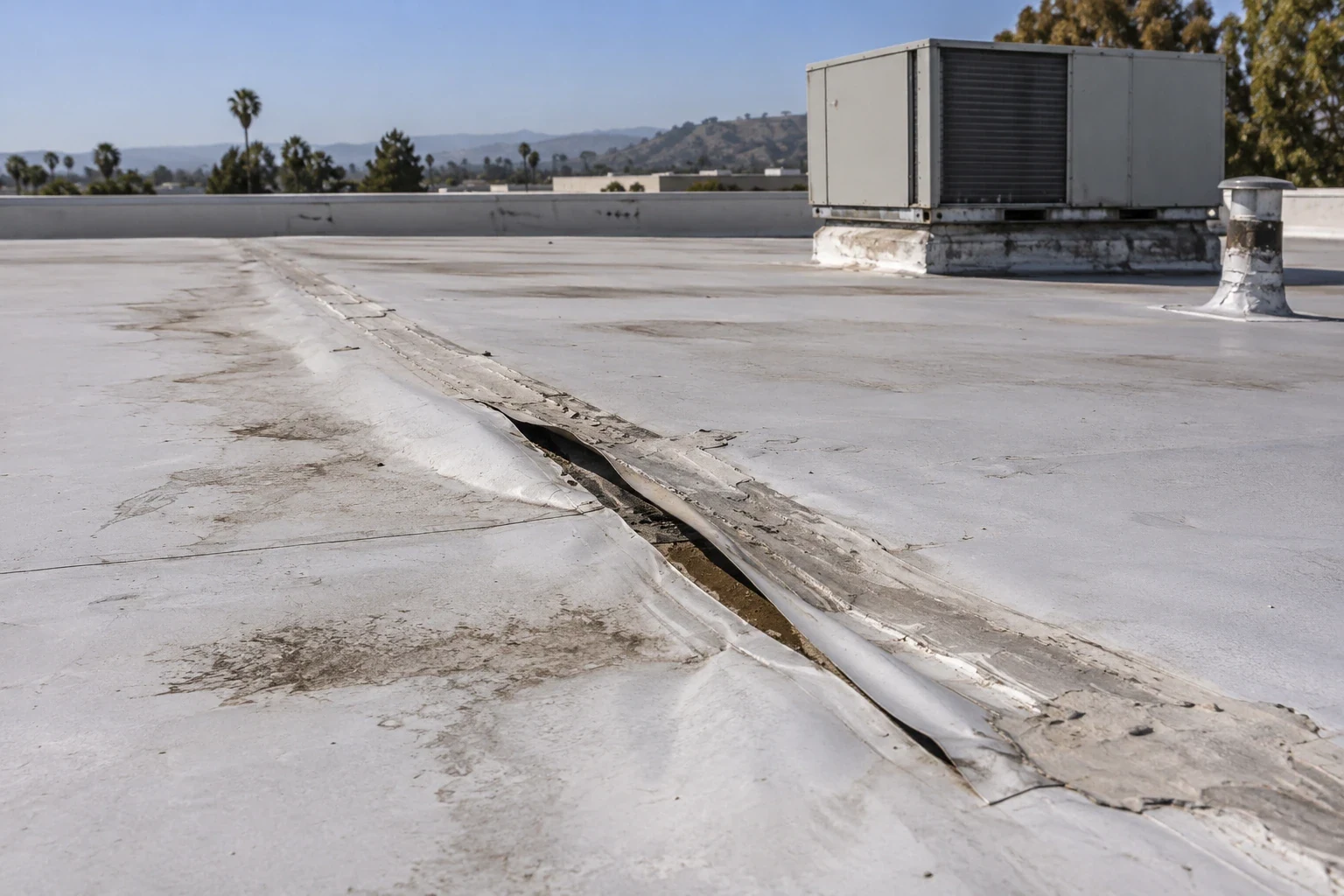
Seams can open where the bond or weld has weakened, particularly at a repair edge or a location subject to movement. Flashings can pull away at a wall or curb, while a pipe penetration may have a split boot or failed seal. Drain bowls and scuppers can collect debris or separate from the surrounding membrane. We inspect the main field and the details together because fixing a visible opening without checking its adjoining materials may leave the water path intact.
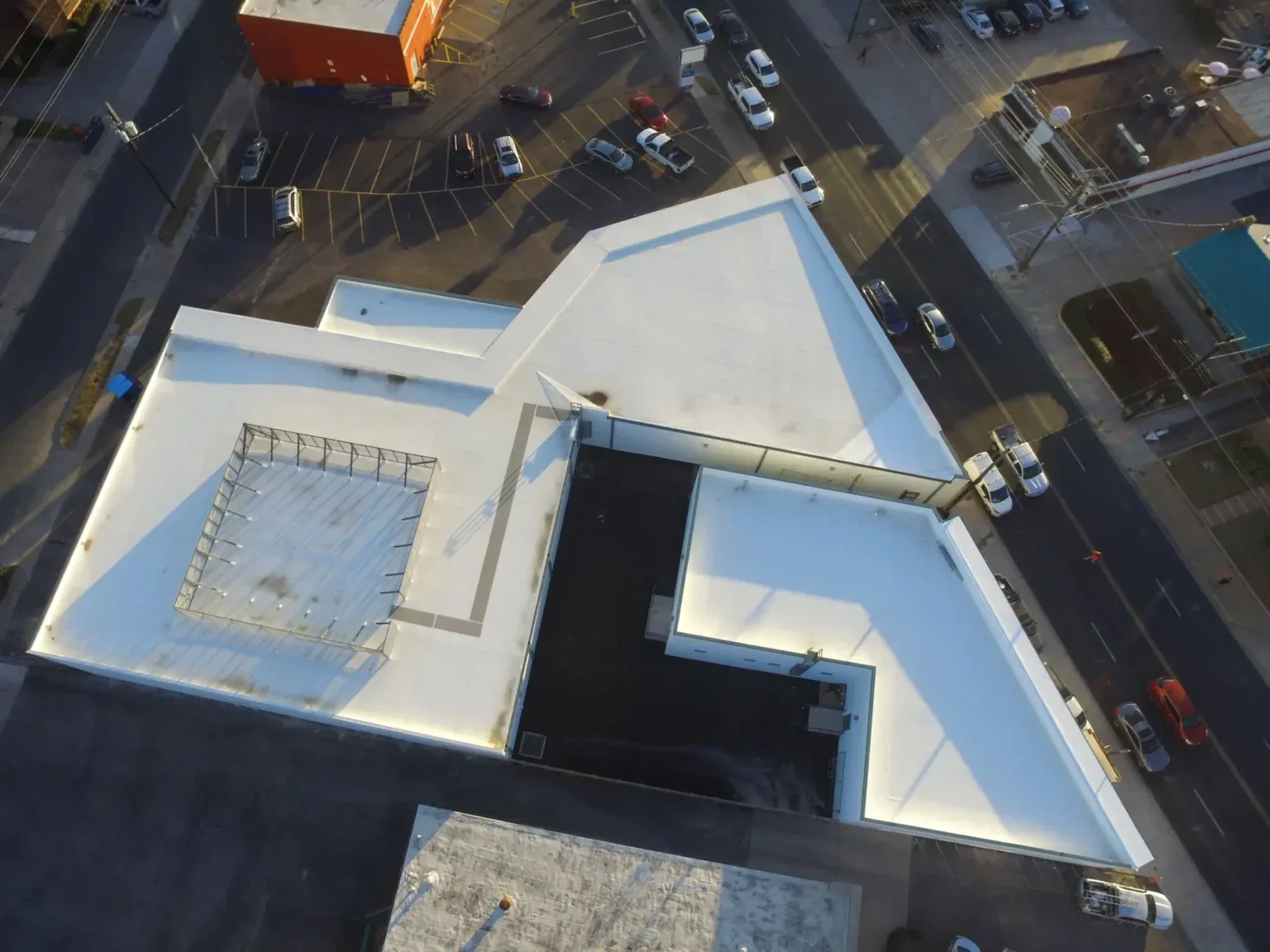
Vallejo's commercial and industrial spaces on Mare Island include a mix of offices, retail, and industrial uses. That variety makes the roof assembly and equipment layout a building-specific question, rather than something inferred from the district. We identify whether the roof is a single-ply membrane, modified bitumen, built-up, or metal before selecting compatible repair materials. For a clear membrane opening, puncture repair can address the damaged area; a separated seam may need a defined seam repair that extends to sound material.
What the Water Has Reached
A roof leak may affect insulation or deck as well as the visible ceiling. We look for soft areas, blisters, staining, open laps, corrosion, and changes in the roof surface near the suspected entry. Interior observations can indicate how long the leak may have been present, but they do not establish how much material is wet. If the repair requires lifting a membrane or opening a ceiling, we record the condition before it is covered and note whether wet materials need removal.
Vallejo averages no rainfall in July and August, while rainfall varies across seasons. Schedule a roof review before wetter weather, then trace the reported leak against the building’s actual roof conditions. Where moisture extent is uncertain, infrared and core-cut survey work can pair imaging with selected openings. A condition report records the water path, repair limits, and any additional review needed for the affected zone.
Containing the Leak and Making the Repair
When water is entering during active operations, the first step is to protect the affected interior and control the roof opening. We coordinate access, identify the room or equipment at risk, and use temporary protection or dry-in measures suited to the observed condition. A temporary measure manages immediate exposure; it is not a substitute for a permanent repair when the entry point and materials are known. The site contact should know where the crew is working and how to report any continuing water entry.
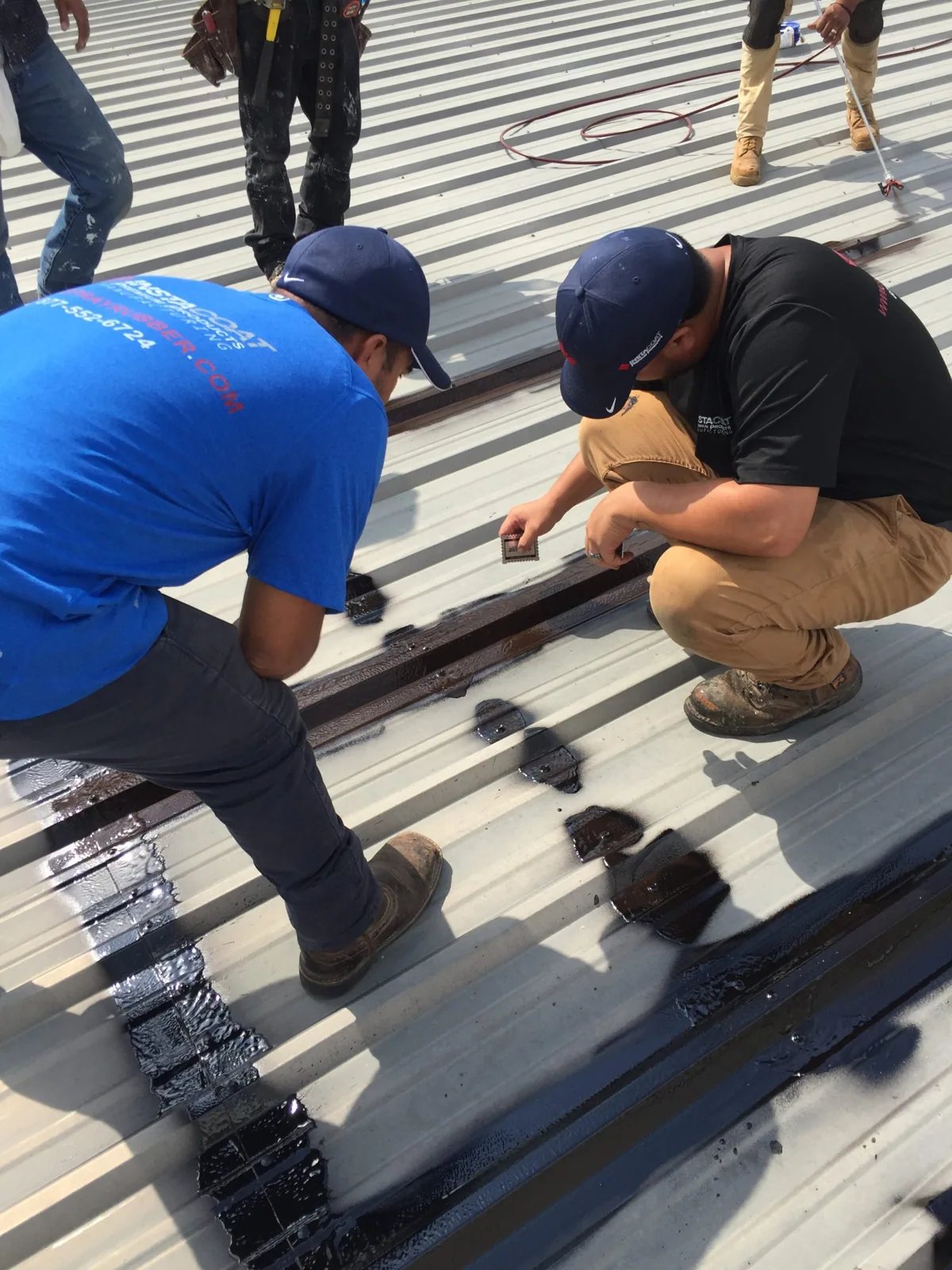
Once the surface is safe to work, we prepare the affected materials and repair the membrane, flashing, seam, or drainage detail with a compatible system. If wet insulation or damaged deck is found, the work boundary may change and ownership needs a documented decision before covering it. A planned repair scope can address adjacent defects identified during the investigation. If the building sits near the Sonoma Boulevard corridor or Sonoma-Broadway employment district, delivery, tenant movement, and roof access should be set with the property contact before tools and materials reach the work area.
A Repair Record for the Next Rain
The closeout record should show where the repair was made, what materials were replaced, photographs before and after work, and any condition left for monitoring. We note whether water was present below the membrane and whether a larger moisture survey or capital review remains. This allows a future inspection to revisit the same zone and compare its condition with the prior record. The owner can also track whether a similar issue appears at other buildings with a related roof assembly.
Sonoma Boulevard, Broadway, and Tennessee Street connect Vallejo districts, but they cannot identify a leak entry point. Map symptoms to the roof details above and around the affected room. Arrange a review with the leak history, available plans, access needs, and operating schedule. We will map the affected area, identify the likely entry path, and outline the immediate repair and any follow-up inspection. Keeping the findings with the roof record makes the next budget decision clearer if the defect returns or additional wet material appears.
Commercial Roofing Questions
Why is the ceiling stain far from the roof opening?
Water can travel along insulation, deck joints, pipes, or framing before reaching the ceiling. We compare the interior mark with roof seams, penetrations, walls, and drainage details above it. The inspection follows likely paths and documents the evidence at each point. A stain location is useful context, while the repair limit follows the roof condition we can confirm.
What should our staff do while a leak is active?
Protect people, equipment, and inventory in the affected area, then report where water is appearing and whether it is changing. The site contact should coordinate roof access and interior entry with the repair crew. We can use temporary protection while tracing the entry point. Record the time, room, and conditions so the investigation can compare them with the roof findings.
Can a roof leak be repaired without opening the ceiling?
Many roof-side defects can be inspected and repaired from above, but wet insulation or a damaged deck may require an opening to define the affected materials. We explain what can be confirmed visually and where a test cut would change the scope. The owner can then weigh the evidence, interior impact, and repair boundary before concealed materials are covered.
How do you know whether insulation needs removal?
We check for wet or softened material through inspection and, when appropriate, targeted openings or moisture survey work. The extent matters because a small wet area may need a local replacement, while wider moisture can affect the repair strategy. We photograph the exposed condition and map the removal limit so the owner can review the added work before it is closed.
What if the leak returns after the repair?
The closeout record gives the next inspection a starting point: repair location, material, photos, and any adjacent concern left for monitoring. We revisit the path and compare new evidence with that record, including whether water entered at another detail. A recurring leak may require a wider repair boundary, moisture testing, or a capital review if the assembly shows broader deterioration.
Trace the Water Path
Arrange a roof and interior review with the leak history, access details, and operating schedule. We will document the likely entry path and prepare a repair scope for the affected assembly.
Request a Roof Assessment
Questions About Commercial Roof Leak Repair in Vallejo, CA
Common questions from building owners and property managers.
Why is the ceiling stain far from the roof opening?
Water can travel along insulation, deck joints, pipes, or framing before reaching the ceiling. We compare the interior mark with roof seams, penetrations, walls, and drainage details above it. The inspection follows likely paths and documents the evidence at each point. A stain location is useful context, while the repair limit follows the roof condition we can confirm.
What should our staff do while a leak is active?
Protect people, equipment, and inventory in the affected area, then report where water is appearing and whether it is changing. The site contact should coordinate roof access and interior entry with the repair crew. We can use temporary protection while tracing the entry point. Record the time, room, and conditions so the investigation can compare them with the roof findings.
Can a roof leak be repaired without opening the ceiling?
Many roof-side defects can be inspected and repaired from above, but wet insulation or a damaged deck may require an opening to define the affected materials. We explain what can be confirmed visually and where a test cut would change the scope. The owner can then weigh the evidence, interior impact, and repair boundary before concealed materials are covered.
How do you know whether insulation needs removal?
We check for wet or softened material through inspection and, when appropriate, targeted openings or moisture survey work. The extent matters because a small wet area may need a local replacement, while wider moisture can affect the repair strategy. We photograph the exposed condition and map the removal limit so the owner can review the added work before it is closed.
What if the leak returns after the repair?
The closeout record gives the next inspection a starting point: repair location, material, photos, and any adjacent concern left for monitoring. We revisit the path and compare new evidence with that record, including whether water entered at another detail. A recurring leak may require a wider repair boundary, moisture testing, or a capital review if the assembly shows broader deterioration.