Commercial Roofing for Real Estate Investors and REITs in Vallejo, CA
Portfolio roof inspections, due diligence, and capital planning for real estate investors and REITs with commercial assets in Vallejo.

Why Commercial Roofing Vallejo?
Commercial Roofing for Real Estate Investors and REITs in Vallejo, CA
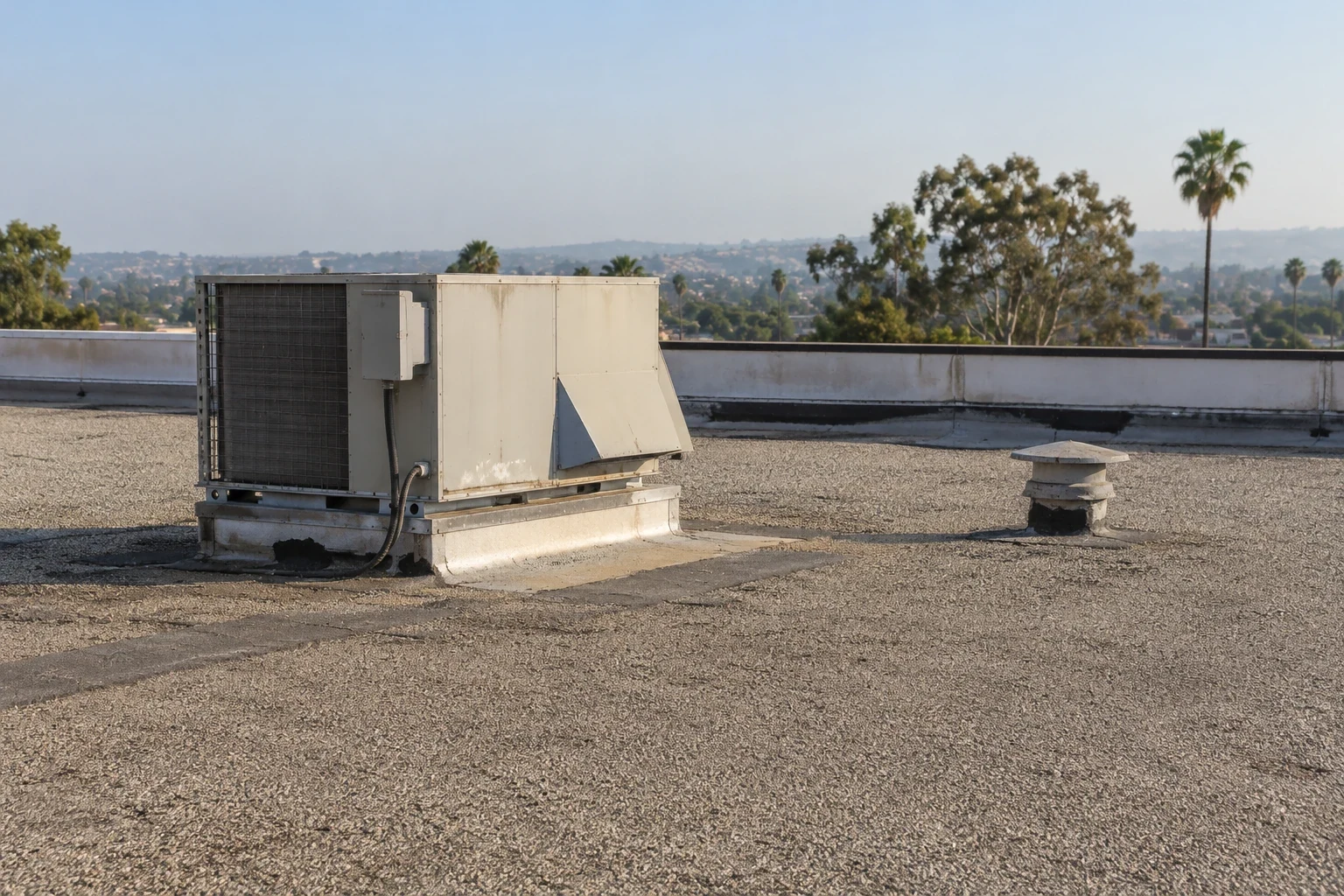
Portfolio capital reviews get clearer when roof condition, lease impact, and renewal timing are tied to the same asset record. In Vallejo, commercial properties include the office, retail, and industrial spaces of Mare Island and the evolving Downtown Vallejo planning area. Mare Island has more than 100 businesses across office, retail, and industrial settings. Downtown Vallejo priorities include mobility, infrastructure, housing, and economic development. Keep roof access, tenant activity, and repair history tied to each asset. The roof inventory should record each property's assembly and age from its own plans, closeouts, and field observations. We inspect each property, compare the field with available plans and repair history, and rank recommendations by observed condition. A roof capital schedule can carry those priorities into investment review. property-management teams and industrial owners can use the same evidence with different operating assumptions.
Separate Asset Risk From the Acquisition Assumption
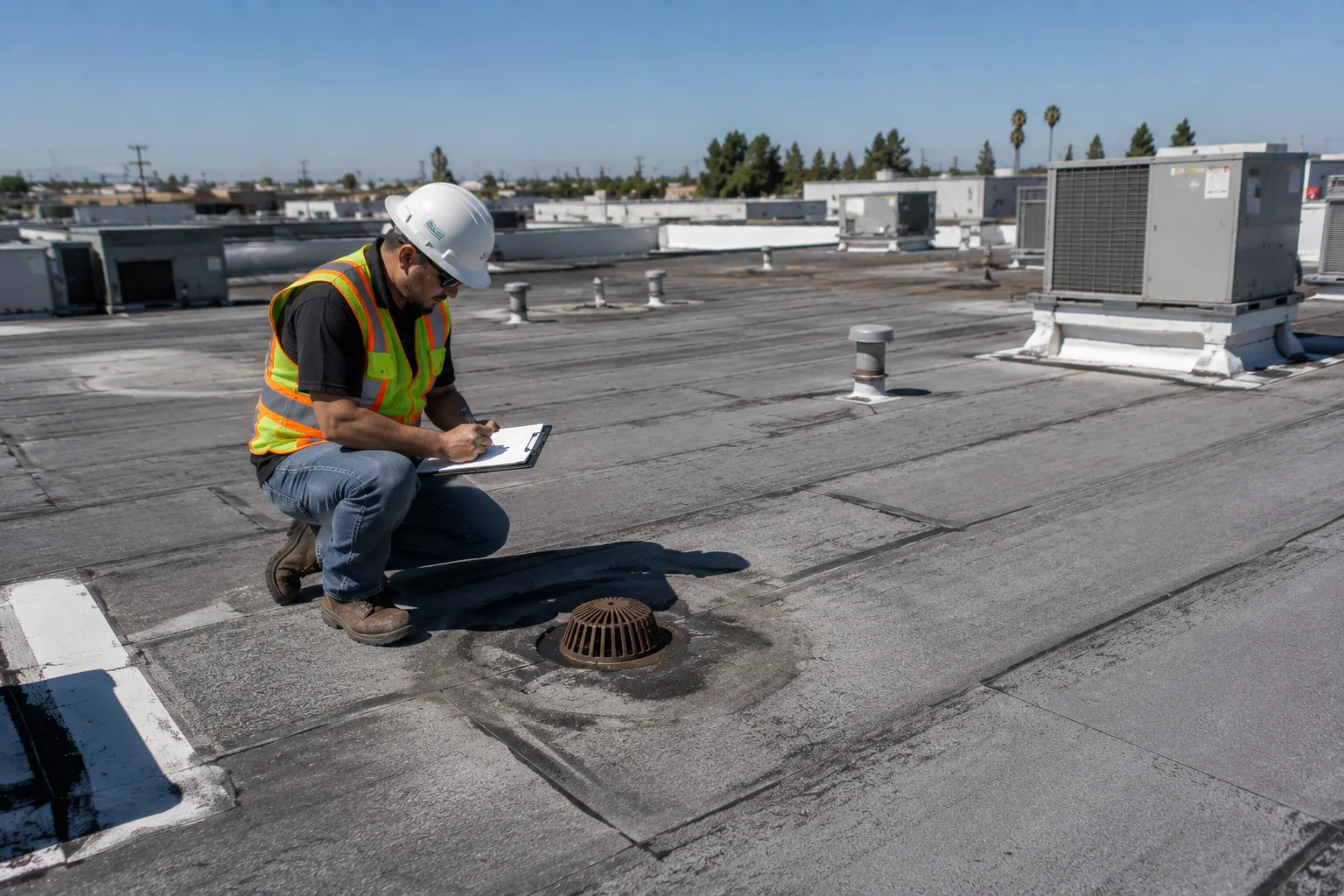
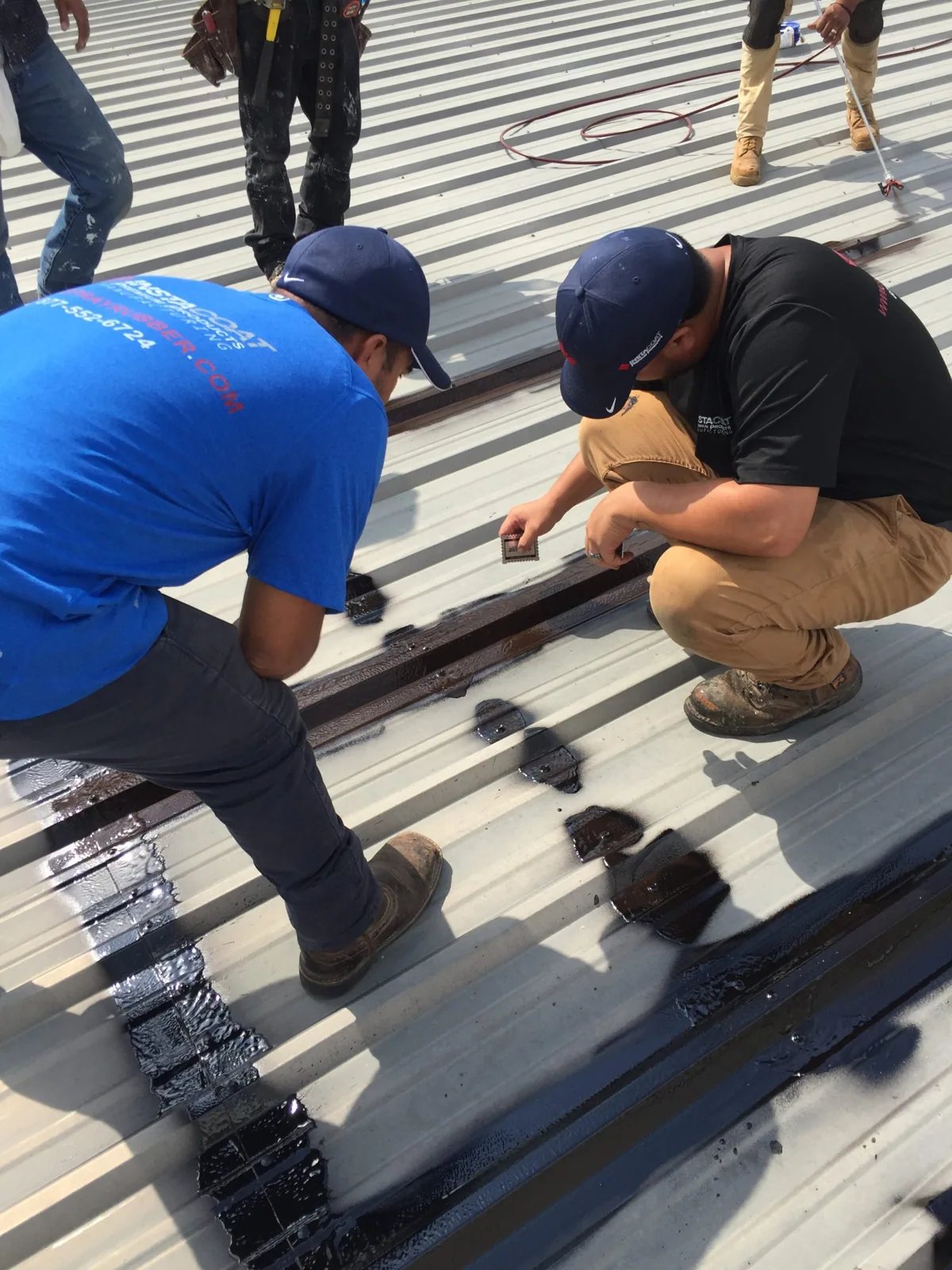
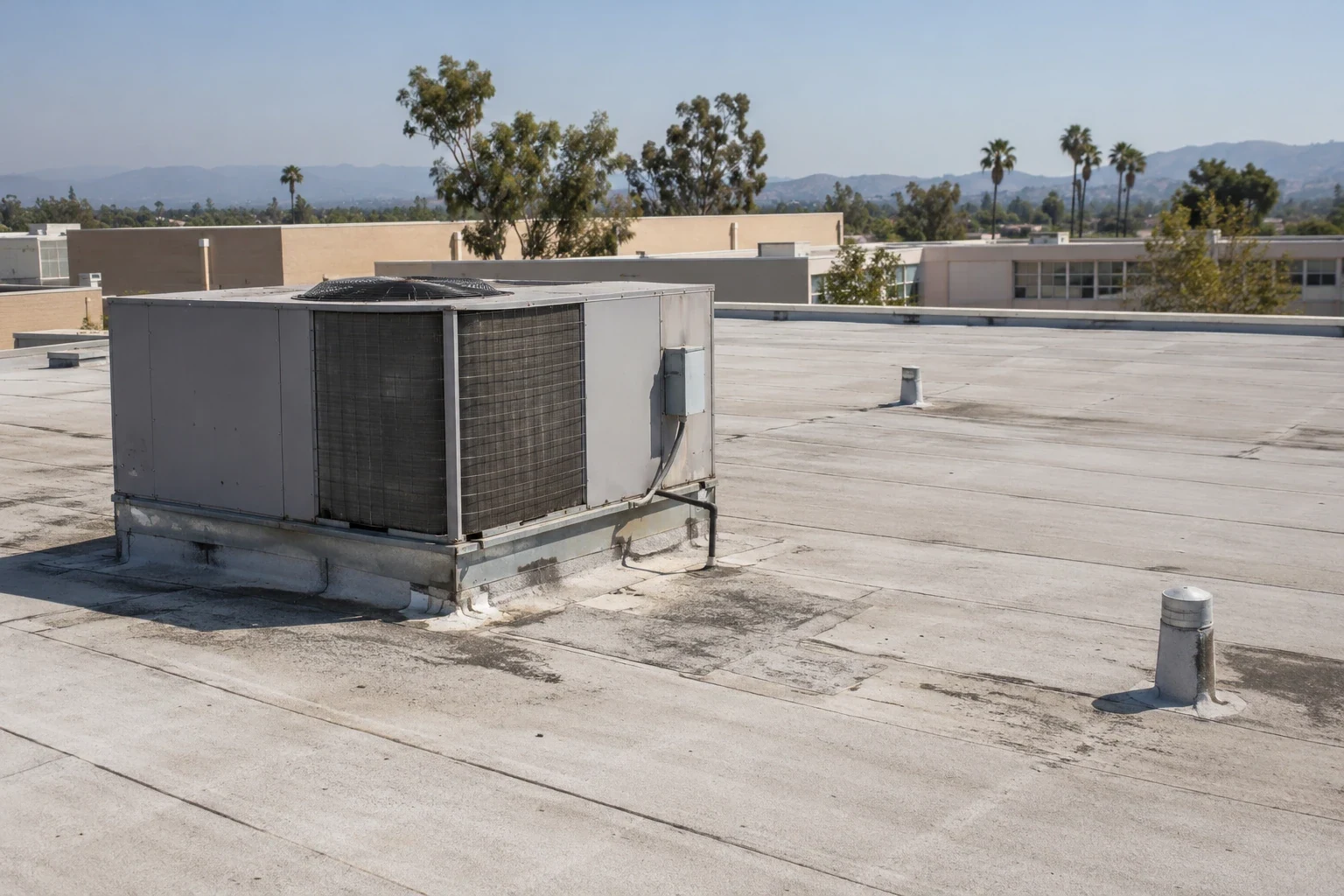
A lease file, seller disclosure, and prior repair invoice each describe part of a roof's story. We compare those records with visible seams, flashings, drains, edges, penetrations, and signs of patching during a site walk. If moisture is suspected beneath the membrane, targeted testing can clarify whether the condition is localized or extends beyond the visible area. The report states what was inspected, what could not be reached, and what remains unconfirmed. A due-diligence survey can help an investor define follow-up before a transaction or refinancing decision. July and August have no average rainfall in the Vallejo station record, while summer monthly highs sit near 85 to 87 degrees Fahrenheit. Set drain-maintenance timing with those baselines, then compare each property's roof zones and repair trends.
Price the Repair Boundary Before the Hold Plan
Localized damage may support a repair when the surrounding assembly remains sound and the water path is understood. Repeated leaks, broad moisture, failing attachment, or details that cannot be restored can move the asset toward renewal. We define each option by the roof zone, materials to remove or retain, edge and drain work, testing, and access assumptions. That gives the investment team a better comparison than a single allowance labeled roof repair. A condition inspection can identify the observations behind the scope, and a built-up roof review can clarify how that assembly's surfacing and interply conditions affect a decision. The recommendation stays tied to the roof, not to a portfolio-wide replacement year.
Map Tenant and Access Costs to Each Scenario
Roof work can affect tenant operations, loading, rooftop equipment, interior protection, and access to shared areas. We identify which buildings need notice, where a lift or material staging could interfere with use, and how each phase can be separated. A manager confirms lease requirements, access rules, and work windows before a schedule is approved. Downtown Vallejo planning addresses mobility and infrastructure, while Mare Island has office, retail, and industrial properties. For each asset, confirm the loading route, roof access, occupied areas, and work window with the property contact. We include assumed work hours and access routes in each option so the owner can compare operational impact with direct roof scope. If a tenant change or equipment project is pending, the sequencing note can show whether a repair should be completed before that work proceeds.
Build Capital Priorities From Evidence
Owners can sort findings into immediate water-entry work, planned maintenance, testing, and capital renewal. Each item should have an observed condition, a building and roof zone, a repair boundary, access assumptions, and a review date. We note lead time and weather windows that affect execution, while the investment team weighs cash-flow timing, tenant impact, and the remaining service-life question. A roof asset record can carry those fields across the portfolio without erasing differences in assembly or condition. The Curtola Employment Center includes worker-serving commercial uses. Tie the roof visit to the current property contact, tenant schedule, and approved access window. The roof schedule remains grounded in records and field observations.
Keep the Roof File Transaction-Ready
A dependable handoff includes current photographs, inspection notes, repairs completed, materials, moisture-test results, exclusions, and follow-up actions. We label the roof zones and show the extent of work so a buyer, asset manager, or property manager can understand what changed. If the survey did not reach a section, the record says so. This helps when a lender or investor reviews several properties with different leases and operating profiles. For a Downtown Vallejo, keep the inspection record tied to its own roof assembly, repair history, and capital window. We can update the assembly record after later service work, preserving a condition trend that supports future acquisition, disposition, and capital decisions. For transaction review, we can separate documents supplied by the seller from conditions observed during our inspection, then list each remaining test, access visit, or repair detail needed to close the gap. A buyer can see which assumptions are supported, which depend on a second visit, and which roof items should be carried into the first operating budget. That distinction is useful when several assets share a closing date but have different roof assemblies and tenant constraints. The report remains a roofing record rather than a substitute for legal, environmental, or financial diligence.
Revisit the Forecast When Conditions Change
A replacement forecast should be reviewed after a major leak, equipment change, tenant improvement, repair, or new moisture finding. We can revisit drains, penetrations, edges, and prior repairs, then revise the scope and timing from the updated evidence. A forecast is a planning tool, not a promise that a roof will remain unchanged until a target year. Seasonal drainage checks can catch debris or localized failures before water reaches occupied space. When an asset is sold or refinanced, the latest inspection and repair record gives the next decision-maker a clearer starting point. Investors retain the financial model; we provide a roof-level condition record that shows where the underlying scope and timing assumptions came from.
Commercial Roofing Questions
What should a roof due-diligence review include before a property purchase?
We review available plans, leases or access notes supplied by the owner, repair history, and visible roof conditions. The survey identifies assemblies, roof zones, drainage, penetrations, edge details, visible defects, inaccessible areas, and tests that may be needed. The resulting scope separates observed work from assumptions that should be resolved before a capital decision. We can also list the repair allowance, recommended maintenance, and renewal alternative as separate entries, each tied to the same inspection record. That helps the acquisition team compare the roof work consistently with other asset assumptions and identify which follow-up belongs before closing versus after ownership transfer.
How do investors compare roof repair with replacement in a portfolio?
Each property receives its own repair boundary and condition evidence. We compare recurrence, moisture extent, assembly condition, access, tenant impact, and scope inclusions, then separate immediate repairs from renewal planning. Use a portfolio worksheet to compare priorities, with roof-zone observations and photographs supporting each recommendation.
Can a roof report support a refinance or disposition review?
A clear report can document assembly, inspected zones, current repairs, photographs, test results, and unresolved areas for the next reviewer. Keep roof condition, repair obligations, and unresolved testing separate from the transaction's other diligence and future capital assumptions. We make the scope and assumptions visible so the owner can include them in the broader asset file.
How often should an investor update a roof capital forecast?
Update it after a leak, significant repair, equipment replacement, tenant improvement, or new inspection finding. We can revisit the condition trend and adjust priorities, testing, and timing. Routine review intervals depend on the assembly and observed condition, with active issues receiving attention before the next portfolio-wide planning cycle.
Review the Asset-Level Roof Assumptions
Arrange a roof review with available plans, repair history, tenant and access information, and capital timing so the investment file reflects current roof observations.
Request a Roof Assessment
Questions About Commercial Roofing for Real Estate Investors and REITs in Vallejo, CA
Common questions from building owners and property managers.
What should a roof due-diligence review include before a property purchase?
We review available plans, leases or access notes supplied by the owner, repair history, and visible roof conditions. The survey identifies assemblies, roof zones, drainage, penetrations, edge details, visible defects, inaccessible areas, and tests that may be needed. The resulting scope separates observed work from assumptions that should be resolved before a capital decision. We can also list the repair allowance, recommended maintenance, and renewal alternative as separate entries, each tied to the same inspection record. That helps the acquisition team compare the roof work consistently with other asset assumptions and identify which follow-up belongs before closing versus after ownership transfer.
How do investors compare roof repair with replacement in a portfolio?
Each property receives its own repair boundary and condition evidence. We compare recurrence, moisture extent, assembly condition, access, tenant impact, and scope inclusions, then separate immediate repairs from renewal planning. Use a portfolio worksheet to compare priorities, with roof-zone observations and photographs supporting each recommendation.
Can a roof report support a refinance or disposition review?
A clear report can document assembly, inspected zones, current repairs, photographs, test results, and unresolved areas for the next reviewer. Keep roof condition, repair obligations, and unresolved testing separate from the transaction's other diligence and future capital assumptions. We make the scope and assumptions visible so the owner can include them in the broader asset file.
How often should an investor update a roof capital forecast?
Update it after a leak, significant repair, equipment replacement, tenant improvement, or new inspection finding. We can revisit the condition trend and adjust priorities, testing, and timing. Routine review intervals depend on the assembly and observed condition, with active issues receiving attention before the next portfolio-wide planning cycle.