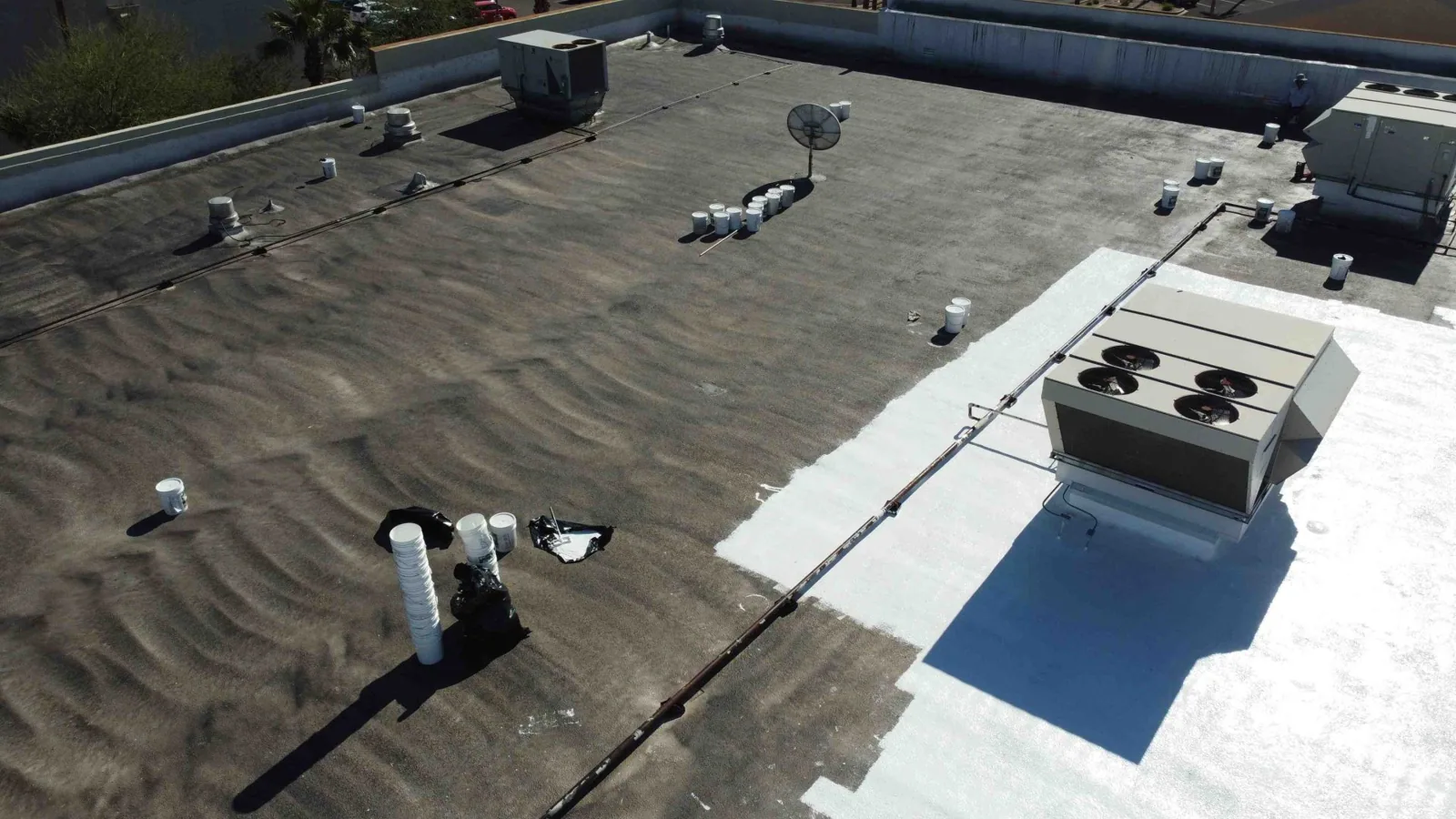
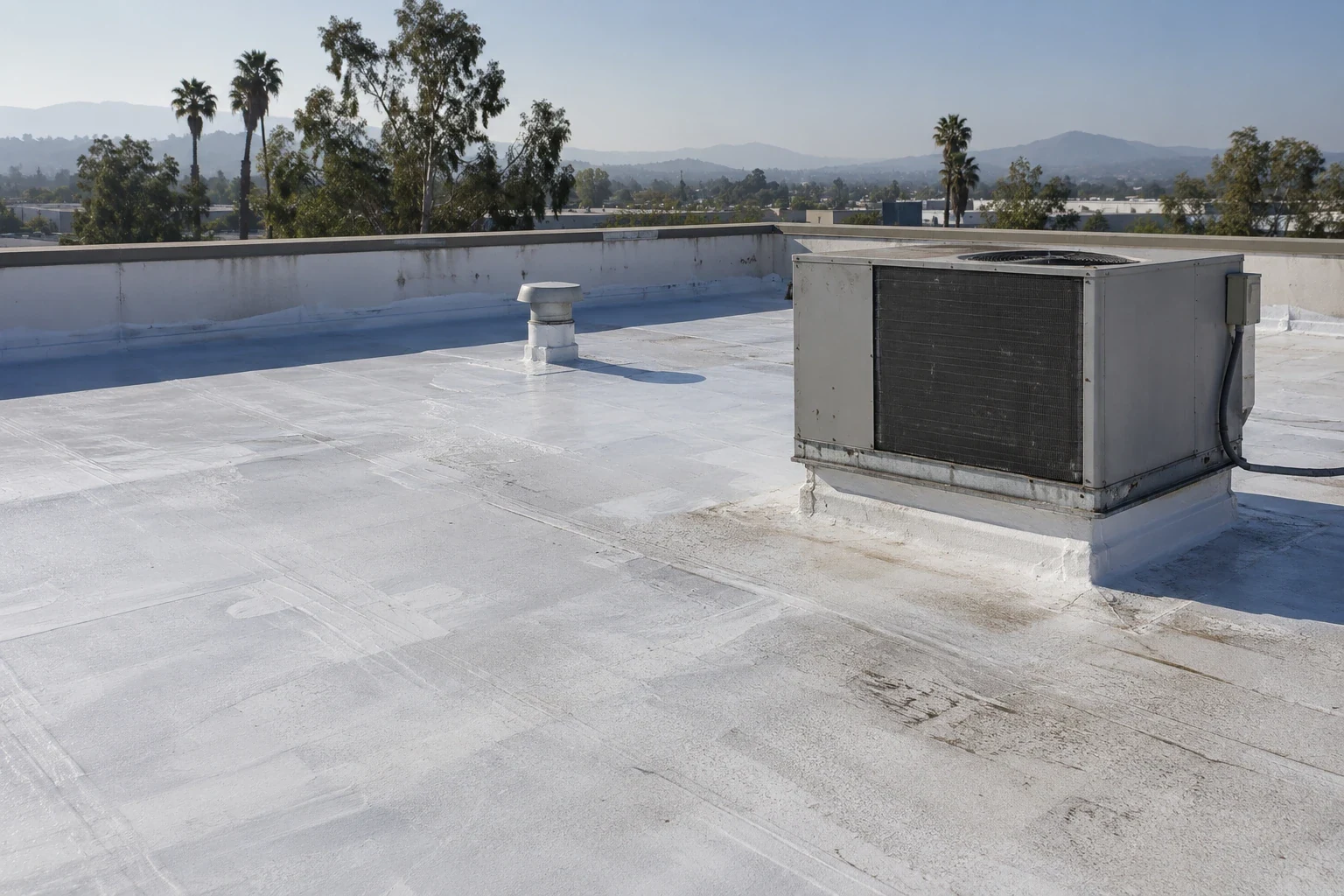
Commercial Roof Maintenance in Vallejo, CA
Plan commercial roof maintenance in Vallejo, CA with inspections, repair priorities, and records that support operating and capital decisions.
Why Commercial Roofing Vallejo?
Commercial Roof Maintenance in Vallejo, CA
A maintenance plan earns its place when it changes a roof decision before water reaches occupied space. A portfolio with office, retail, and industrial buildings needs more than one calendar reminder: roof assembly, drainage layout, access, and the cost of interrupting the tenant all affect the useful interval. In Vallejo, the commercial mix on Mare Island includes office, retail, and industrial space, and available spaces can have features such as overhead cranes or oversized roll-up doors. Those uses call for a roof inventory that records the actual building and access conditions instead of assigning every address the same checklist. A commercial roof inspection establishes the condition baseline. A maintenance visit then checks whether the last repair held, whether drains remain open, and whether a new defect changes the next budget cycle. That record gives an owner a reasoned choice among a defined repair, continued observation, and a larger renewal scope.
A Roof Inventory That Supports Decisions
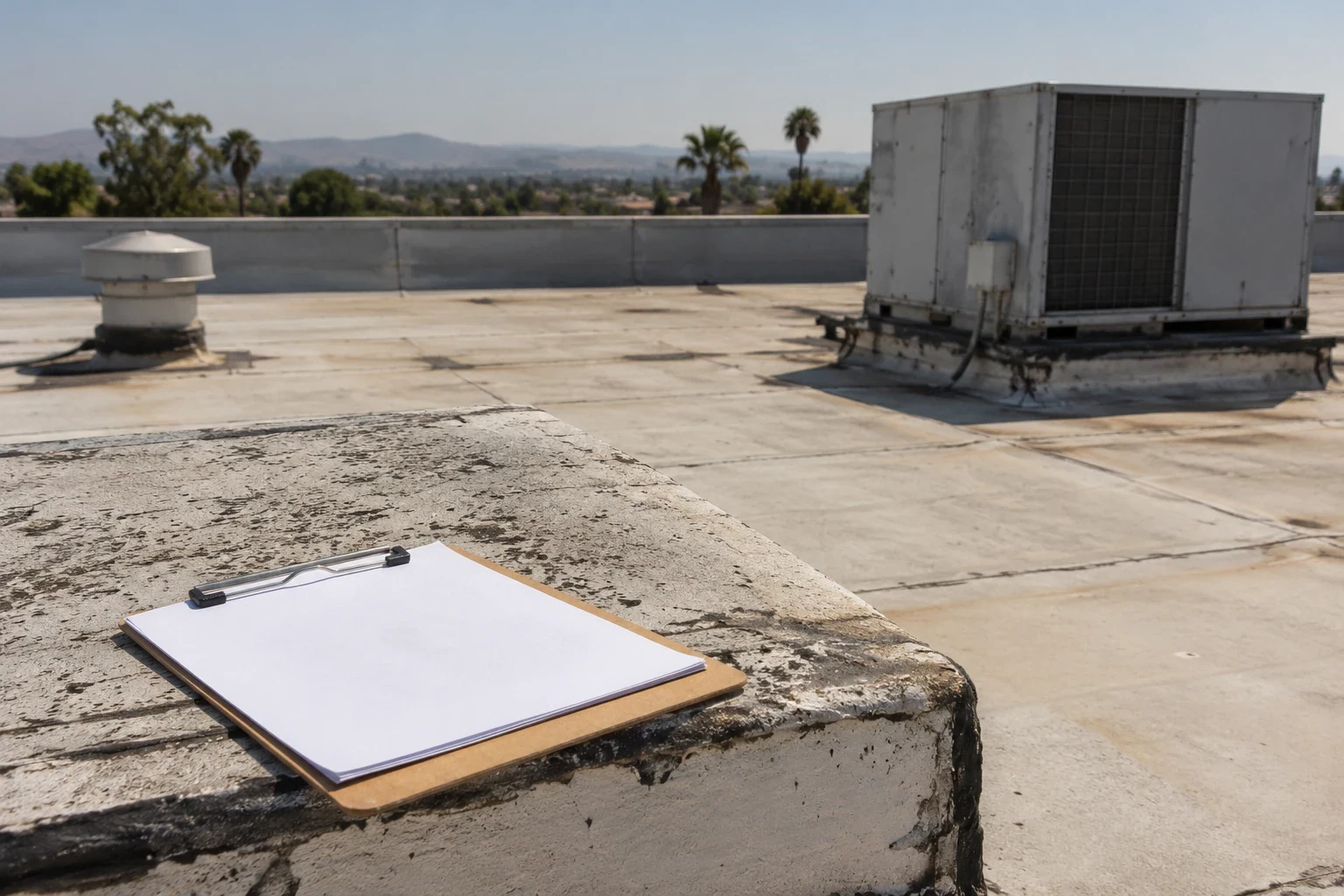
Begin with one record for each roof area, not just one line for each street address. Note the assembly when it can be identified, visible roof zones, drain and scupper locations, rooftop equipment, access limits, and the date of the observation. If drawings or closeout records describe a different assembly from the one visible at the roof edge, record the discrepancy for follow-up. On a multi-use property, the office entry and loading side may have different tenant impact and work windows even when they share a roof. Connect the roof condition report to repair history and a future roof asset record. A dated photograph tied to a roof zone is more useful than a note that simply says the roof was checked.
Drainage After the Dry Months
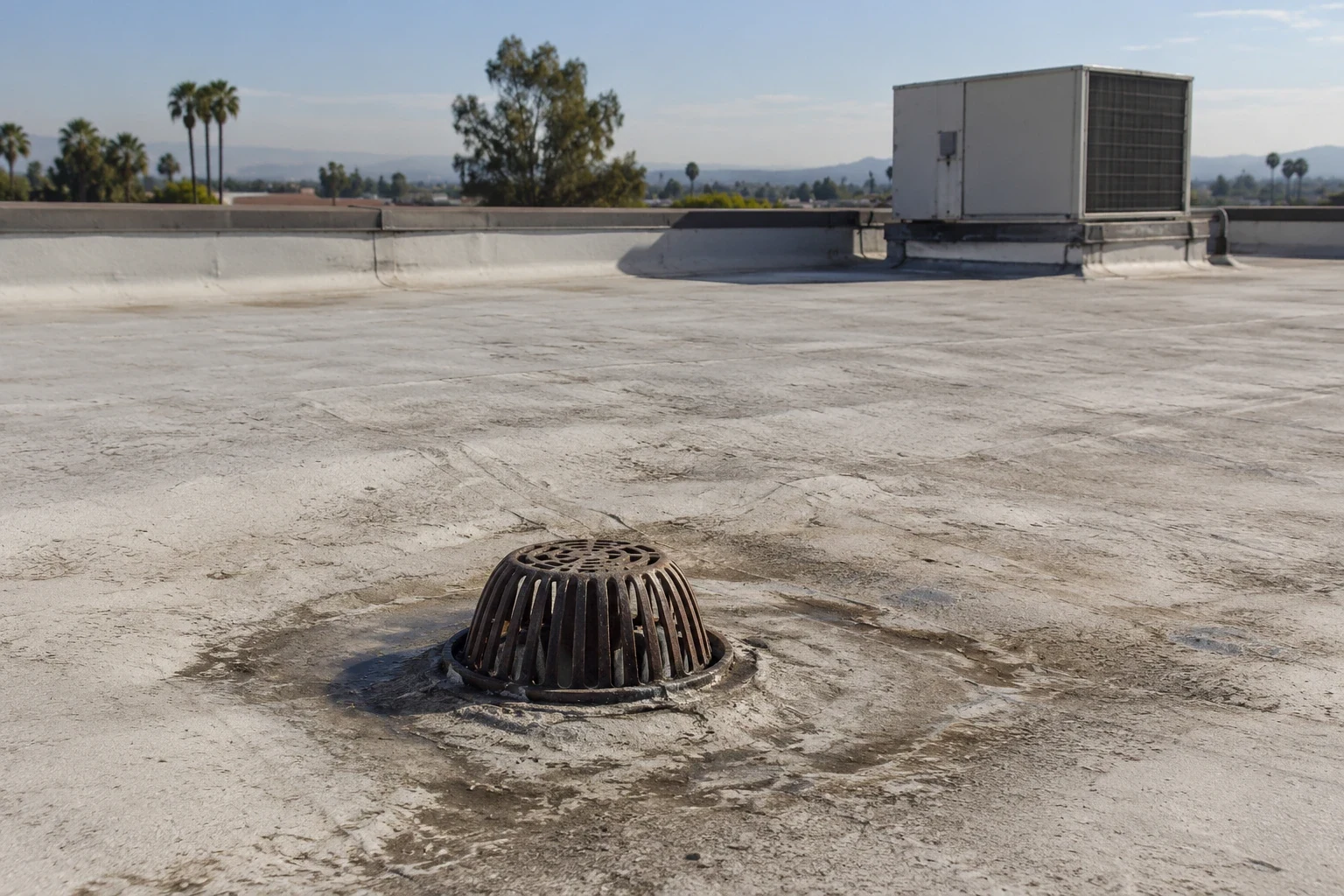
Use each maintenance visit to record drain condition, debris, and the date of observed ponding; that site record is more useful than a regional seasonal average. Vallejo station averages show no rainfall in July and August. Before the first wet-weather work window, check whether water leaves each roof as intended. Compare drain bowls, strainers, scuppers, gutters, and low points with the prior record. Look for debris, displaced strainers, loose metal, open seams, cracking at a drain flange, or ponding that persists after surrounding areas clear. The result separates housekeeping from a detail needing repair or further investigation. A recurring low point may call for a drainage and scupper review to document the condition and correction options.
Separate Service Work from Renewal
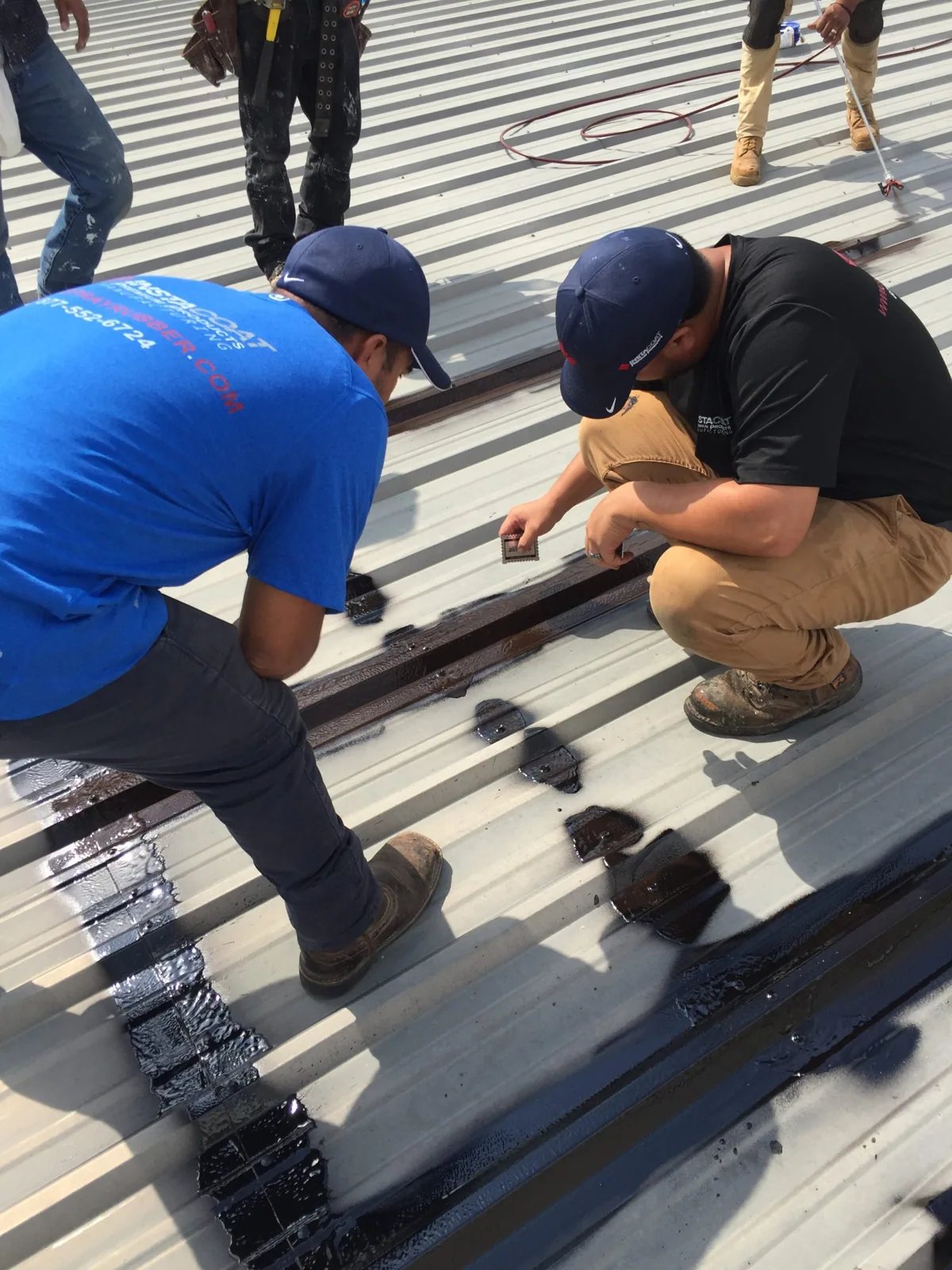
Maintenance does not replace a repair scope. A visit may find a loose edge, separated flashing, puncture, or seam that needs focused work. Mark each item by roof zone and note whether it is isolated or appears in several areas. Compare that repair boundary with the condition trend. A few sound, repairable details may support continued service. Repeated failures, widespread wet insulation, or a brittle surface can point toward a broader evaluation. State what was observed, what could not be accessed, and what question needs a closer survey. Owners comparing a targeted fix with a larger roof replacement scope can use the same roof-zone map and condition record. If the assembly may be suitable, a coating restoration review is a separate feasibility question involving substrate condition, attachment, moisture, and details.
Work Windows for Active Buildings
A sound sequence accounts for people and operations below the roof. An office property may need notice before ladder access or work over an entrance; an industrial building may need a route clear of loading and rooftop equipment. Some Mare Island properties have overhead cranes and oversized roll-up doors. Confirm how those features affect material movement, roof access, and the daily work window at the building. At a retail address along Sonoma Boulevard, pedestrian routes and storefront activity may set different staging constraints. Before a visit, confirm access, escort or key arrangements, restricted hours, equipment shutdown needs, and who can approve a small repair. If an urgent leak is found, around-the-clock response can address the immediate condition while the owner decides whether it belongs in routine maintenance or a capital scope. A defined repair visit should record the work area and follow-up items.
A Useful Closeout Record
Close each visit with an account an asset manager can compare against the prior season. Include the date, roof zones reached, observations, photographs, completed work, and areas that remained inaccessible. Separate confirmed conditions from items needing a test cut, infrared survey, or another diagnostic step. For a recommended repair, state its location and the practical consequence of waiting, such as vulnerable flashing at an occupied entrance or a drain to clear before wet weather. Tie replacement recommendations to visible evidence and explain what could change the recommendation. This record supports a portfolio condition trend without implying that two roofs share an assembly. Owners with buildings in the Downtown Vallejo area and Curtola Employment Center can compare records while keeping each building's observations distinct. Arrange a review with available plans, repair history, access needs, and budget timing to set the next interval.
Commercial Roofing Questions
What should the maintenance record show when a roof could not be fully accessed?
The closeout should name the roof zones reached, the reason other areas were unavailable, and any observation that remains incomplete. Photographs can show the accessible areas, but they should not imply that a covered or restricted zone was inspected. We can identify a return visit, escort, or alternate survey method for the missing area and keep that task separate from repairs already completed. That distinction lets the asset record support a decision without treating an access gap as a clean bill of condition.
How do you decide whether a drain issue belongs in routine maintenance or a repair scope?
Start with the location and condition of the drain, then compare it with the prior visit. Debris that can be safely removed is different from a cracked flange, loose flashing, or water that remains after adjacent areas drain. We document what is visible and identify a repair boundary when the detail needs work. If the roof geometry or concealed assembly may be contributing, a closer assessment can follow before anyone proposes a larger correction.
Can a recurring inspection schedule determine when the roof needs replacement?
A schedule makes change visible over time; compare it with assembly condition, moisture findings, and repair frequency before setting a replacement window. The assembly, extent of deterioration, moisture evidence, repair history, and operating constraints have to be considered together. We can compare current photographs and findings with prior records, then separate immediate repairs from conditions that warrant a broader evaluation. That gives the budget owner a condition-based discussion instead of a date copied forward from an older capital plan.
What information helps coordinate maintenance at an occupied property?
Access instructions, restricted hours, tenant contacts, rooftop equipment rules, and any planned shutdowns help set a workable visit. We also ask for roof plans, prior repair records, and the person authorized to approve added work if a defect is found. Those details affect where the crew stages and which areas can be reached. The work plan can then account for storefront, office, or loading activity without assuming every building operates on the same schedule.
When should a maintenance finding trigger a separate moisture survey?
A survey is useful when the visible condition leaves a material question about concealed moisture or the extent of a suspected problem. A stain, soft area, open seam, or recurring repair location can define the next survey area; map adjacent roof zones before setting the investigation boundary. We can mark the area, describe the limits of the visual review, and discuss whether infrared imaging or another diagnostic method fits the assembly and conditions. The owner then has a defined next step before expanding the repair scope.
Set the Next Maintenance Decision
Arrange a Vallejo roof review with available plans, repair history, access needs, and budget timing. We will connect the site walk to a clear condition record and identify the repair or investigation that belongs next.
Request a Roof Assessment
Questions About Commercial Roof Maintenance in Vallejo, CA
Common questions from building owners and property managers.
What should the maintenance record show when a roof could not be fully accessed?
The closeout should name the roof zones reached, the reason other areas were unavailable, and any observation that remains incomplete. Photographs can show the accessible areas, but they should not imply that a covered or restricted zone was inspected. We can identify a return visit, escort, or alternate survey method for the missing area and keep that task separate from repairs already completed. That distinction lets the asset record support a decision without treating an access gap as a clean bill of condition.
How do you decide whether a drain issue belongs in routine maintenance or a repair scope?
Start with the location and condition of the drain, then compare it with the prior visit. Debris that can be safely removed is different from a cracked flange, loose flashing, or water that remains after adjacent areas drain. We document what is visible and identify a repair boundary when the detail needs work. If the roof geometry or concealed assembly may be contributing, a closer assessment can follow before anyone proposes a larger correction.
Can a recurring inspection schedule determine when the roof needs replacement?
A schedule makes change visible over time; compare it with assembly condition, moisture findings, and repair frequency before setting a replacement window. The assembly, extent of deterioration, moisture evidence, repair history, and operating constraints have to be considered together. We can compare current photographs and findings with prior records, then separate immediate repairs from conditions that warrant a broader evaluation. That gives the budget owner a condition-based discussion instead of a date copied forward from an older capital plan.
What information helps coordinate maintenance at an occupied property?
Access instructions, restricted hours, tenant contacts, rooftop equipment rules, and any planned shutdowns help set a workable visit. We also ask for roof plans, prior repair records, and the person authorized to approve added work if a defect is found. Those details affect where the crew stages and which areas can be reached. The work plan can then account for storefront, office, or loading activity without assuming every building operates on the same schedule.
When should a maintenance finding trigger a separate moisture survey?
A survey is useful when the visible condition leaves a material question about concealed moisture or the extent of a suspected problem. A stain, soft area, open seam, or recurring repair location can define the next survey area; map adjacent roof zones before setting the investigation boundary. We can mark the area, describe the limits of the visual review, and discuss whether infrared imaging or another diagnostic method fits the assembly and conditions. The owner then has a defined next step before expanding the repair scope.