Commercial Ponding Water Roof Repair in Vallejo, CA
Roof drainage reviews for Vallejo commercial buildings, with low points, drains, slope conditions, and membrane impacts documented before repair.
Why Commercial Roofing Vallejo?
Commercial Ponding Water Roof Repair in Vallejo, CA
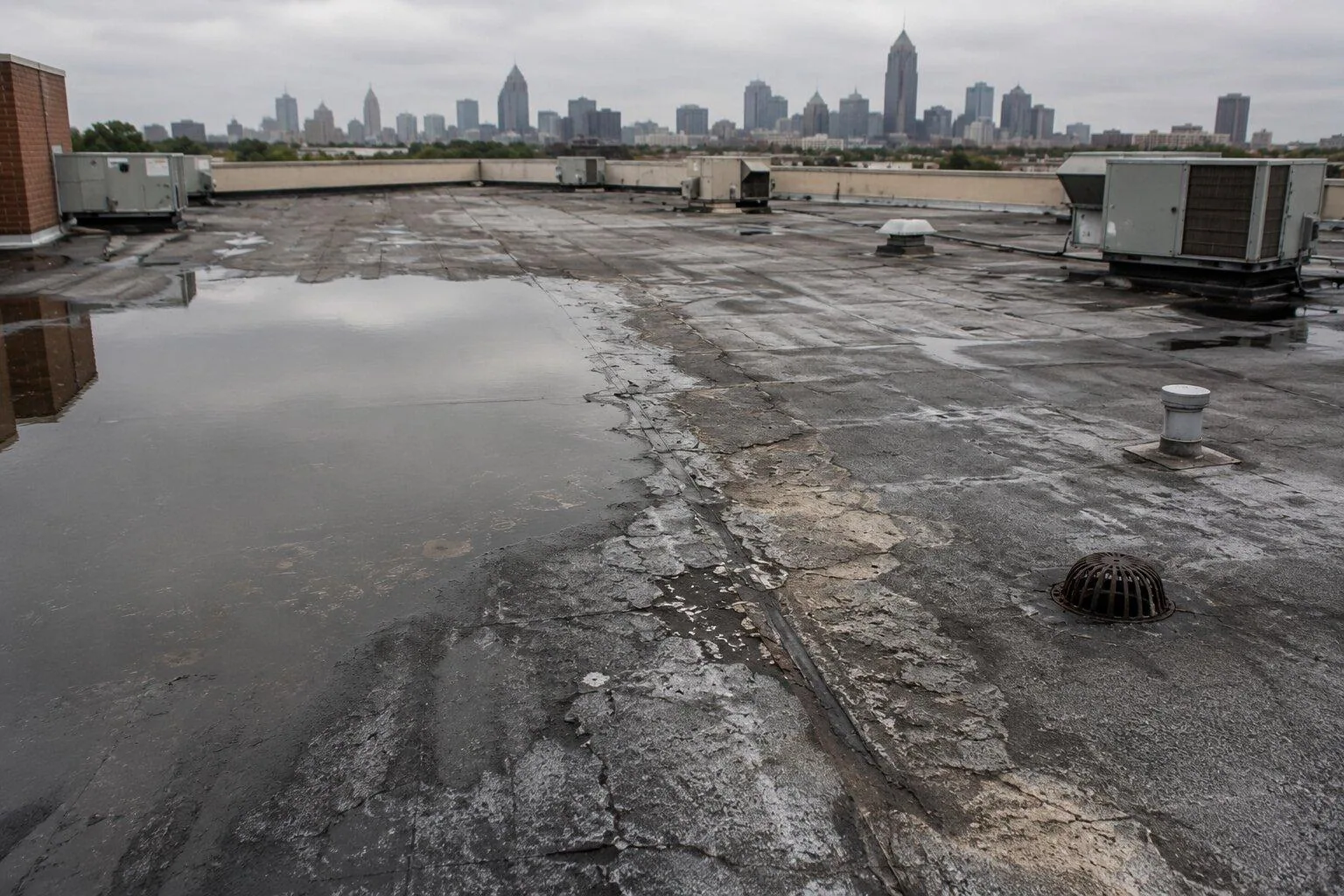
Standing water after a storm may point to a blocked outlet, a low area, a changed surface, or a roof that no longer drains as intended. We record where the water sits, how long it remains when that information is available, and which drains, scuppers, or transitions are nearby. In Vallejo, a property along Sonoma Boulevard or in the broader Downtown area sits within a city whose General Plan names several commercial corridors and whose downtown plan reviews infrastructure and mobility. That context does not explain a roof's slope. The roof walk does. A drain and scupper review can check the outlet path, while a flashing assessment separates a detail leak from a drainage issue.
Map the Low Point to Its Outlet
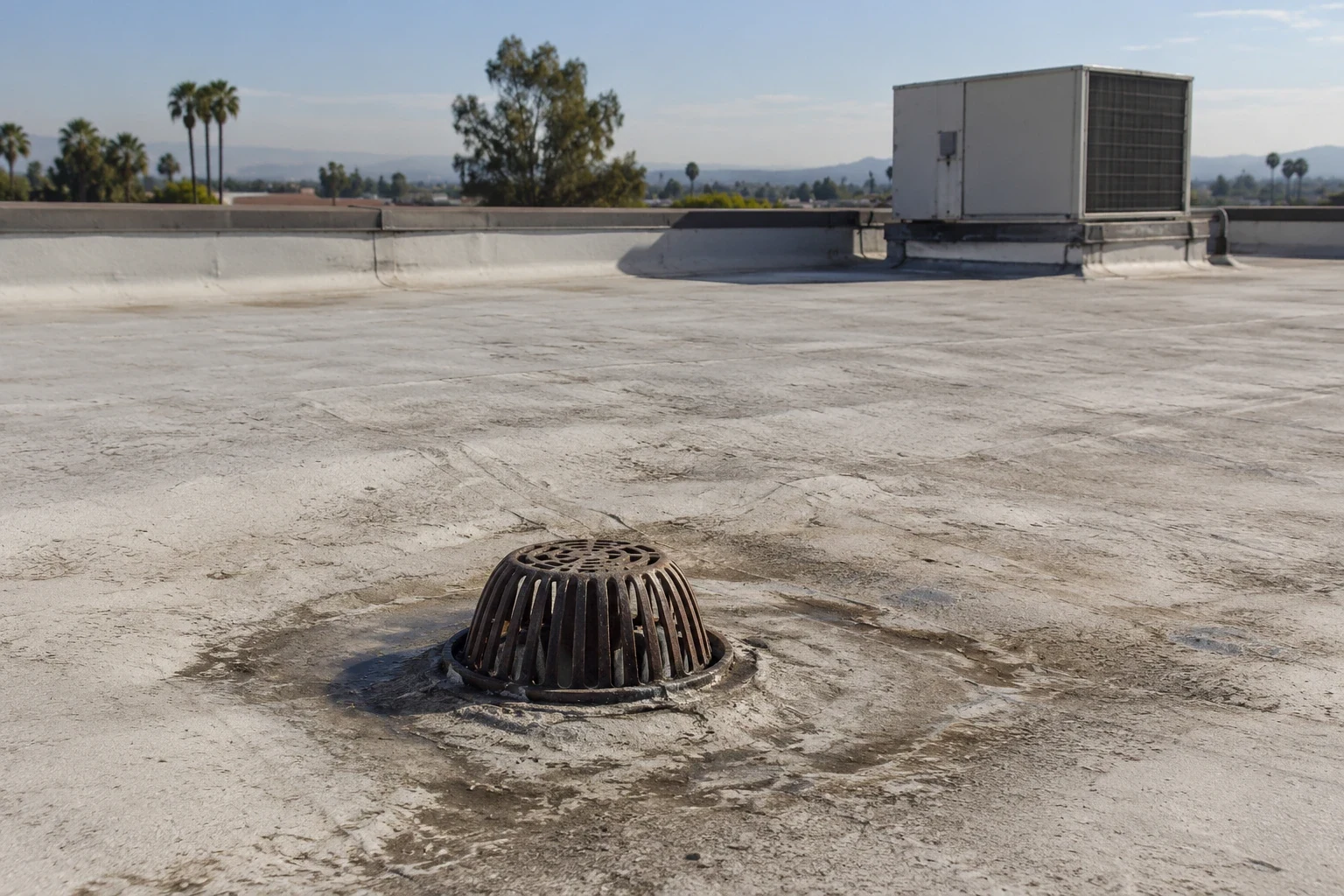
We begin with roof geometry, drain bowls, scuppers, overflow routes, crickets, and changes where additions meet older sections. The walk records debris, loose strainers, damaged clamping rings, sediment, displaced pavers, and any membrane distortion that affects runoff. Photographs show the location and depth reference when practical, so a service team can return to the same area. If a drain is clear but water remains, we note the extent and determine whether a level survey or further testing would clarify the slope. A drain-cleaning task and a correction to the drainage plane are different scopes.
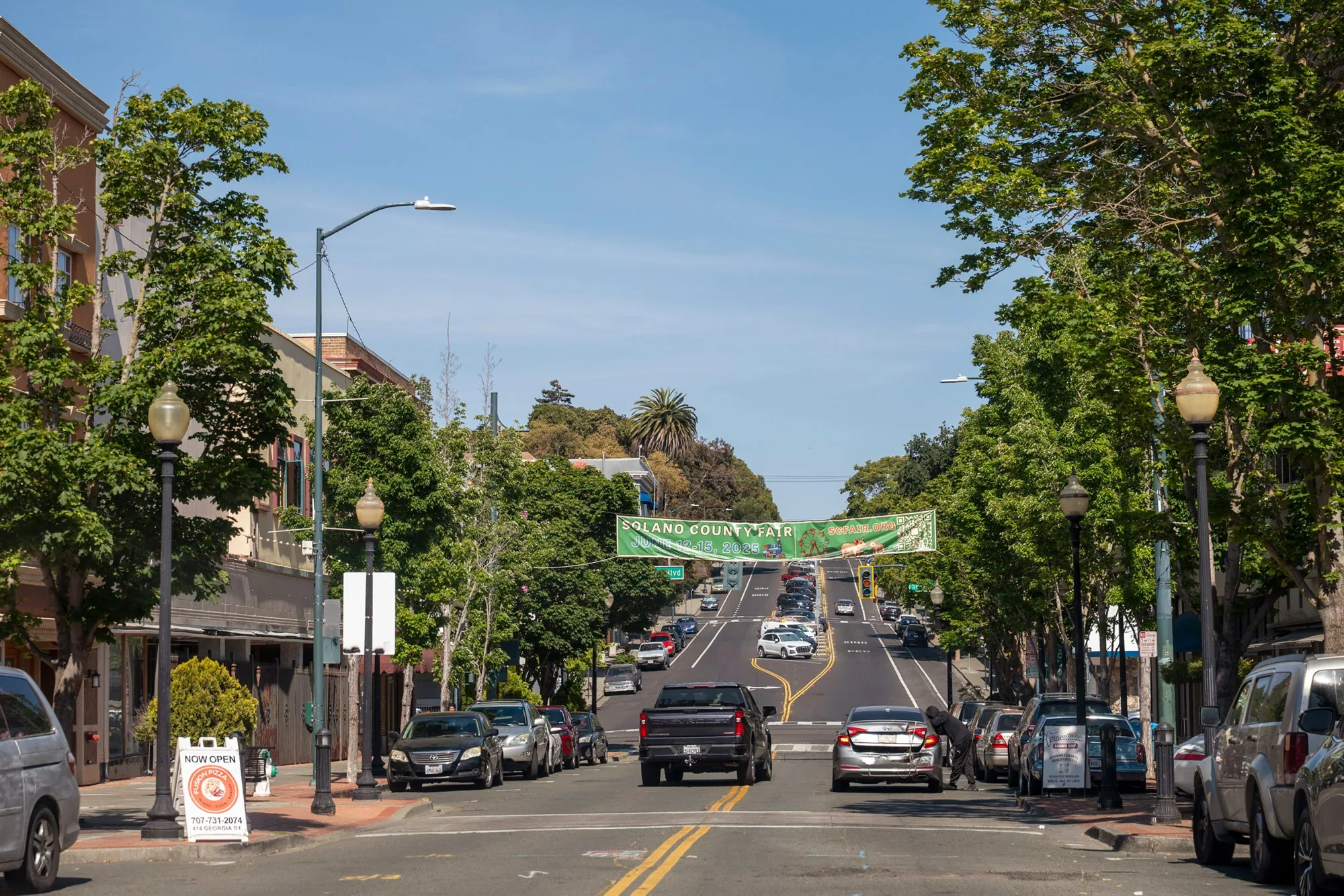
The General Plan identifies Sonoma Boulevard, Solano Avenue, Tennessee Street, and other routes as commercial or neighborhood corridors. A building near Sonoma Boulevard still needs its own roof map, drain count, and overflow review. We trace the roof's path from each low point to an outlet and note any scupper, parapet, or equipment curb that interrupts runoff. A commercial inspection can establish the condition record before a drainage repair is specified.
Check What the Water Is Doing to the Assembly
Water that remains on a roof can add demand to the structure and expose weak details to repeated wetting. We look for blisters, open seams, soft insulation, displaced ballast or pavers, staining at drains, and changes in the membrane surface. The observation is not a structural calculation. If the amount or location of retained water raises a load question, ownership should involve the appropriate design professional. We keep that question distinct from the roofing repair scope. Where moisture may have reached insulation, selected imaging or test cuts can identify whether the affected area extends beyond the visible pond.
Mare Island includes commercial spaces in office, retail, and industrial uses, but the City does not describe drainage at individual roofs. That place context reminds a portfolio manager to account for varied building operations, not to assume a particular slope or deck. We check equipment, penetrations, and access around the observed low areas at each property. A moisture survey may help map wet insulation, and membrane repair can address a puncture if one is found near the drainage path.
Separate Cleaning From Slope Correction
When debris or a blocked strainer is the cause, clearing the outlet and correcting the drain detail may restore flow. If water remains because the surface is depressed or the drain is set too high, a localized correction may require tapered insulation, a cricket, or a drain adjustment. The selected method depends on membrane condition, structural limits, attachment, and transitions. We do not price slope work from a photograph alone. The inspection identifies the area, the outlet, the adjacent details, and whether an elevation survey or test opening is needed before a final repair limit is set.
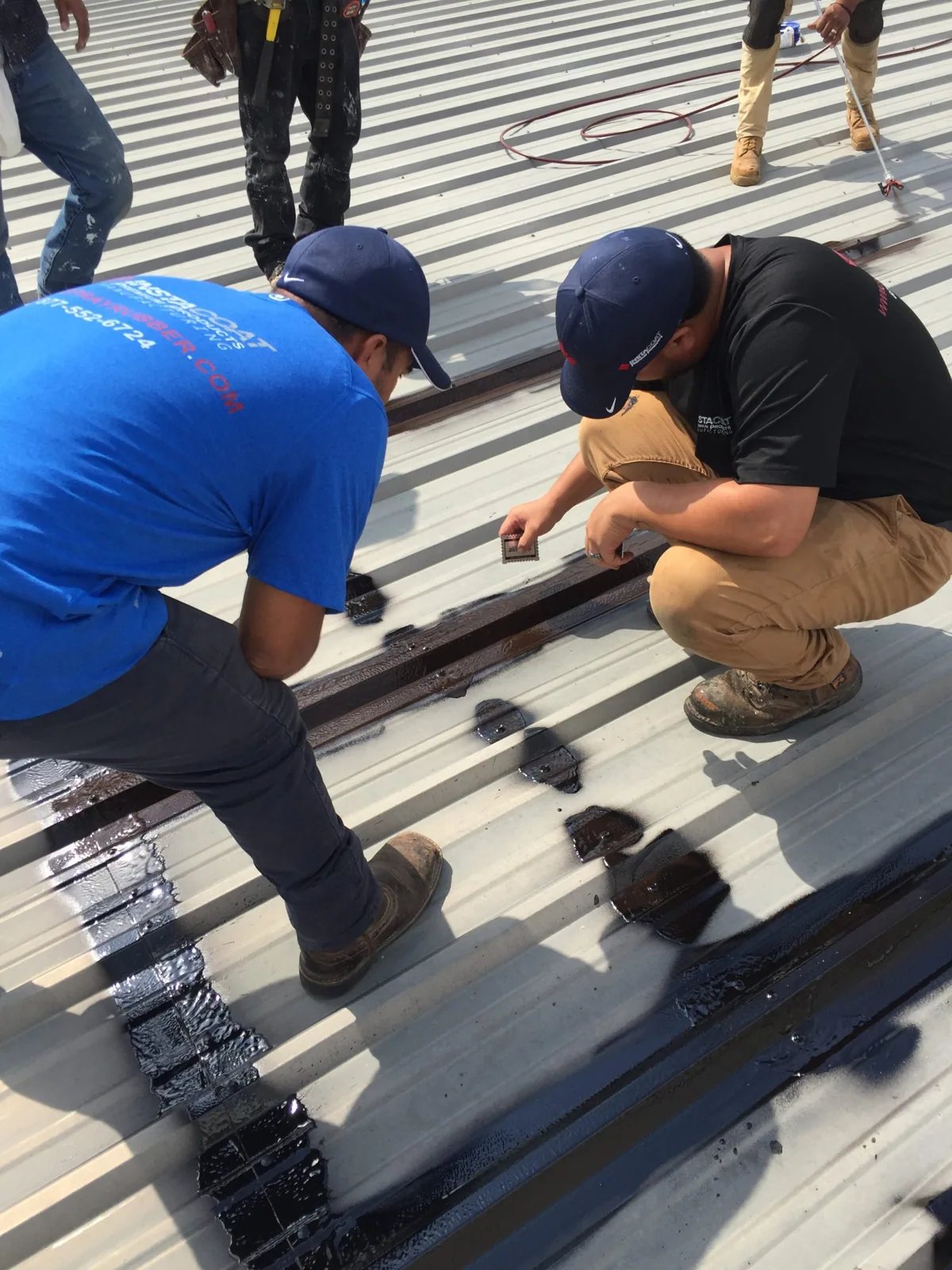
A repair may be appropriate where the assembly around the low point remains serviceable. Broader ponding across multiple roof zones may call for a drainage plan as part of recovery or replacement analysis. We describe the membrane tie-in, drain or scupper work, insulation changes, temporary protection, and test criteria. For a roof with open laps, seam repair addresses another failure mode; a roof recovery review checks whether an additional layer is suitable for the existing assembly.
Use Vallejo's Rain Pattern as a Scheduling Cue
The published Vallejo station chart lists 0 inches of average rain for both July and August. Use that seasonal reference to schedule routine outlet checks; it cannot answer whether a particular roof drains properly. We verify the field condition, inspect overflow routes, and note where the next heavy rain would reveal a performance question. If an active leak is present, protection and repair should be based on the current roof condition rather than postponed for a seasonal window.
Vallejo's downtown plan update includes infrastructure and mobility in its current review scope. For a building in Downtown Vallejo, access and delivery assumptions still need to be checked with the property team. We record lift placement, roof access, and operating restrictions before bringing materials to a drain or low point. A site walk can be planned with the manager so that repair crews do not obstruct public entrances or loading routes.
Leave a Drainage Baseline for the Next Visit
After the work, we record the outlet or low point addressed, photos of the completed detail, materials installed, and any slope correction included. If a roof area was inaccessible or the owner deferred testing, that is listed with the remaining question. The file can include a follow-up observation after rainfall or a maintenance visit so the team checks whether runoff improved. A condition report keeps that record attached to the assembly and gives facilities a point of comparison for future service.
Arrange a review with roof plans, past ponding photographs, drain maintenance, and access requirements. We will map the water path, identify what can be confirmed, and separate cleaning, detail repair, and slope work. If moisture testing or structural review is needed, the scope will show that dependency before ownership authorizes a larger correction. The result is a drainage decision tied to the actual roof zone and outlet, not a blanket recommendation for every building in the portfolio.
Commercial Roofing Questions
How do you determine whether a roof drain is causing ponding?
We inspect the bowl, strainer, clamping ring, piping access where available, overflow path, and the surface leading to the outlet. A clear drain can still sit above a low area or be poorly connected to the drainage plane. The report identifies what was observed and any test or elevation check needed.
Does standing water mean the roof needs replacement?
Not by itself. We check how broad the ponding is, how long it remains, whether the membrane or insulation shows damage, and whether the outlet can be corrected. A focused repair may fit one low point, while repeated retention across zones can require wider design and renewal analysis.
Can a roofing crew add slope to a low area?
Tapered insulation or a cricket can change runoff where the assembly and structure allow it. We first map the low point, drains, transitions, and existing layers, then identify attachment and height constraints. A qualified design review may be needed when water retention raises a structural load concern.
What records should facilities keep after drain work?
Keep photographs of the outlet and repaired zone, material and detail notes, any elevation or test results, access limits, and the date of follow-up. We can record an observation after rainfall or a maintenance visit so staff can compare flow at the same locations.
When is a moisture survey useful for ponding?
Use targeted imaging when blisters, soft areas, leak history, or other signs suggest water has reached the insulation. The survey can map candidate zones for selective openings. We explain how the result would alter the repair boundary before adding a broader scope.
Trace the Water to Its Outlet
Arrange a roof walk with plans, ponding photographs, drain records, and access details so low points, outlet conditions, and repair limits can be reviewed together.
Request a Roof Assessment
Questions About Commercial Ponding Water Roof Repair in Vallejo, CA
Common questions from building owners and property managers.
How do you determine whether a roof drain is causing ponding?
We inspect the bowl, strainer, clamping ring, piping access where available, overflow path, and the surface leading to the outlet. A clear drain can still sit above a low area or be poorly connected to the drainage plane. The report identifies what was observed and any test or elevation check needed.
Does standing water mean the roof needs replacement?
Not by itself. We check how broad the ponding is, how long it remains, whether the membrane or insulation shows damage, and whether the outlet can be corrected. A focused repair may fit one low point, while repeated retention across zones can require wider design and renewal analysis.
Can a roofing crew add slope to a low area?
Tapered insulation or a cricket can change runoff where the assembly and structure allow it. We first map the low point, drains, transitions, and existing layers, then identify attachment and height constraints. A qualified design review may be needed when water retention raises a structural load concern.
What records should facilities keep after drain work?
Keep photographs of the outlet and repaired zone, material and detail notes, any elevation or test results, access limits, and the date of follow-up. We can record an observation after rainfall or a maintenance visit so staff can compare flow at the same locations.
When is a moisture survey useful for ponding?
Use targeted imaging when blisters, soft areas, leak history, or other signs suggest water has reached the insulation. The survey can map candidate zones for selective openings. We explain how the result would alter the repair boundary before adding a broader scope.