Commercial Roofing for Emeryville Properties
Emeryville roof reviews document assembly, access, drainage, repair history, and capital decisions for local commercial properties and their managers.

Why Commercial Roofing Vallejo?
Commercial Roofing for Emeryville Properties
Emeryville supports business growth, site selection, development partnerships, and commercial-space searches across the city. Emeryville's development priorities include transportation infrastructure, marketing, community advancement, and business networks. Confirm roof access and project approval with the owner. Emeryville's Community Development Department handles planning, building, economic development, housing, and public-arts programs. Those functions frame municipal coordination; the roof record and responsible project reviewers determine the building-specific work path.
A commercial property search and a roof asset review answer different questions. A prospective tenant may need a timely condition record before a lease, while an existing owner may be planning maintenance across several buildings. Confirm the party who can authorize roof access, disclose repair history, and approve work. Keep any site-selection discussion separate from observed roof conditions, and keep municipal contacts, property ownership, and roofing scope as separate records. A multi-site owner can use manufacturer asset coordination to standardize records while preserving building-level findings.
Connect the Review to the Property Stage
Emeryville's citywide commercial-space context can include offices, retail, production, and service uses, but the owner must confirm the exact property and current occupancy. Ask the manager about delivery patterns, rooftop mechanical dependencies, customer paths, and the locations of sensitive equipment. For a tenant turnover, document what was present at inspection and distinguish inherited conditions from new damage. The lease timeline may influence a decision window, but it should not replace a safe repair plan or an accurate roof inventory. For a confirmed production property, use an equipment-aware manufacturing roof review when the building's production use affects access.
Because planning, building, housing, and economic-development functions sit within the City's Community Development responsibilities, a property manager may need to confirm which approvals apply to a proposed scope. A roofing scope records proposed roof work; the appropriate City office confirms applicable permit review. Identify the project address and describe roof work precisely when asking the appropriate City office about review requirements. Keep the response with the project file, noting its date and scope.
Build a Zone-Level Asset Map
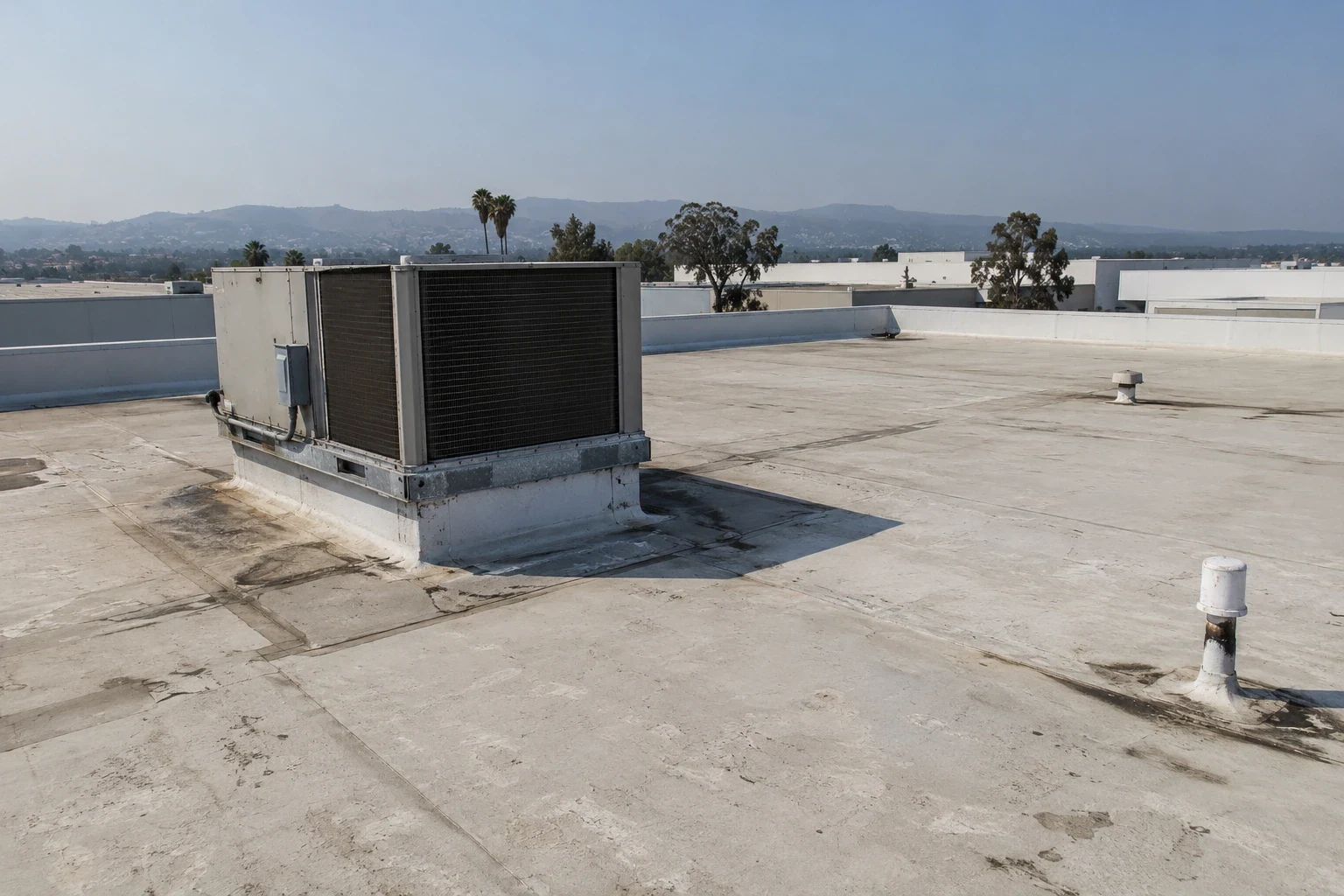
Build a zone map that links roof conditions to the floor plan, rooftop equipment, drainage, and prior repair locations. Record membrane or panel type only where inspection or documents support the identification; flag likely overlays and concealed assemblies. Note penetration count, curbs, drains, edges, and areas blocked by equipment. In a multi-tenant commercial building, map symptoms by suite and date as well as roof zone, since water can travel laterally before appearing inside.
Different roof areas may have been installed or repaired in separate phases. Compare closeout packages and invoices with visible transitions, then use test openings only where the owner authorizes them and the results will change a decision. Identify the limits of each diagnostic method. A roof condition survey should give the owner an observation log, not a conclusion unsupported by testing.
Choose Diagnostics by Decision
Before a field visit, confirm building contact, security check-in, access credential, escort, safety orientation, and fall-protection controls. Map where the crew could load materials without blocking adjacent operations, and verify that staging permission comes from the property representative. A nearby commercial-space search listing or public parcel map does not authorize entry. If a roof zone is reached only through a tenant-controlled room, arrange access in advance and document any area that remains unavailable.
If the issue concerns suspected wet insulation, plan diagnostics around the next action. Define whether a test cut, capacitance reading, or infrared pass will support repair quantities, replacement design, or warranty review. Confirm restoration material and owner approval before opening a membrane. The moisture mapping process should state limits and confirmation steps; a thermal anomaly needs field inspection before a repair boundary is set. Keep raw files and marked-up images with the roof-zone plan.
Plan Around Active Operations
A property with active production, customer service, or shared parking needs a schedule matched to actual site operations. The manager should identify deliveries, loading doors, access control, noise windows, and equipment that must remain online. Set barriers where people could cross beneath roof work, and establish a daily route for materials and debris.
Construction records should show what happened to each open roof zone at every shift boundary. Note whether the membrane was temporarily sealed, drainage remained clear, and the area was inspected before weather exposure. When interior occupants report water, capture room, time, and operating conditions, then compare the report with work-zone photos before assigning cause. This is especially useful when equipment condensate, plumbing, or facade entry may resemble a roof leak.
Set Limits for Each Renewal Option
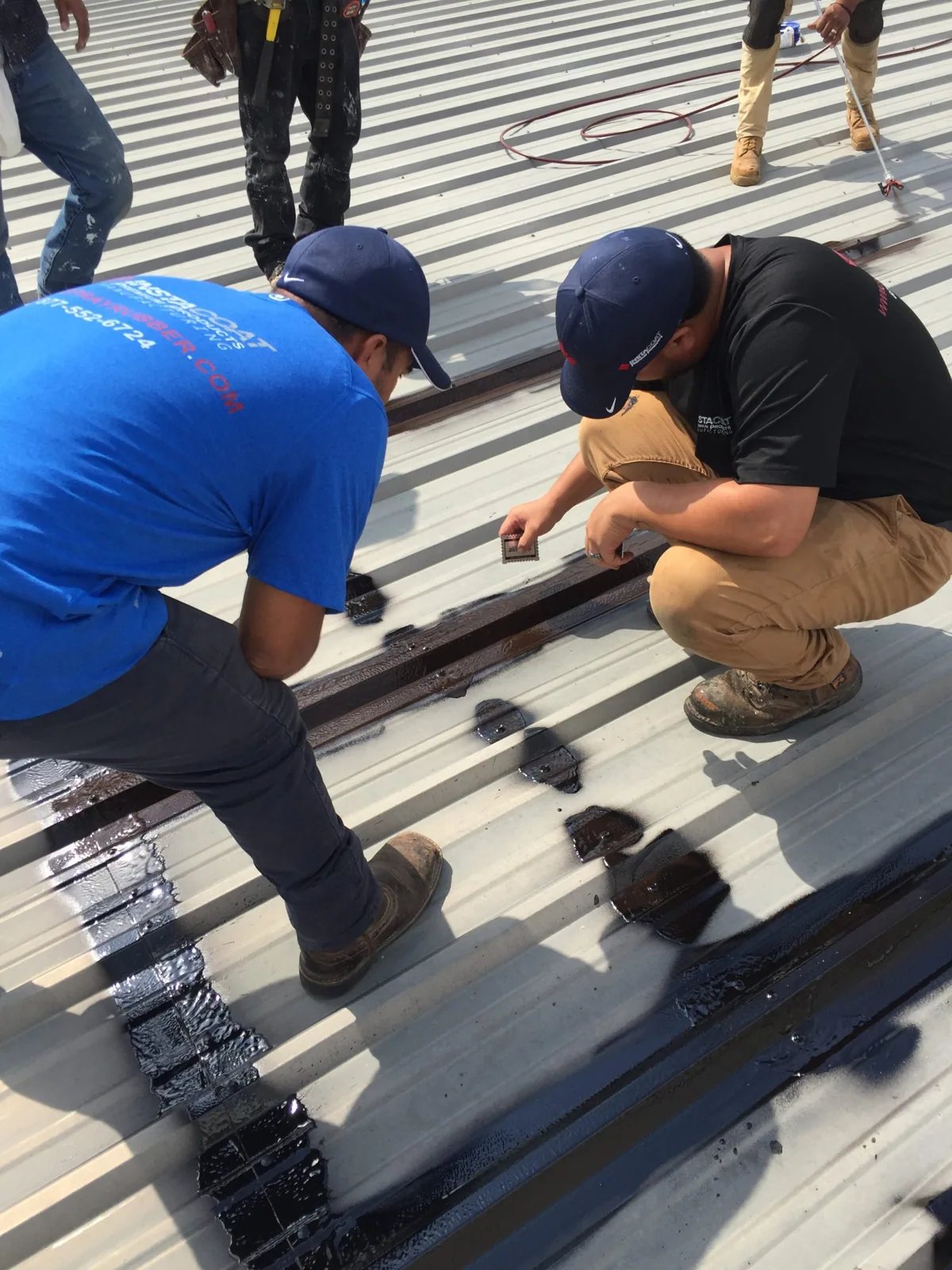
A repair scope should connect each defect to a defined location, material, preparation method, and confirmation step. Separate a puncture or isolated flashing problem from a recurring pattern that could signal a broader assembly issue. Check compatibility with prior coating, repair material, or warranty terms. If unknown layers or moisture could change the repair boundary, propose investigation as a separate decision. An owner can then choose the next test with the price and consequence visible. A documented repair assignment should connect observed evidence to a bounded work area.
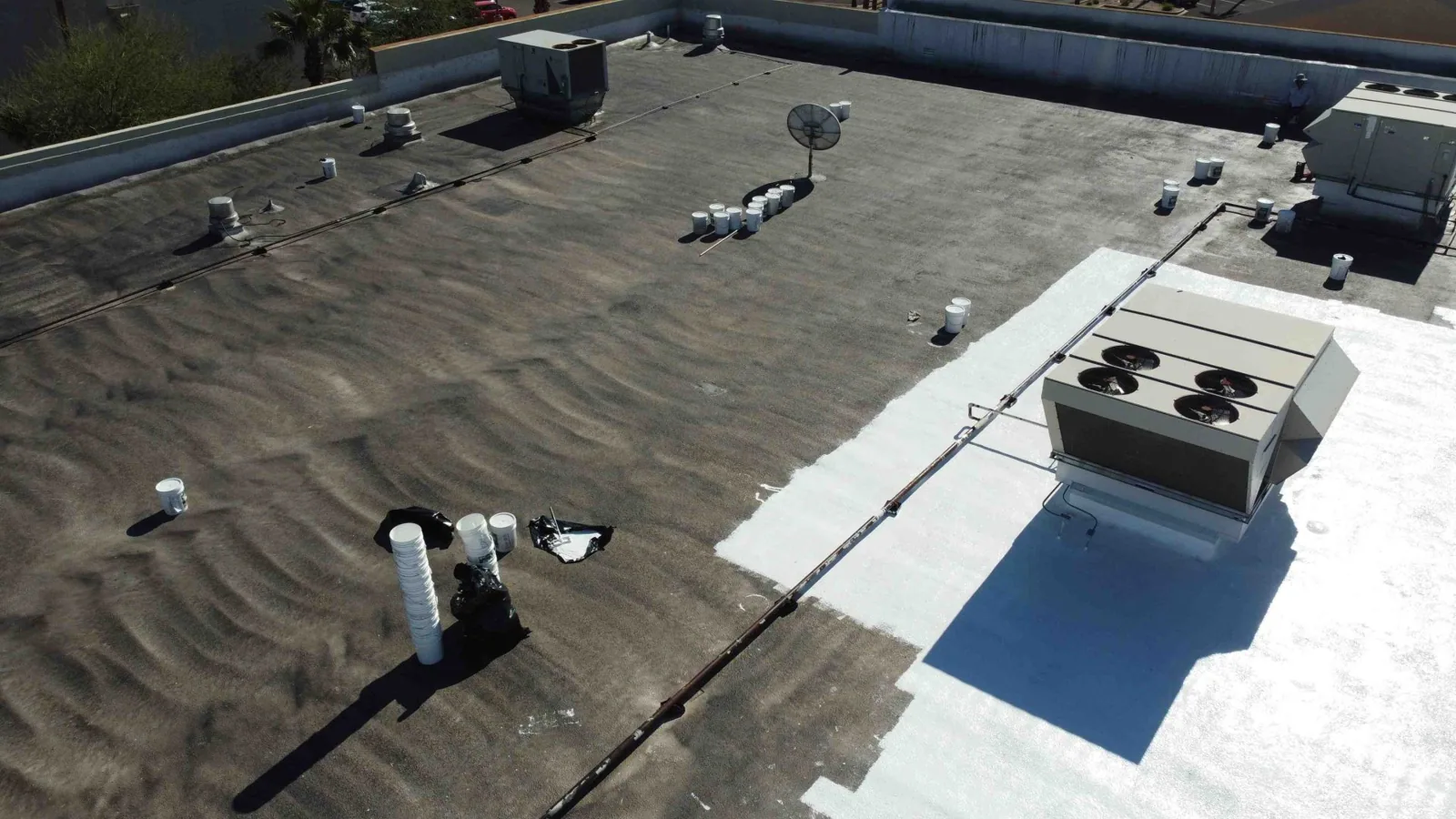
For renewal, state whether the design assumes tear-off, recover, or retention and explain what evidence supports that choice. Include deck review, insulation, drainage, curbs, perimeter details, rooftop equipment, and tie-ins. The replacement scope should state the exact work area and the treatment of concealed conditions. Coating may be considered only when the substrate is suitable and system requirements are met. It cannot resolve unknown structural conditions or make an unidentified roof assembly compatible.
Maintain a Decision-Ready Budget Register
Emeryville's planning and development functions are relevant to project coordination, but cost approval remains with the owner and applicable public review remains separate. Organize the estimate into defined roof work, access and protection, tenant or operations coordination, testing, and conditional quantities. State which assumptions depend on permit confirmation or site access. For a portfolio, use a common format across properties while retaining separate building measurements and approval records.
Rank work from current evidence: active water entry, safety concerns, recurring repairs, system limitations, drainage, and the consequence of disruption to tenants or production. Identify where more information could alter the recommendation, such as a test opening, structural evaluation, or lease milestone. The capital register should carry dated estimates and a confidence note. Keep a contingency tied to a named uncertainty rather than using one blanket amount that obscures the reason for potential change.
Keep Project and Property Records Linked
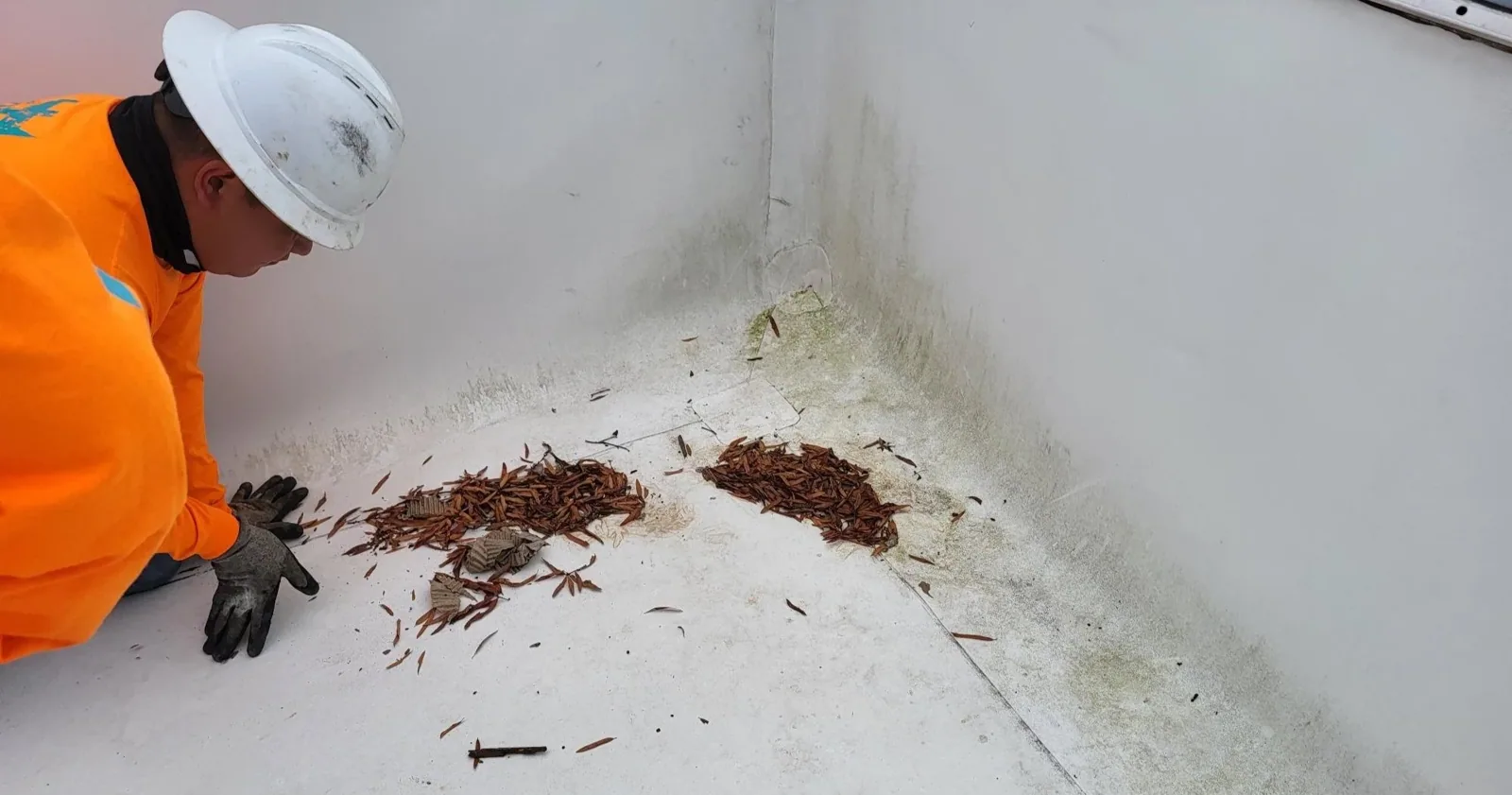
After work, preserve the approved scope, dated images, roof-zone map, material data, field changes, inspection notes, and owner acceptance. Record any excluded equipment or access-limited area, and name who owns the next review. For tenant turnover, the closeout should identify existing conditions at completion so a future manager can establish a baseline. Store roof plans, leak tickets, repair scopes, and photos by property and project date so the building's maintenance history stays intact.
Keep neighboring municipal roof records separate: a property in Albany and one in Richmond have distinct addresses, assembly histories, and access approvals. For a local roof review, share the exact address, plans, prior tickets, warranty information, access rules, and operating constraints. The result should give the owner a documented view of current condition, limits of inspection, and the evidence needed for a repair or renewal decision.
Commercial Roofing Questions
Does Emeryville’s site-selection support confirm roof condition?
No. Economic-development assistance concerns business growth and commercial-space searches. Roof assembly, repair history, access, and current condition must be established for the building.
Who should confirm permit or review requirements?
The property owner or authorized project lead should describe the exact address and scope to the appropriate City office. A roofer’s estimate does not establish public approval.
How can a tenant turnover affect the roof review?
Use the lease or handoff date to plan timing, but document the actual roof condition separately. Distinguish inherited defects, new observations, and work authorized by the owner.
When is testing worth adding to a proposal?
Testing is useful when its result could change repair limits, replacement design, warranty decisions, or quantities. State the method, restoration plan, and decision it will inform.
How should multiple Emeryville buildings be budgeted?
Use consistent categories and risk criteria, but keep each address’s measurements, access assumptions, condition evidence, and approval decision on its own project record.
Plan an Emeryville roof review
Share the available roof plans, service history, access requirements, and budget timing so the next scope can follow the property record.
Request a Roof Assessment
Questions About Commercial Roofing for Emeryville Properties
Common questions from building owners and property managers.
Does Emeryville’s site-selection support confirm roof condition?
No. Economic-development assistance concerns business growth and commercial-space searches. Roof assembly, repair history, access, and current condition must be established for the building.
Who should confirm permit or review requirements?
The property owner or authorized project lead should describe the exact address and scope to the appropriate City office. A roofer’s estimate does not establish public approval.
How can a tenant turnover affect the roof review?
Use the lease or handoff date to plan timing, but document the actual roof condition separately. Distinguish inherited defects, new observations, and work authorized by the owner.
When is testing worth adding to a proposal?
Testing is useful when its result could change repair limits, replacement design, warranty decisions, or quantities. State the method, restoration plan, and decision it will inform.
How should multiple Emeryville buildings be budgeted?
Use consistent categories and risk criteria, but keep each address’s measurements, access assumptions, condition evidence, and approval decision on its own project record.