Commercial Roof Edge Metal and Gutters in Vallejo, CA
Inspect commercial roof edge metal, coping, gutters, and downspouts in Vallejo, CA with detail repairs tied to drainage and wind exposure.
Why Commercial Roofing Vallejo?
Commercial Roof Edge Metal and Gutters in Vallejo, CA
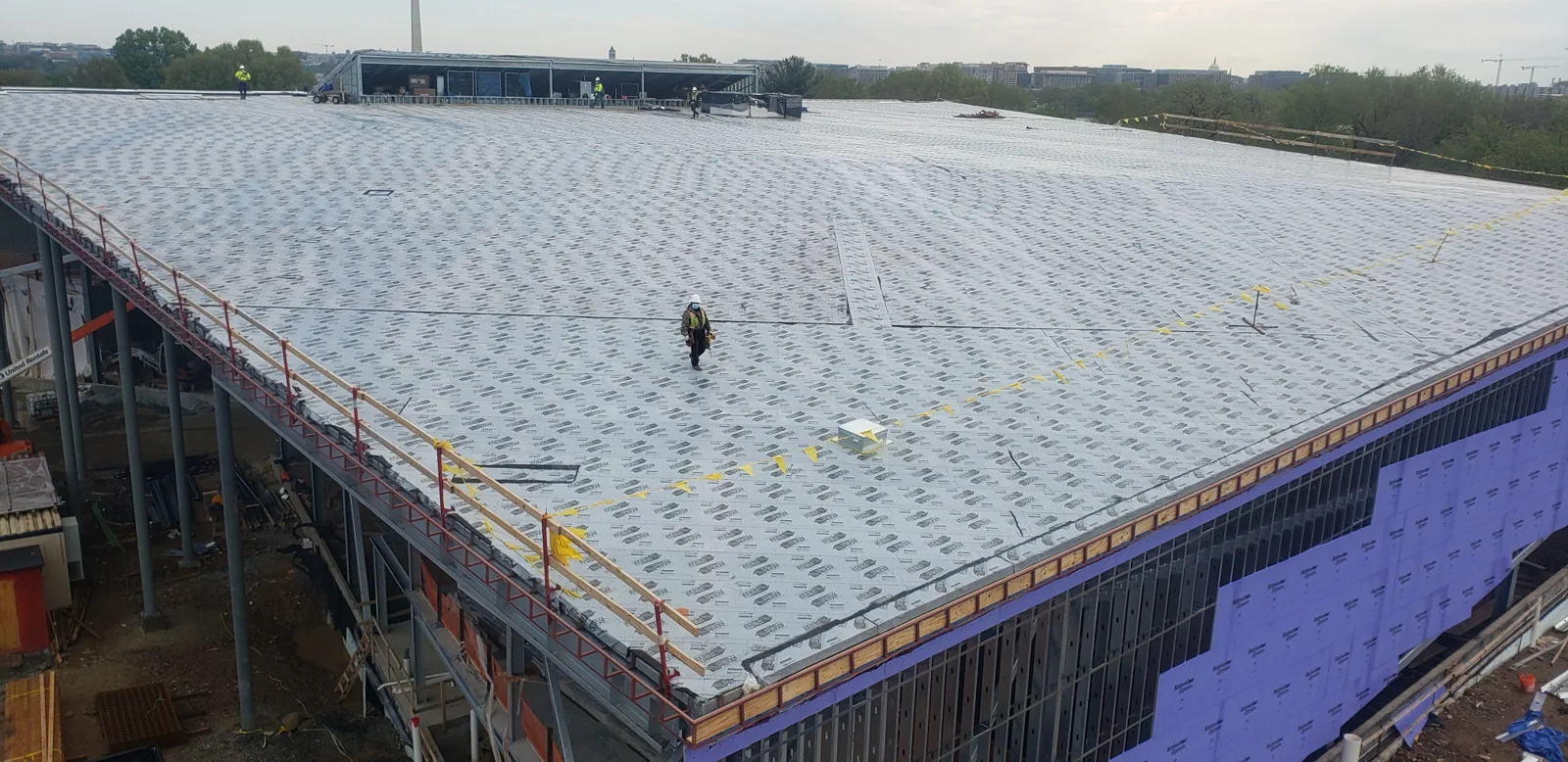
The roof perimeter joins several systems that need to work as one: membrane termination, edge metal, coping, fascia, and the path that carries water away. A gap at one transition can let wind or water reach the assembly, while a blocked gutter can send runoff back toward the wall. We inspect the edge by roof zone, note attachment and laps, and compare the condition with nearby seams, parapets, and drains. Replacing a short metal section without restoring the membrane tie-in can leave the weak point in place. For office, retail, and industrial buildings around Vallejo, staging and access also affect the sequence. Mare Island commercial properties have varied uses, and some have overhead cranes or oversized roll-up doors. That context is not proof of a specific roof detail; it is a reason to verify access before setting a scope. A perimeter inspection can document the transition, and a storm repair review can separate displaced metal from membrane damage.
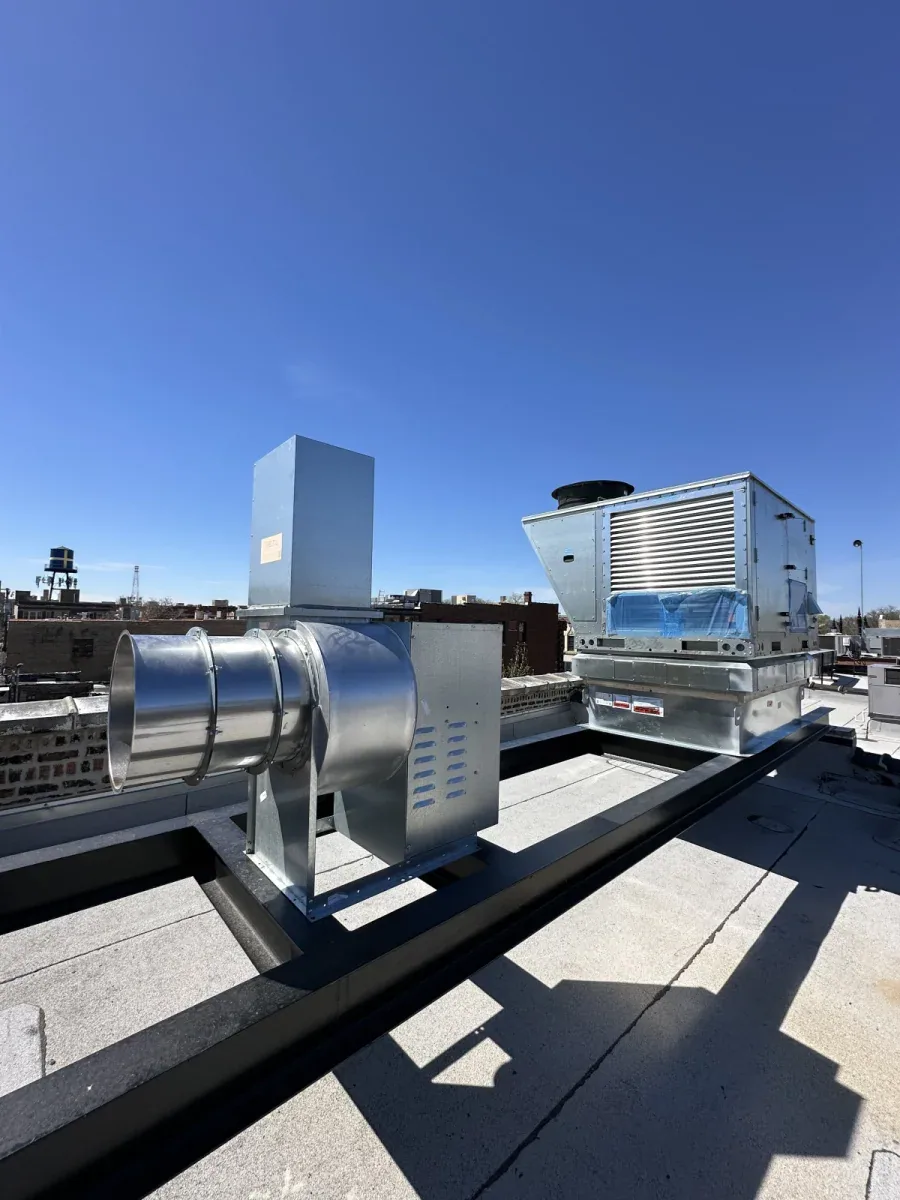
Trace the Termination at the Roof Edge
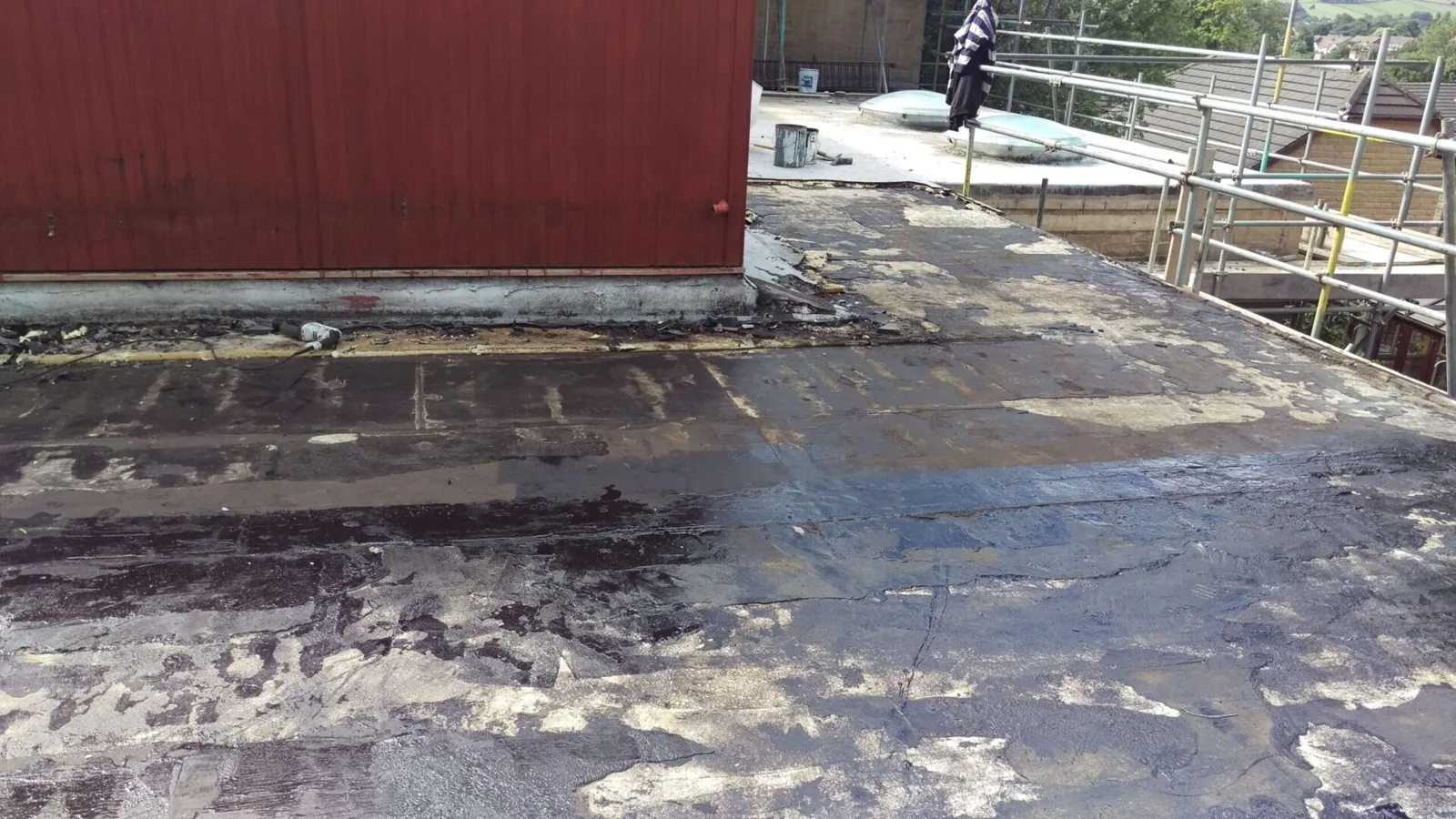
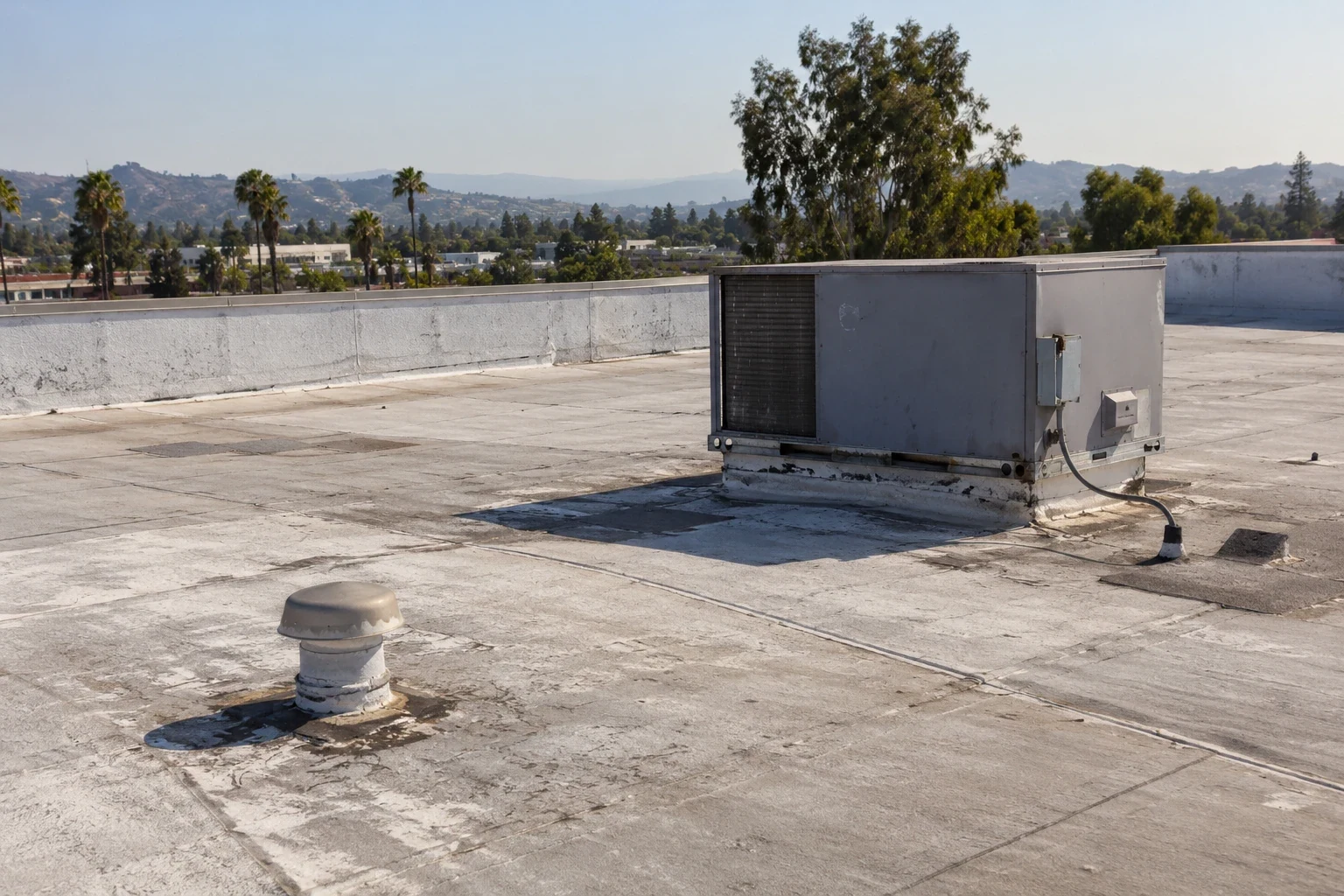
At a metal edge, check the cleat, fasteners, laps, corners, and the connection to the membrane. At a parapet, inspect coping joints, end dams, seams, and the condition where the roof membrane turns up behind the metal. Look for loose sections, open joints, displaced fasteners, sealant failure, and signs that water has reached the wall or deck. A photograph should show enough surrounding roof to identify the transition and the direction of the lap. If the edge lifts, note whether it is limited to one section or repeats along a longer run. We also check whether gutters remain pitched to their outlets, whether downspouts are connected, and whether discharge is directed away from entrances and walls. The same review should identify any interface with rooftop equipment or existing penetrations that could complicate the repair. A metal symptom is not automatically evidence that the membrane has failed; inspect both sides of the transition before assigning the work boundary.
Repair the Connection, Not Just the Visible Piece
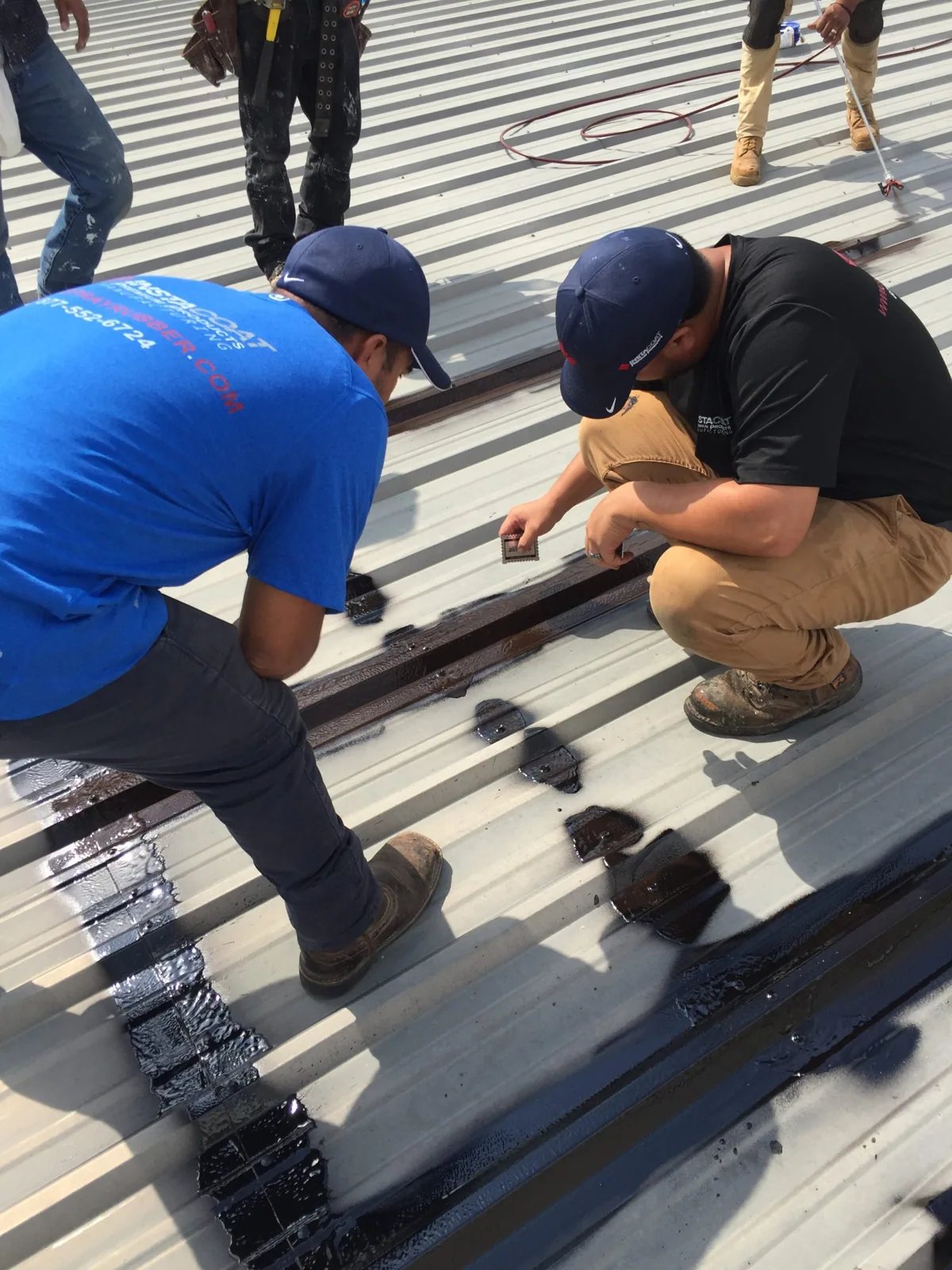
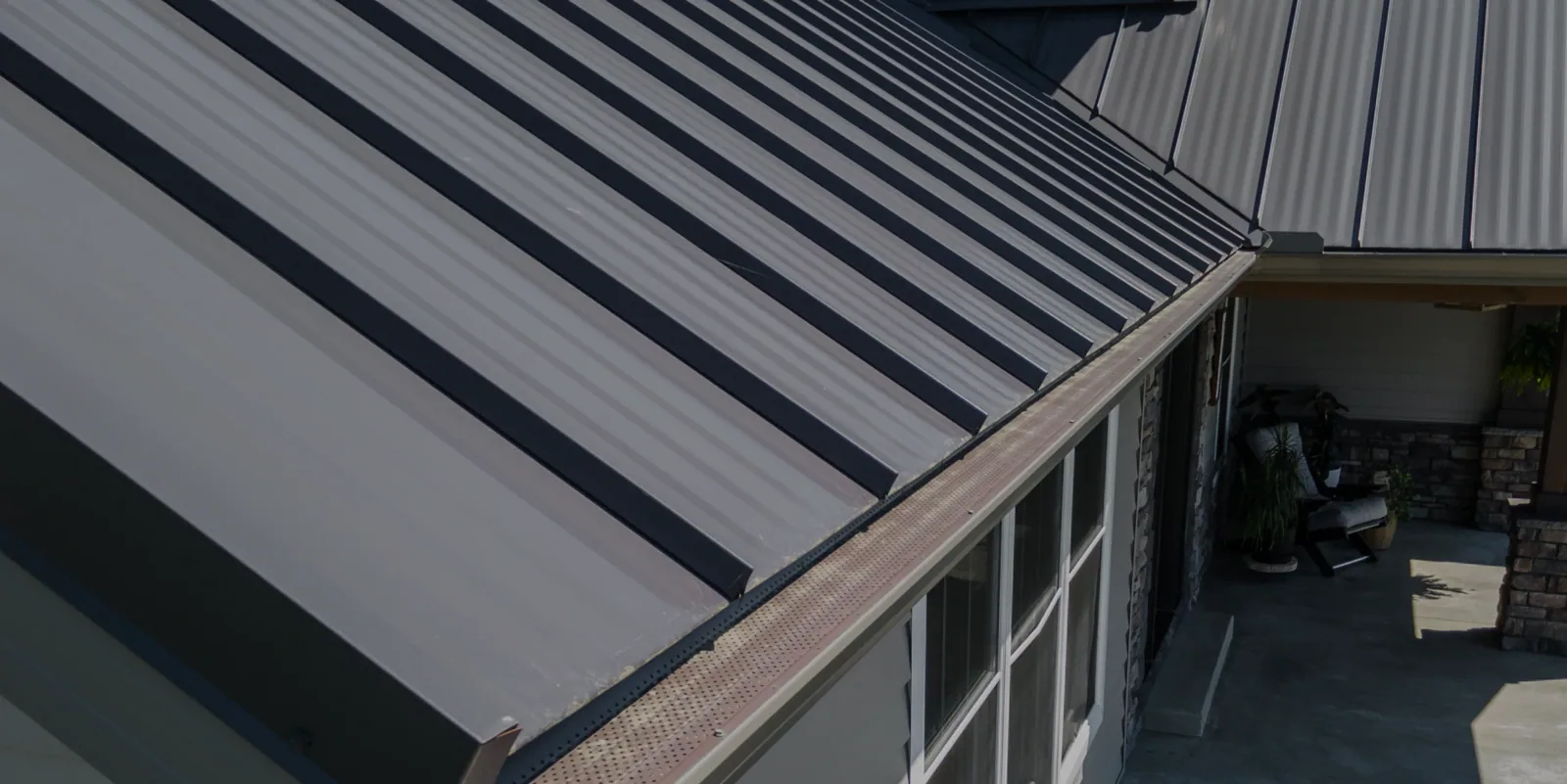
A sound repair has to restore the roof system's termination. That may require lifting or removing a metal section, replacing damaged fasteners or cleats, preparing sound substrate, and tying the membrane back into the edge detail. At coping, the scope may include joints, corners, cleats, and transitions to adjacent walls. Gutter work can involve hangers, outlets, downspouts, and the slope that sends water toward them. We state what is included and whether wall repair or downstream drainage is outside the roofing boundary. If multiple sections are loose or metal has distorted across a long run, a broader perimeter review may be more useful than isolated patches. Owners can compare a focused roof repair with a replacement scope when edge conditions recur across the assembly. If wind has displaced a coping cap, the metal roof review can address the metal system itself; it should not be confused with a sheet-metal roof at every building.
Sequence Work Around Access
Perimeter work often requires a lift, fall protection, or a clear zone below the edge. Confirm public walkways, loading doors, tenant entrances, and any equipment that limits lift placement. A commercial corridor such as Admiral Callaghan Lane has street and sidewalk activity, so a specific site may need a staging plan that protects people and keeps access open. Roadway improvements along the corridor do not establish how a private property is configured. We verify the actual building and coordinate the work window with the person responsible for access. A gutter replacement may also require coordination with a plumbing or exterior-trades contractor if the scope extends beyond the roof outlet. Cost and timing depend on height, metal type, run length, corners, transitions, access, and whether concealed substrate damage appears after removal. If the opening reveals a wider problem, we photograph it and seek direction before expanding the work.
Protect Drainage at Every Transition
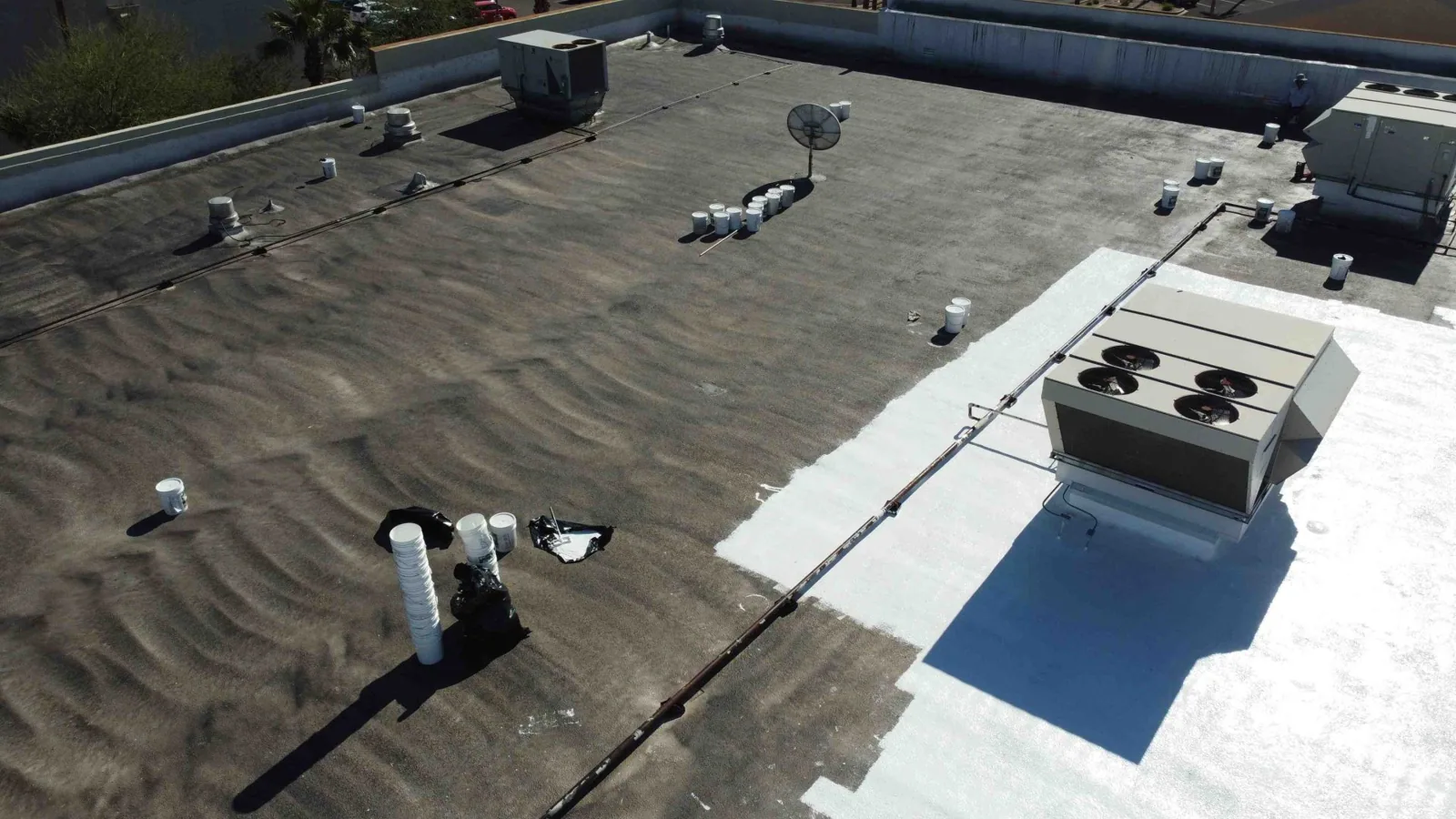
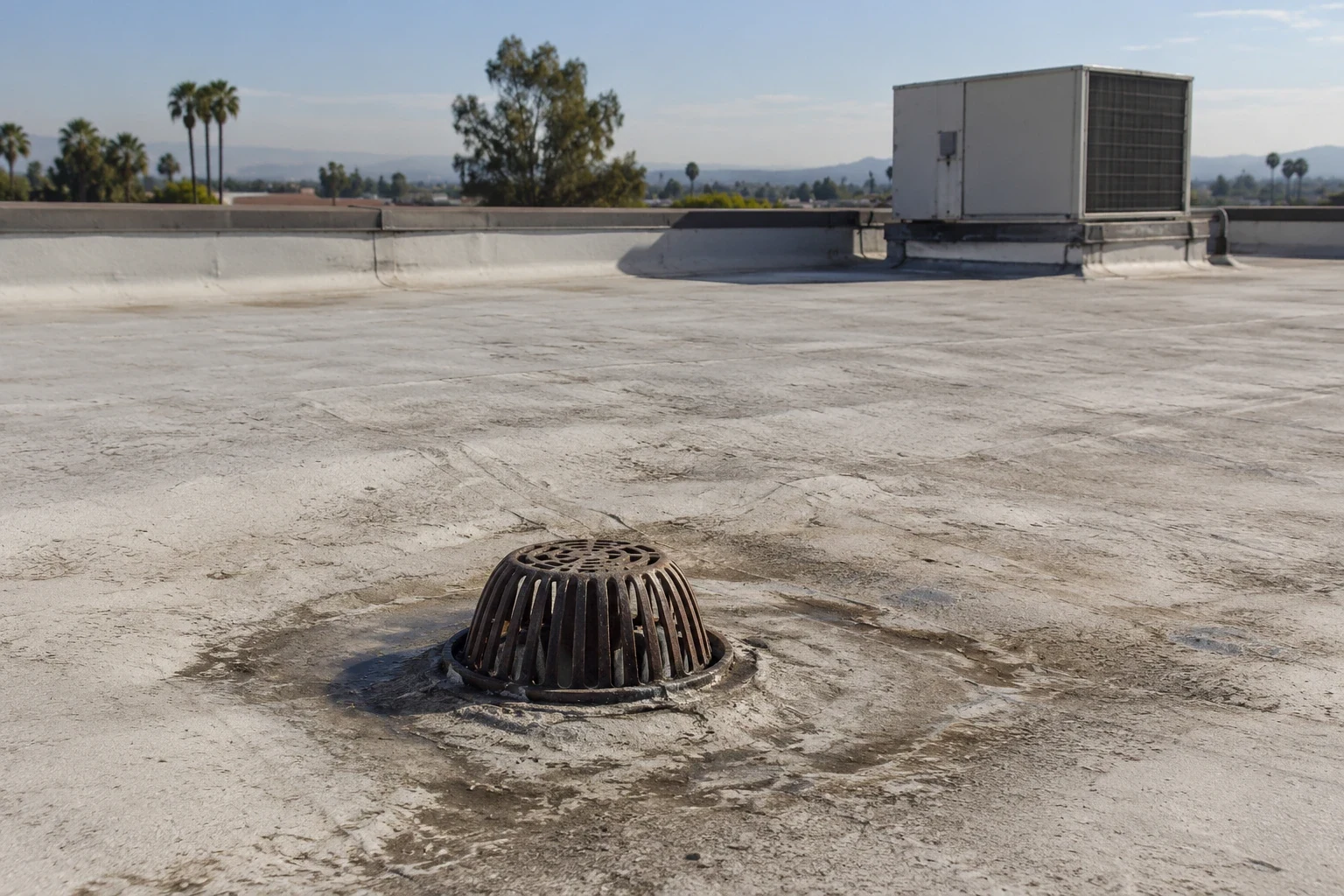
Metal, membrane, and drainage details should be reviewed together after repair. A coping joint needs a path that sheds water, while the roof membrane must remain sealed at its termination. Gutters need clear outlets, supported hangers, and downspouts that discharge as intended. A repair that directs water toward a different wall is incomplete. Vallejo's climate baseline records no average July or August rainfall; use that seasonal pattern to plan inspections, while current weather governs work timing. We inspect the completed edge and note any follow-up observation after rainfall. Where an existing drain or low point is also part of the concern, connect the repair record with a drainage review. A maintenance visit can revisit the same corners and outlets so recurring movement or debris is recorded before it spreads to adjacent roof areas.
Keep the Perimeter Record Specific
Closeout should identify the building side, roof zone, metal run, corners or joints repaired, membrane tie-in, and photographs before and after work. Note if access prevented inspection of a section or if a wall or downspout connection remained outside the scope. That detail helps the next reviewer compare the same edge rather than infer the repair from an invoice. Owners near Downtown Vallejo and the Vallejo Waterfront may face different access conditions, but each roof needs its own map and record. If the work responds to wind displacement, preserve the observed condition and repair description without assigning an unsupported cause. A condition report can set the baseline for later review. Arrange a site walk with roof plans, prior perimeter work, access restrictions, and budget timing. We can show whether the next action is a localized attachment repair, a longer metal replacement, a drainage correction, or a larger assembly decision.
Commercial Roofing Questions
Why can water appear inside below an edge that looks mostly intact?
The visible metal is only one part of the transition. A hidden membrane termination, open lap, fastener, coping joint, or wall interface may let water enter and travel before it appears inside. We inspect the edge and nearby roof areas, then document which conditions are visible and where more investigation is needed. The repair scope should reach sound material rather than stop at the first visible symptom.
Can a short coping repair solve a loose section?
It can when the movement and failed attachment are confined to that section and the adjacent joints and membrane termination remain sound. We check cleats, fasteners, corners, end conditions, and the roof connection before defining the repair. If the same issue repeats along the run, a longer section may need review. The proposal should state the affected length and how the metal will connect to adjacent work.
Does replacing a gutter include the connected downspout?
The proposal should say whether it includes the trough, hangers, outlets, downspouts, and discharge connection. A roof contractor can address the roof edge and outlet detail, but a blocked or damaged pipe farther downstream may fall to another trade. We identify that boundary during the review so the owner knows which work restores roof drainage and which needs separate coordination.
What roof records help price edge-metal work?
A roof plan, photographs, prior repair invoices, and access or staging rules help define the work. If a leak has been reported, identify the interior area and when it appears. The inspection can then compare the symptom with the edge, coping, gutter, and nearby membrane. We document the run, transitions, and any areas not reached so the estimate has a clear scope rather than an assumed length.
When should an edge repair expand to a full roof review?
A broader review is appropriate when displaced metal repeats, several roof zones show related failures, or the membrane termination cannot be isolated from a larger condition. We can map the affected areas and compare them with repair history before recommending more work. An isolated loose cleat does not establish that the whole roof needs replacement, and widespread failure should not be minimized as a single metal patch.
Review the Roof Edge as a System
Arrange a Vallejo roof review with plans, prior perimeter work, access restrictions, and budget timing. We will document the metal, membrane, and drainage transitions and set a repair boundary that can be inspected at closeout.
Request a Roof Assessment
Questions About Commercial Roof Edge Metal and Gutters in Vallejo, CA
Common questions from building owners and property managers.
Why can water appear inside below an edge that looks mostly intact?
The visible metal is only one part of the transition. A hidden membrane termination, open lap, fastener, coping joint, or wall interface may let water enter and travel before it appears inside. We inspect the edge and nearby roof areas, then document which conditions are visible and where more investigation is needed. The repair scope should reach sound material rather than stop at the first visible symptom.
Can a short coping repair solve a loose section?
It can when the movement and failed attachment are confined to that section and the adjacent joints and membrane termination remain sound. We check cleats, fasteners, corners, end conditions, and the roof connection before defining the repair. If the same issue repeats along the run, a longer section may need review. The proposal should state the affected length and how the metal will connect to adjacent work.
Does replacing a gutter include the connected downspout?
The proposal should say whether it includes the trough, hangers, outlets, downspouts, and discharge connection. A roof contractor can address the roof edge and outlet detail, but a blocked or damaged pipe farther downstream may fall to another trade. We identify that boundary during the review so the owner knows which work restores roof drainage and which needs separate coordination.
What roof records help price edge-metal work?
A roof plan, photographs, prior repair invoices, and access or staging rules help define the work. If a leak has been reported, identify the interior area and when it appears. The inspection can then compare the symptom with the edge, coping, gutter, and nearby membrane. We document the run, transitions, and any areas not reached so the estimate has a clear scope rather than an assumed length.
When should an edge repair expand to a full roof review?
A broader review is appropriate when displaced metal repeats, several roof zones show related failures, or the membrane termination cannot be isolated from a larger condition. We can map the affected areas and compare them with repair history before recommending more work. An isolated loose cleat does not establish that the whole roof needs replacement, and widespread failure should not be minimized as a single metal patch.