Commercial Roofing Along Admiral Callaghan Lane in Vallejo, CA
Commercial roof reviews along Vallejo's Admiral Callaghan corridor, with building-specific access, drainage, repair, and renewal records.
Why Commercial Roofing Vallejo?
Commercial Roofing Along Admiral Callaghan Lane in Vallejo, CA
Commercial buildings along Admiral Callaghan Lane need a roof sequence that fits the actual access route and business hours. The segment between Redwood Parkway and Turner Parkway is an active commercial area, with a separate roadway segment between Turner Parkway and Plaza Drive. Confirm current staging, loading, and roof access with each property's contact before recommending work. Owners comparing this corridor with Sonoma Boulevard properties or Springs Road locations can use the same inspection fields while preserving each building's own roof record. A commercial roof inspection establishes the assembly and visible condition.
Use the Corridor as a Location Index
Road work can affect how a crew reaches a property, but older project records do not establish today's lane conditions, curb access, or permits. Before mobilization, the owner confirms the current route and any authority approval for lifts, parking, or material drop. We write down the chosen staging plan and a contingency if access changes. A property along the Admiral Callaghan corridor should have its own access notes; confirm truck-routing considerations for the specific site before mobilization.
Before a roof visit, confirm the gate or loading contact, vehicle clearance, lift location, and any site rules for ladders or rooftop access. Do not infer that a route used by one property will suit another; turning space, overhead obstructions, and operating hours can differ. If a lift or lane restriction requires approval, identify who obtains it and when the request must be submitted. Set a weather contingency and safe stopping point for any delay in lift access, delivery, or roof entry. Keeping these logistics with the individual roof record helps the owner plan service without treating a broad corridor description as site-specific access approval.
Reconcile Field Conditions With the Maintenance File
Collect roof plans, warranty documents, repair tickets, leak logs, and photographs before the walk. Mark each reported leak by date and interior location, then compare it with roof seams, drains, edge details, curbs, and past patch boundaries. If a report refers only to a corridor or tenant without a room or date, note that limitation. The roof map separates what can be seen from what is inferred. A recurring interior report may point to a water path that crosses more than one roof zone, so do not set a repair limit from the ceiling stain alone.
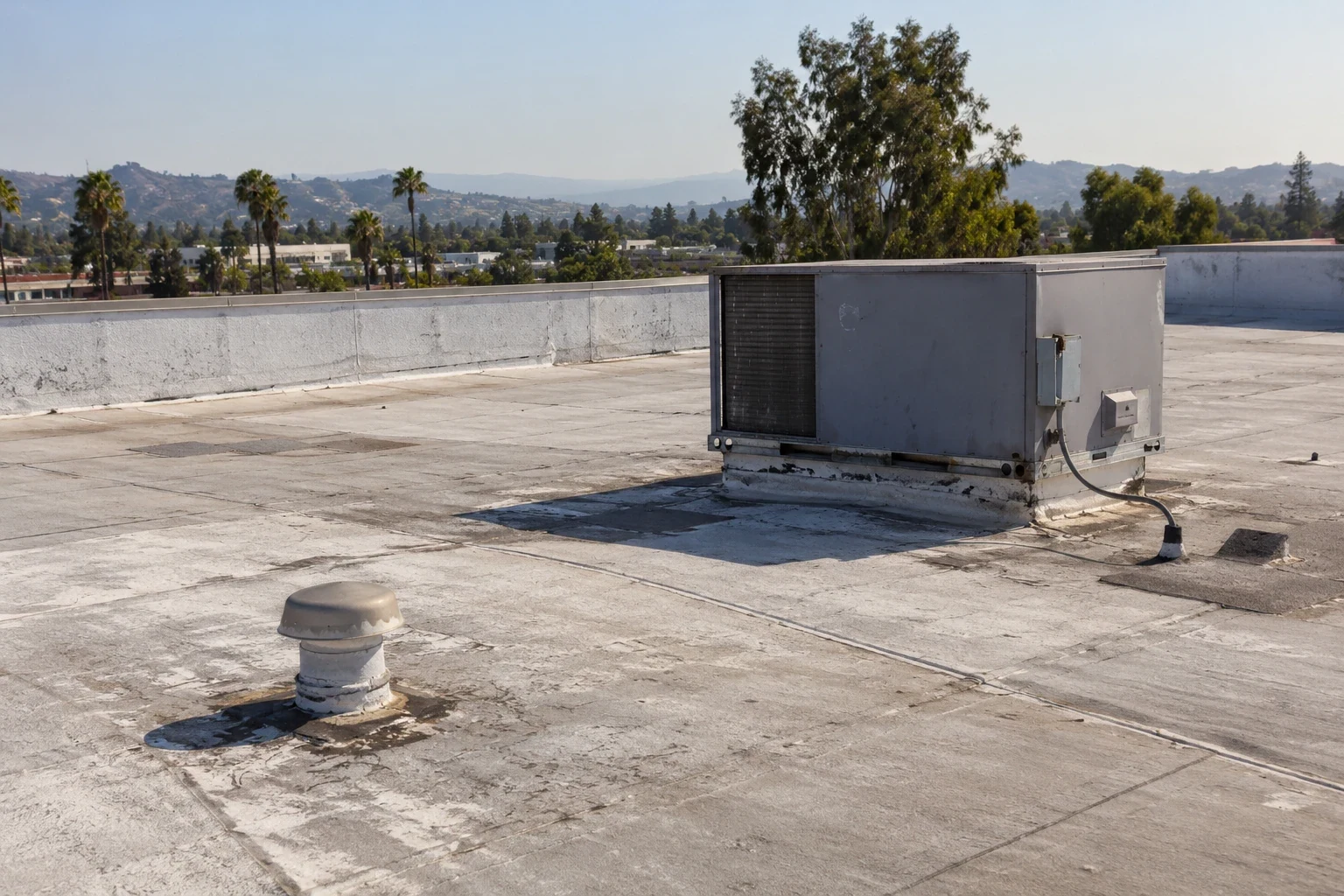
Confirm whether the roof assembly is membrane, metal, built-up, coated, or another system. A drawing can inform the inspection, but exposure may reveal a changed layer or prior overlay. We identify test locations only when they answer a scope question and the owner approves the opening. If moisture is suspected, a moisture survey can help prioritize selective checks. For a known seam or flashing problem, detail repair review can keep that finding distinct from a broad replacement conversation.
Give Drains, Edges, and Penetrations Their Own Notes
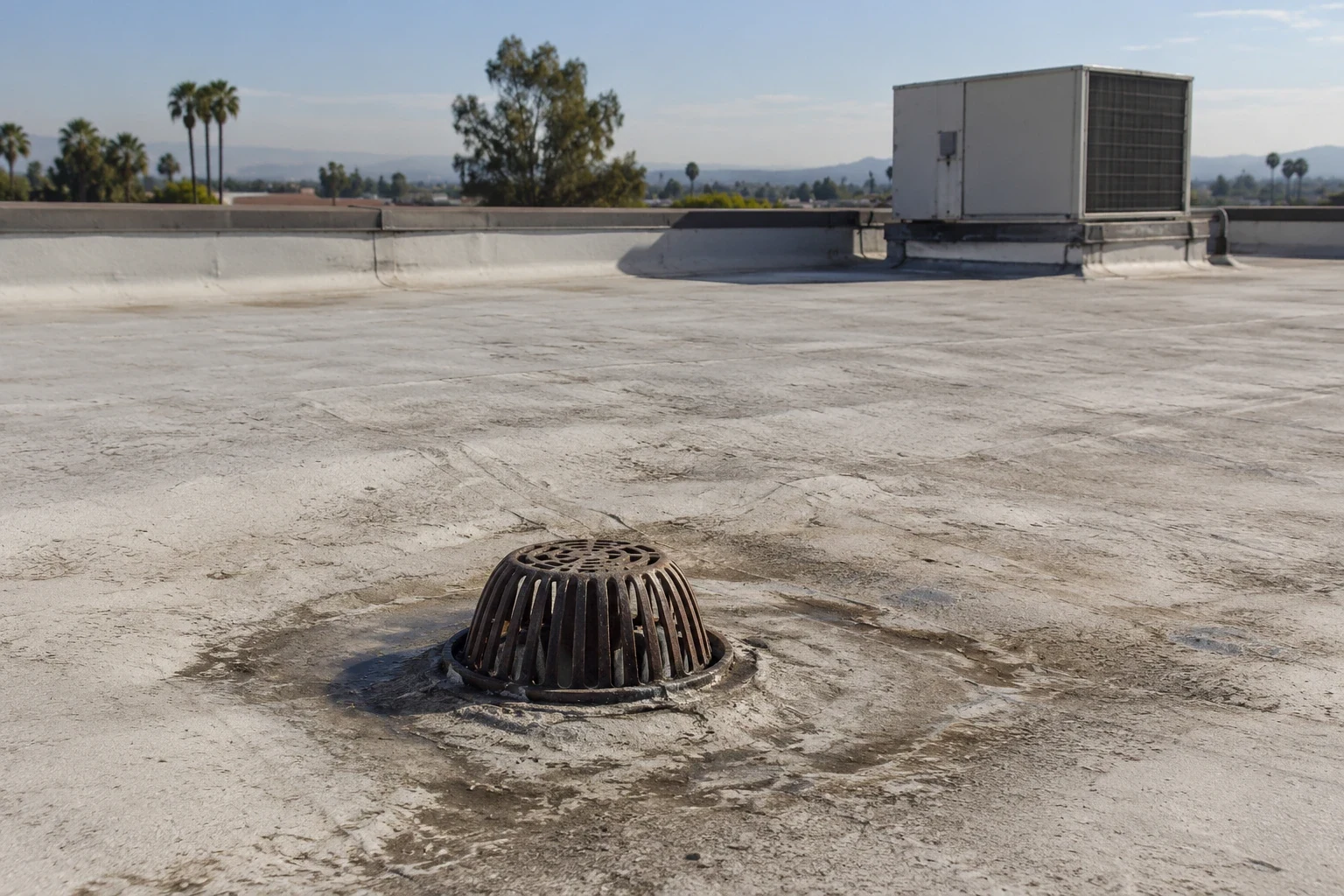
A sound-looking field area does not resolve a failed drain flange or wall transition. We inspect roof-to-wall interfaces, edge metal, coping, seams, penetrations, curbs, supports, scuppers, and outlets. Photograph each detail with enough context to locate it again. Record debris, standing-water observations, and drainage direction, while avoiding structural conclusions that require a separate professional evaluation. Where a roof has several patches, map their edges and materials so the next repair does not overlap a prior scope without a reason.
A targeted drain and scupper scope can address an outlet or conductor interface. If water is entering near a wall, track the counterflashing and adjacent membrane tie-in. The owner should know whether the proposed work fixes a detail, changes a water path, or only adds temporary protection. We identify follow-up observations after rain or maintenance where an immediate confirmation is not possible. That record helps facilities compare the proposed repair with the condition it was intended to correct.
Coordinate Work Around Traffic and Operations
The route from the truck to the roof can influence safety, time, and daily output. Confirm authorized parking, unloading, pedestrian paths, tenant hours, loading dock rules, and protected entrances with the property representative. Before mobilization, confirm current site logistics, including the route from the truck to the roof and any lift or material-drop constraints. No lane closure, curb occupation, or traffic control should be presumed. Where a delivery requires a special arrangement, the owner coordinates approvals with the relevant authority and keeps a contact available on the work day.
For occupied properties, the sequence should define zone limits, noise or odor considerations, temporary dry-in, and end-of-day handback. A phased work plan can keep different roof areas in a clear order. The repair file should also identify which equipment or tenant operations cannot be interrupted. If access is unavailable, the report records the gap and does not imply that the roof was fully inspected. That distinction matters when a project is priced in phases or reviewed during a capital cycle.
Compare Options Against the Same Roof Map
A repair proposal names the defect, zone, materials, tie-in, removal depth, and exclusions. It should explain the effect of concealed conditions and how the owner approves changed quantities after exposure. A localized condition may support a patch or detail restoration when surrounding materials remain serviceable. Repeated repairs, broad moisture findings, or widespread seam or fastener issues can change the decision. We compare options with the same condition map so a repair and renewal scope are not based on different assumptions.
The repair alternative can address a bounded area. A replacement review can set broader capital limits, including staging, removal, drainage, insulation, edge details, and restoration sequence. If a coating is proposed, verify adhesion, substrate, layer compatibility, and drainage before comparing it with replacement. The decision should account for service-life objective, repeat maintenance, tenant impact, and budget window rather than a nearby street project or generalized corridor label.
Leave the Next Inspector a Useful Baseline
Closeout should include roof-zone photographs, the material installed, details repaired, warranty papers, test observations, and any open access or concealed-condition question. Record the exact repair boundary and identify whether temporary measures remain. A later inspector can then compare a new leak call with the prior work rather than restart discovery. For portfolio reporting, assembly, documented age, repair frequency, drain condition, access, and renewal trigger provide a consistent summary across different corridors.
To arrange an Admiral Callaghan Lane roof review, send available plans, repair history, leak locations, roof access details, and the confirmed operating schedule. We will inspect the approved areas, map the assembly and visible conditions, and return a repair or renewal scope with its limits stated. Recommendations follow the leak history, access, and roof conditions recorded at that building.
Commercial Roofing Questions
Which part of Admiral Callaghan Lane does the service area cover?
The service area is the broad Vallejo corridor. The commercial corridor runs between Redwood Parkway and Turner Parkway; a separate roadway project extends from Turner Parkway toward Plaza Drive. Those area boundaries do not set an individual property's roof scope.
Do roadway improvements establish roof access conditions?
No. Public-works history provides corridor context. The owner or site contact confirms current access, parking, loading, work hours, and any permissions needed for a roofing visit.
Can you inspect a roof during tenant operations?
Often, subject to approved access and sequencing. The plan identifies protected routes, work zones, staging, and how the area is secured at the end of each shift.
What should an owner do about repeat leaks?
Provide dates, room locations, repair tickets, and photos. We compare reports with roof drains, seams, transitions, and prior patches, then state which water path is confirmed or still uncertain.
How are repair and replacement scopes kept comparable?
Both options use the same roof-zone map and confirmed assembly facts. Each states its limits, access plan, concealed-condition assumptions, and effect on the capital window.
Build the Corridor Roof Record One Property at a Time
Share plans, leak history, access details, and confirmed site hours. We will document the roof conditions and define a scope tied to the actual building.
Request a Roof Assessment
Questions About Commercial Roofing Along Admiral Callaghan Lane in Vallejo, CA
Common questions from building owners and property managers.
Which part of Admiral Callaghan Lane does the service area cover?
The service area is the broad Vallejo corridor. The commercial corridor runs between Redwood Parkway and Turner Parkway; a separate roadway project extends from Turner Parkway toward Plaza Drive. Those area boundaries do not set an individual property's roof scope.
Do roadway improvements establish roof access conditions?
No. Public-works history provides corridor context. The owner or site contact confirms current access, parking, loading, work hours, and any permissions needed for a roofing visit.
Can you inspect a roof during tenant operations?
Often, subject to approved access and sequencing. The plan identifies protected routes, work zones, staging, and how the area is secured at the end of each shift.
What should an owner do about repeat leaks?
Provide dates, room locations, repair tickets, and photos. We compare reports with roof drains, seams, transitions, and prior patches, then state which water path is confirmed or still uncertain.
How are repair and replacement scopes kept comparable?
Both options use the same roof-zone map and confirmed assembly facts. Each states its limits, access plan, concealed-condition assumptions, and effect on the capital window.