Commercial Roofing for Concord Properties
Concord roof reviews document assembly, access, drainage, repair history, and capital decisions for local commercial properties and their managers.

Why Commercial Roofing Vallejo?
Commercial Roofing for Concord Properties
Concord's commercial buildings call for a roof review that separates downtown, Monument Boulevard, and other business districts before cost or timing is set. The downtown planning area connects jobs, housing, retail, and transportation, and business-district work also includes Monument Boulevard. Each address still needs its own roof plan, authorized access, and work window before construction is priced.
A portfolio spanning downtown, Monument Boulevard, and other Concord business nodes benefits from roof records organized by both district and building. Two nearby buildings can have different roof assemblies, tenants, drain layouts, and capital timelines. Give every address its own roof plan, repair history, warranty record, and approval contact. For a portfolio that spans downtown and Monument Boulevard, group travel logistics while keeping each building's assembly, access, and condition on its own record. Where an owner controls public facilities, public-agency roof planning offers a separate prompt for procurement and approval records.

Use and Access Profile
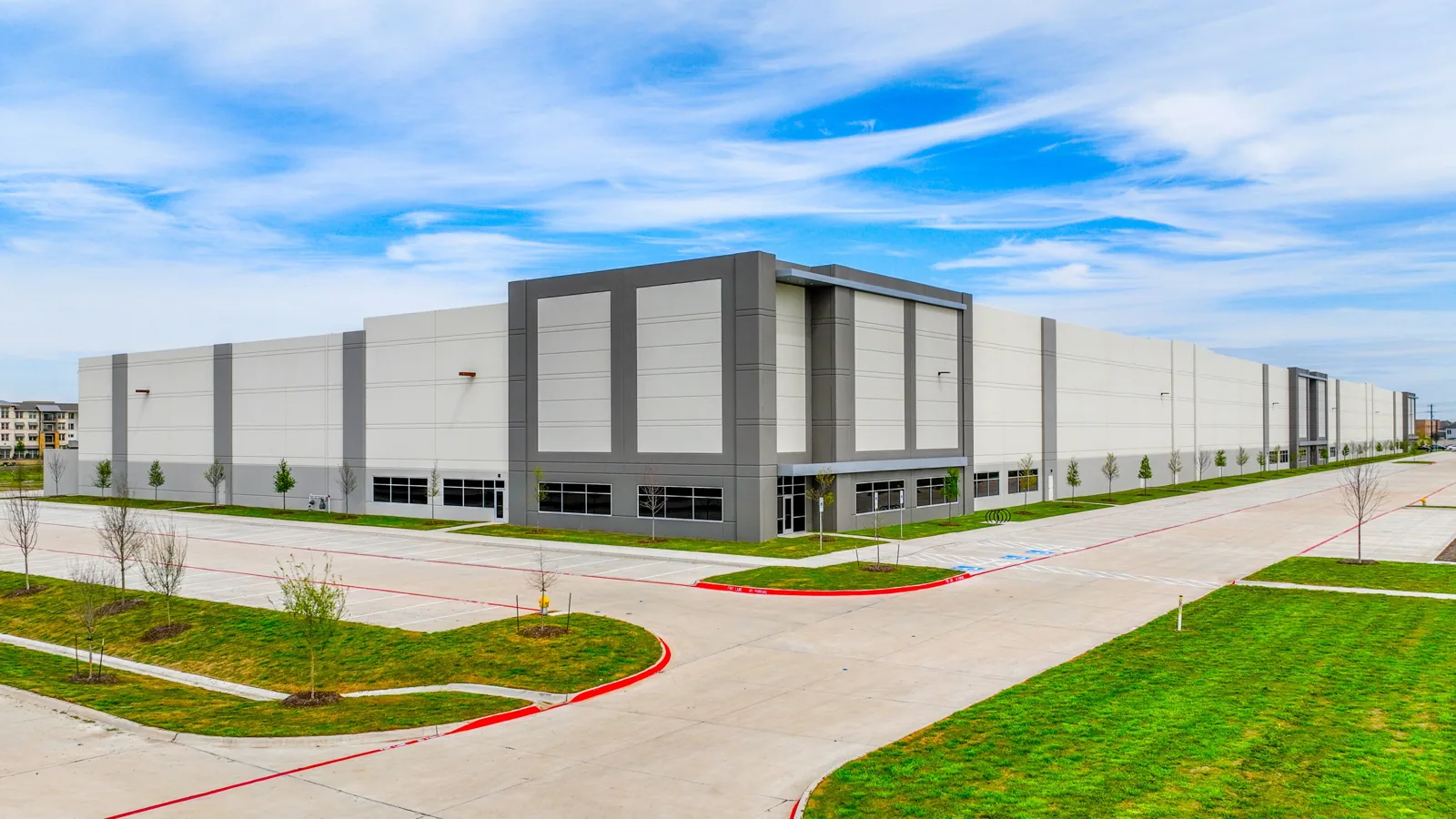
Begin the Concord review by identifying how each building is used and how that use changes the consequences of roof work. A storefront may need clear pedestrian routes and short noisy work windows. A distribution building may rely on loading doors and uninterrupted truck circulation. An office property may need advance notice for lifts near entrances or mechanical equipment. Confirm current operating hours and loading access with the property contact before setting the visit. Ask the property representative to confirm hours, sensitive operations, and areas that cannot be blocked. At a loading-oriented building, the warehouse field checklist can help frame roof access questions.
Downtown Concord combines employment, housing, retail, and transit uses. A roof plan should reflect each building's operating schedule and access needs; nearby addresses do not share one roof condition. If a manager oversees several sites, use a portfolio cover sheet for common contacts and procurement rules, then keep individual building records separate. The owner should verify the exact legal parcel, access authority, and operating contact before an inspection.
Build the Roof Record
A useful roof inventory records more than an estimated replacement year. At each Concord address, map roof zones and note the visible membrane or panel, approximate installation evidence, major penetrations, drains, perimeter details, and any changes between additions. Label observations by location rather than treating the whole roof as one surface.
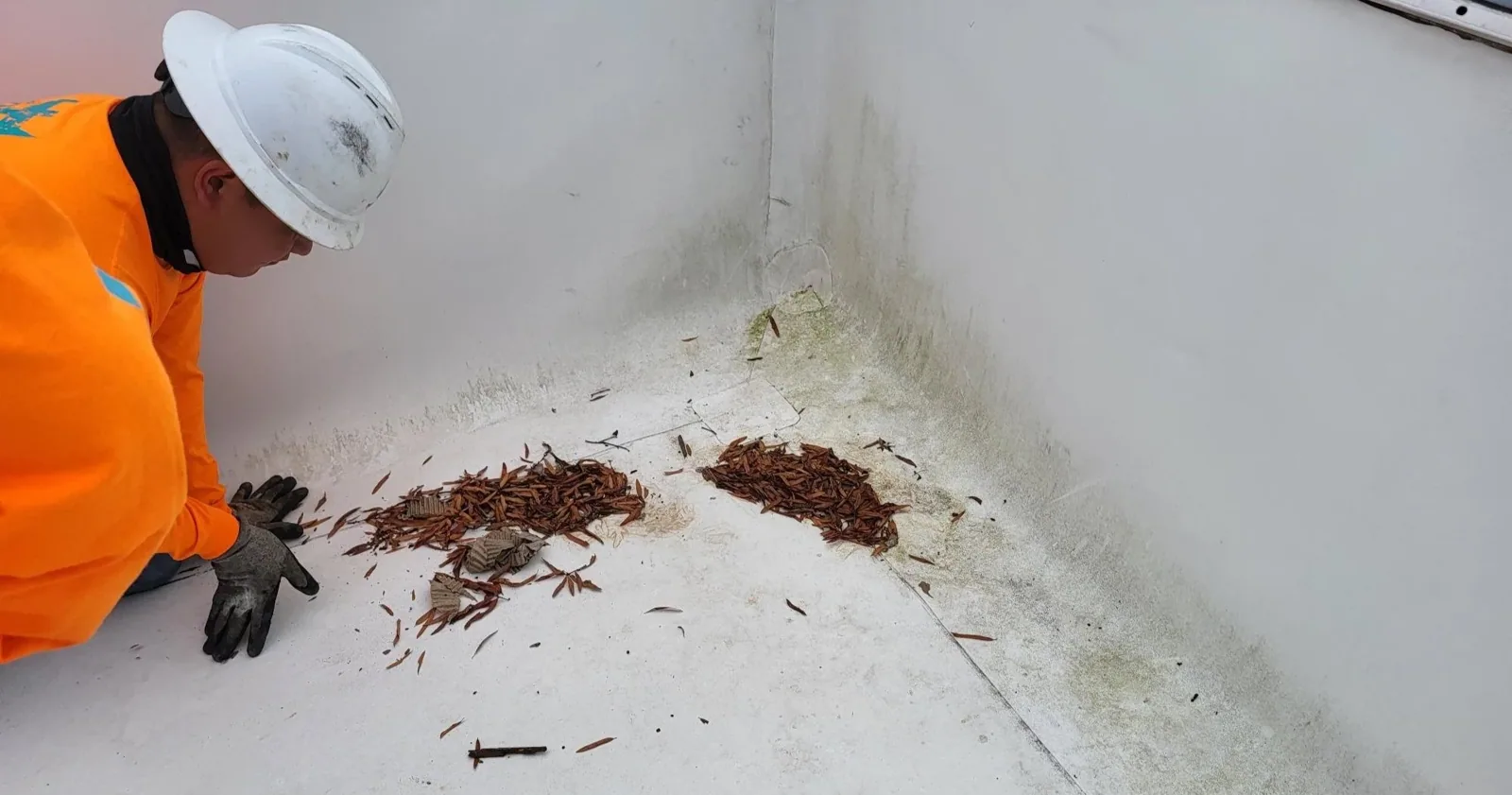
The first site walk should connect interior symptoms with the exterior drainage path. Photograph ceiling stains and note when they appeared, then compare them with roof-side seams, curbs, valleys, scuppers, and downspouts that can be reached safely. A wet ceiling below a mechanical room may have a different leak origin from a mark near an exterior wall. The commercial roof inspection record should distinguish observed conditions from hypotheses so a maintenance decision does not become a warranty conclusion without supporting evidence.
Set the Survey Boundary
Set a deliberate survey boundary before anyone opens a hatch. Confirm the building representative, fall-protection plan, roof access method, escort needs, and the areas the owner authorizes. In a busy commercial node, coordinate vehicle staging and pedestrian control with the property manager instead of assuming that a public street or adjacent lot is available. Note any inaccessible zone and the reason.
For larger roofs, divide observations into repeatable zones such as field, perimeter, equipment areas, and transitions. Use the same labels on photographs, sketches, and repair tickets so the next reviewer can find the condition without relying on a verbal handoff. When infrared or drone methods are considered, define the question first and decide how findings will be confirmed. An infrared moisture survey guides selective testing; field verification establishes the moisture boundary within approved roof access.
Coordinate Occupied Work
Concord's varied business districts make operations coordination a building-specific task. Identify door schedules, deliveries, tenant notices, noise limits, rooftop equipment dependencies, and any security check-in. If a work phase would close a loading lane or interrupt an entrance, place that constraint on the scope calendar before quantities are set. Keep a named decision maker for changes in access or sequencing.
Separate emergency stabilization from planned repair. A temporary measure should have a location, date, material, and follow-up owner in the log; it should not disappear into a general note such as 'leak addressed.' During occupied work, protect interior inventory and equipment below the active zone, confirm weather exposure limits with the project team, and collect photos after each shift.
Compare Repair and Renewal
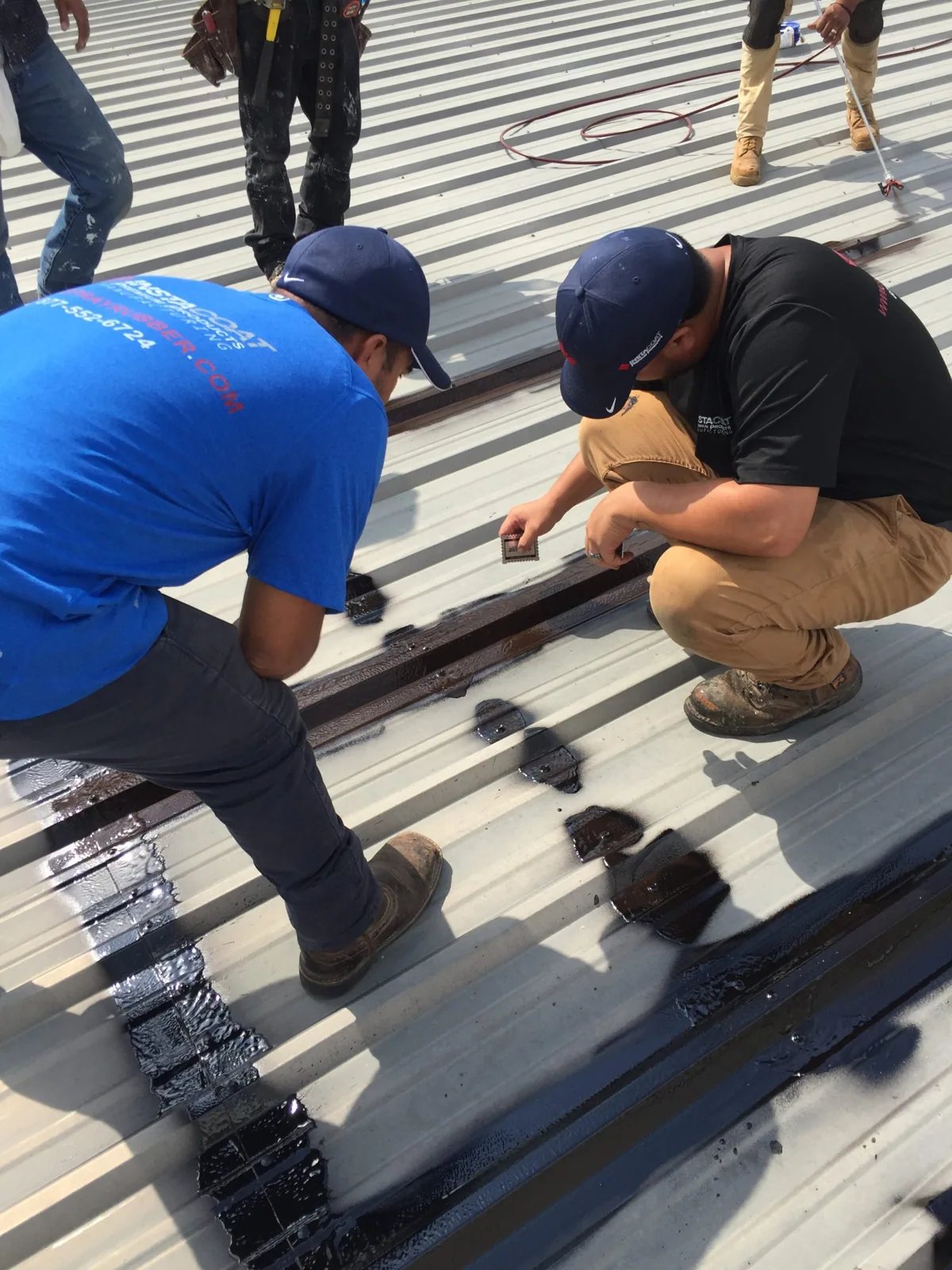
Repair is a reasonable candidate when the defect is localized, the surrounding assembly is serviceable, and the water path can be traced with enough confidence to define a boundary. A seam opening, damaged flashing, or isolated puncture may call for a contained repair, but nearby wet insulation or repeated failures can change that conclusion. Compare the proposed repair with prior work in the same roof zone. If the same detail has been reopened several times, capture that condition trend before authorizing another patch. For a bounded zone, a localized repair order should identify both the test and restoration point.
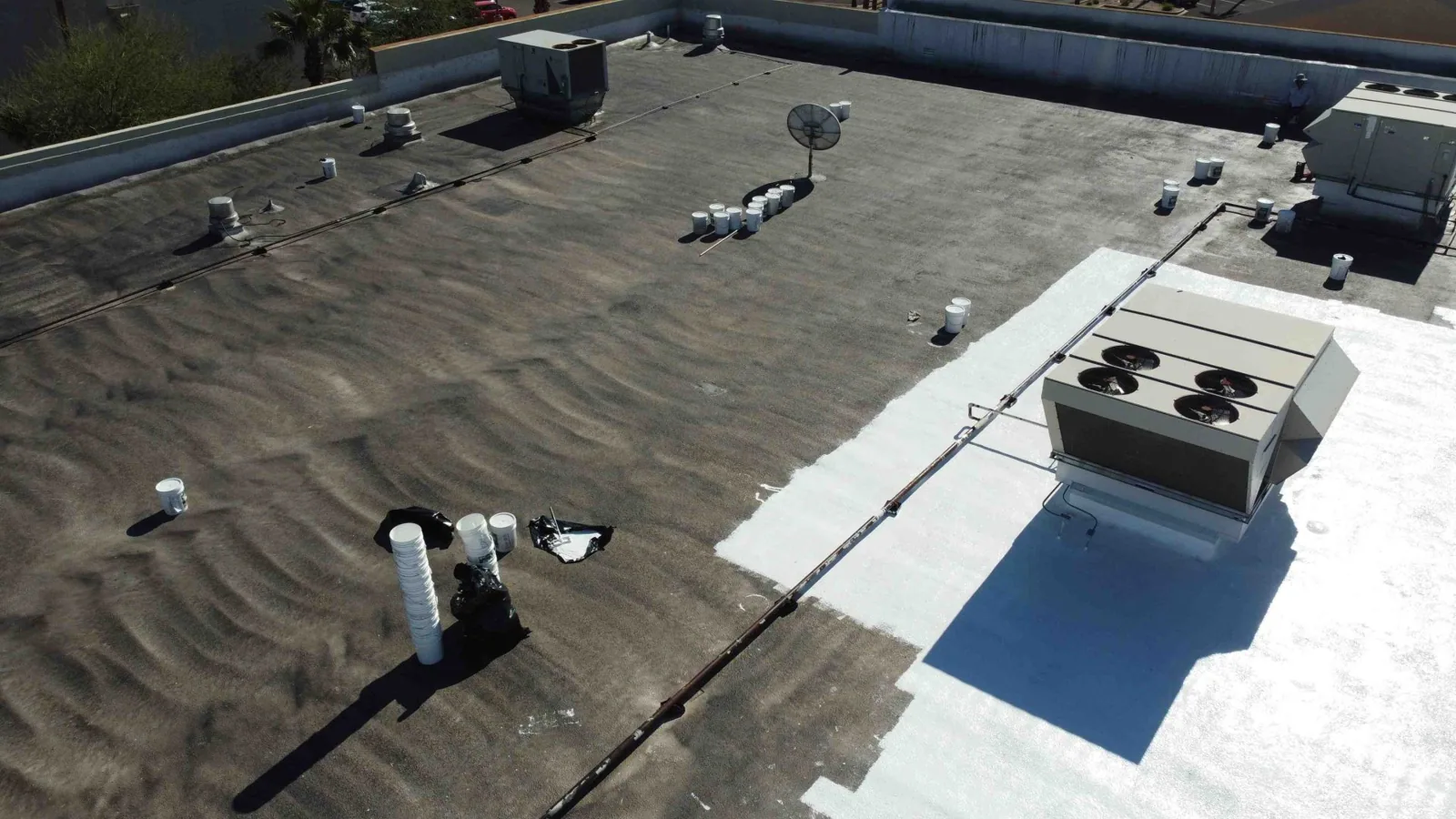
Replacement or recover should be evaluated against confirmed assembly, moisture findings, deck condition, edge details, drainage, and warranty constraints. The replacement scope should identify what will be removed, what remains, how transitions are rebuilt, and which work is excluded. A coating is not a shortcut around unresolved water entry or saturated materials. For a compatible existing surface, roof coating may be considered only after substrate, adhesion, drainage, and manufacturer requirements are documented.
Turn Findings Into Budget Inputs
Translate field findings into a decision package with distinct quantities and assumptions. List immediate leak-control work separately from renewal items, and identify allowances that depend on testing or concealed conditions. Add access, tenant coordination, equipment protection, and disposal assumptions so bids can be compared on the same boundary.
A capital window should follow evidence, not just a building's age. Rank candidate work by active water entry, safety exposure, system compatibility, repair frequency, and operational disruption. Record what information could move a project into a different year: destructive testing, engineering review, a lease event, or a planned tenant improvement. The capital planning review can preserve those dependencies in one place without turning an estimate into a promise.
Preserve the Decision Record
Close the loop by linking the field record to the authorization and the final scope. Store dated photographs, marked roof plans, test locations, approved material submittals, change approvals, and invoices under the building identifier. After work, record the repair boundary, remaining limitations, and any follow-up inspection date.
Keep neighboring markets distinct in the portfolio file. For a portfolio extending beyond Concord, Walnut Creek and Suisun City each need a separate property contact and roof record. For Concord itself, request a roof review with available plans, repair tickets, and access rules. The first useful outcome is a documented condition picture and a clearly bounded next decision, whether that is a repair, additional testing, or a renewal scope.
Commercial Roofing Questions
How should a roof visit work in Downtown Concord?
Downtown Concord links jobs, housing, retail, and transportation connections, so we confirm entrances, public pathways, access windows, and staging with the property contact before mobilization. The roof-zone plan should show the work boundary and any area that remains open to tenants or visitors.
Can a portfolio manager combine several Concord buildings into one survey?
A coordinated visit can share logistics, but each address needs its own roof map, condition notes, quantities, approvals, and closeout record. Separate evidence keeps one building’s defect from being assigned to another.
When should a leak be treated as a repair instead of a renewal project?
That decision follows the measured defect boundary, surrounding assembly condition, prior repair history, and confirmed moisture. Repeated failure or concealed deterioration can make a localized patch inadequate.
What should be ready before a Concord roof visit?
Provide current plans, repair history, warranty documents if available, the authorized contact, access method, safety requirements, and operating restrictions. Flag tenants, deliveries, or equipment that affect the survey window.
How are findings made useful for next year’s budget?
Separate urgent water-control items from planned renewal work, state assumptions and unknowns, and record the evidence that would change priority. Update the ranking when testing or new condition observations become available.
Set the Concord Portfolio Baseline
Provide the roof-zone plan, latest service records, address, and access contact. We will separate current building conditions from portfolio timing before presenting repair options.
Request a Roof Assessment
Questions About Commercial Roofing for Concord Properties
Common questions from building owners and property managers.
How should a roof visit work in Downtown Concord?
Downtown Concord links jobs, housing, retail, and transportation connections, so we confirm entrances, public pathways, access windows, and staging with the property contact before mobilization. The roof-zone plan should show the work boundary and any area that remains open to tenants or visitors.
Can a portfolio manager combine several Concord buildings into one survey?
A coordinated visit can share logistics, but each address needs its own roof map, condition notes, quantities, approvals, and closeout record. Separate evidence keeps one building’s defect from being assigned to another.
When should a leak be treated as a repair instead of a renewal project?
That decision follows the measured defect boundary, surrounding assembly condition, prior repair history, and confirmed moisture. Repeated failure or concealed deterioration can make a localized patch inadequate.
What should be ready before a Concord roof visit?
Provide current plans, repair history, warranty documents if available, the authorized contact, access method, safety requirements, and operating restrictions. Flag tenants, deliveries, or equipment that affect the survey window.
How are findings made useful for next year’s budget?
Separate urgent water-control items from planned renewal work, state assumptions and unknowns, and record the evidence that would change priority. Update the ranking when testing or new condition observations become available.